A DPP-4 inhibitor (gliptin) for type 2 diabetes
Vildagliptin
A DPP-4 inhibitor (gliptin) that gently lowers blood sugar in type 2 diabetes with a low risk of hypoglycaemia on its own; it needs liver-function checks.
What is Vildagliptin?
Vildagliptin is a DPP-4 inhibitor (a 'gliptin') used to lower blood sugar in type 2 diabetes. It helps the body release more of its own insulin after meals, and on its own it has a low risk of hypoglycaemia (low blood sugar) and is generally weight-neutral. It does need liver-function blood tests because it can occasionally affect the liver, and pancreatitis is a recognised but uncommon risk.
Education and reference only. This is a plain-language guide to Vildagliptin — it deliberately contains no doses. Doses depend on the person, the brand and the reason for treatment, and belong with your prescriber. Always check the BNF, the product labelling (SmPC) and follow medical advice.
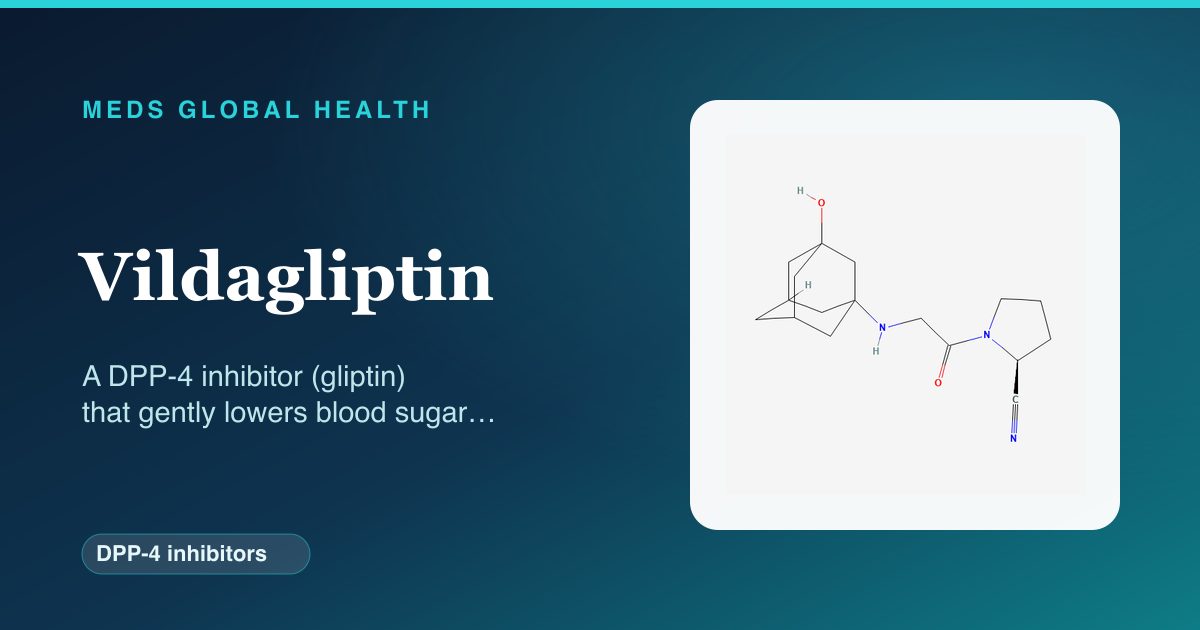
What it is
Vildagliptin is a DPP-4 inhibitor, one of the group of diabetes tablets known as 'gliptins', used in the UK to lower blood sugar in type 2 diabetes. It is often added to metformin or another diabetes medicine, and it is also available combined with metformin in a single tablet. It works mainly around mealtimes, gently improving blood sugar without usually causing low blood sugar or weight gain on its own. It is taken regularly and works in the background to improve overall blood sugar control.
How it works
After you eat, the gut releases hormones called incretins (such as GLP-1) that prompt the pancreas to release insulin and reduce a sugar-raising hormone called glucagon. These incretins are normally broken down quickly by an enzyme called DPP-4. Vildagliptin blocks DPP-4, so the incretins last longer, which increases insulin release and lowers glucagon after meals. Because this effect mainly happens when blood sugar is rising after food, it is less likely to push blood sugar too low than a sulfonylurea.
Company & origin
Originated / developed by: Developed by Novartis..
Vildagliptin is a DPP-4 inhibitor developed by Novartis and introduced in Europe in the late 2000s for type 2 diabetes.
What it treats
Conditions Vildagliptin is used for
Practical use
How to take Vildagliptin
General, dose-free guidance — always follow your prescriber's and the leaflet's specific instructions.
- Take it regularly as prescribed; it can usually be taken with or without food.
- Keep up your usual meals and lifestyle measures, as it works alongside diet and activity rather than replacing them.
- Attend your liver-function blood tests before starting and during treatment, as advised by your team.
- Report promptly any yellowing of the skin or eyes, dark urine, pale stools or unusual tiredness, which can signal a liver problem.
- Seek urgent medical help for severe, persistent stomach pain, especially if it spreads to your back, as this can be a sign of pancreatitis.
- If you also take a sulfonylurea or insulin, be aware that low blood sugar becomes more likely and know how to treat it.
Weighing it up
Advantages & disadvantages of Vildagliptin
Advantages
- On its own it has a low risk of hypoglycaemia, unlike sulfonylureas.
- It is generally weight-neutral, so it does not tend to cause weight gain.
- It is well tolerated by most people and can be combined with metformin, including in a single tablet.
Disadvantages
- It needs liver-function blood tests because it can occasionally affect the liver.
- It carries an uncommon risk of pancreatitis (inflammation of the pancreas).
- Its blood-sugar-lowering effect is modest, and it has not been shown to protect the heart or kidneys the way SGLT2 inhibitors and GLP-1 medicines can.
Practical use
Good to know
On its own, vildagliptin has a low risk of low blood sugar and does not usually cause weight gain, which makes it a gentle option. However, the risk of hypoglycaemia rises if it is combined with a sulfonylurea or insulin. It can occasionally affect the liver, so liver-function blood tests are done before starting and during treatment, and you should report yellowing of the skin or eyes, dark urine or severe tiredness. As with other gliptins, there is an uncommon risk of pancreatitis — seek urgent advice for severe, persistent tummy pain that may spread to your back, often with vomiting. Joint pain has also been reported with this class.
Who should not take it / use with caution
- People with type 1 diabetes or diabetic ketoacidosis.
- People with significant liver problems or raised liver blood tests, in whom it is generally avoided.
- People who have had pancreatitis should use it with caution, and anyone with a serious allergy to vildagliptin should avoid it.
Monitoring
- Liver-function blood tests before starting and periodically during treatment.
- Regular checks of blood sugar control, usually including an HbA1c blood test.
- Watching for signs of pancreatitis or low blood sugar, especially if combined with other diabetes medicines.
Side effects
- Generally well tolerated; possible headache, dizziness or mild digestive upset.
- Changes in liver blood tests, occasionally requiring the medicine to be stopped.
- Joint pain has been reported with this class of medicines.
- Rarely, pancreatitis (severe, persistent stomach pain) — seek urgent help.
Key interactions
- Combining it with a sulfonylurea or insulin increases the risk of low blood sugar.
- It has relatively few interactions overall, but tell your prescriber about all your medicines.
- Other medicines that can affect the liver may add to the need for monitoring.
Available as: Tablets taken by mouth, including a form combined with metformin in a single tablet.
Answers
Vildagliptin: frequently asked questions
What is vildagliptin and how does it work?
Vildagliptin is a DPP-4 inhibitor, or 'gliptin', for type 2 diabetes. It blocks an enzyme that breaks down gut hormones called incretins, so these hormones last longer and help the pancreas release more insulin and lower a sugar-raising hormone after meals, gently improving blood sugar.
Can vildagliptin cause low blood sugar?
On its own it has a low risk of low blood sugar, because it mainly works when blood sugar rises after food. The risk goes up if it is combined with a sulfonylurea or insulin, so in that case it is important to know how to recognise and treat a hypo.
Why do I need liver blood tests with vildagliptin?
Vildagliptin can occasionally affect the liver, so liver-function blood tests are done before starting and during treatment. Report any yellowing of the skin or eyes, dark urine or unusual tiredness promptly, as these can be signs of a liver problem.
Does vildagliptin cause weight gain?
It is generally weight-neutral, meaning it does not usually cause weight gain, which can be an advantage over sulfonylureas. It is often combined with metformin, including in a single tablet, for better blood sugar control.
What is the warning sign of pancreatitis?
Pancreatitis is uncommon but recognised with gliptins. The main warning sign is severe, persistent stomach pain that may spread to your back, often with vomiting. If this happens, stop the medicine and seek urgent medical help.
The wider class
About DPP-4 inhibitors
Vildagliptin belongs to the dpp-4 inhibitors class. For how the class as a whole works, its shared safety principles and monitoring, see the full guide.
Browse by body system
Authoritative sources
- BNF
- NICE CKS
Building a medicines information resource?
We create evidence-led, dose-free drug and formulary references for teams.