A gut-calming medicine for severe diarrhoea-predominant IBS in women
Alosetron
A specialist medicine used only for severe diarrhoea-predominant IBS in women when usual treatments have failed.
What is Alosetron?
Alosetron is a specialist gut medicine used only for women with severe diarrhoea-predominant irritable bowel syndrome whose symptoms have not responded to usual treatments. It works by blocking 5HT3 receptors in the gut, which slows the bowel down and eases urgency, cramping and diarrhoea. Because it can cause serious bowel problems, it is used under a restricted-use programme with careful patient selection and counselling. The two most important risks are ischaemic colitis (a serious loss of blood flow to the bowel) and severe constipation, which can lead to dangerous complications. Anyone who develops new or worsening tummy pain, constipation or blood in the stool must stop it and seek urgent help.
Education and reference only. This is a plain-language guide to Alosetron — it deliberately contains no doses. Doses depend on the person, the brand and the reason for treatment, and belong with your prescriber. Always check the BNF, the product labelling (SmPC) and follow medical advice.
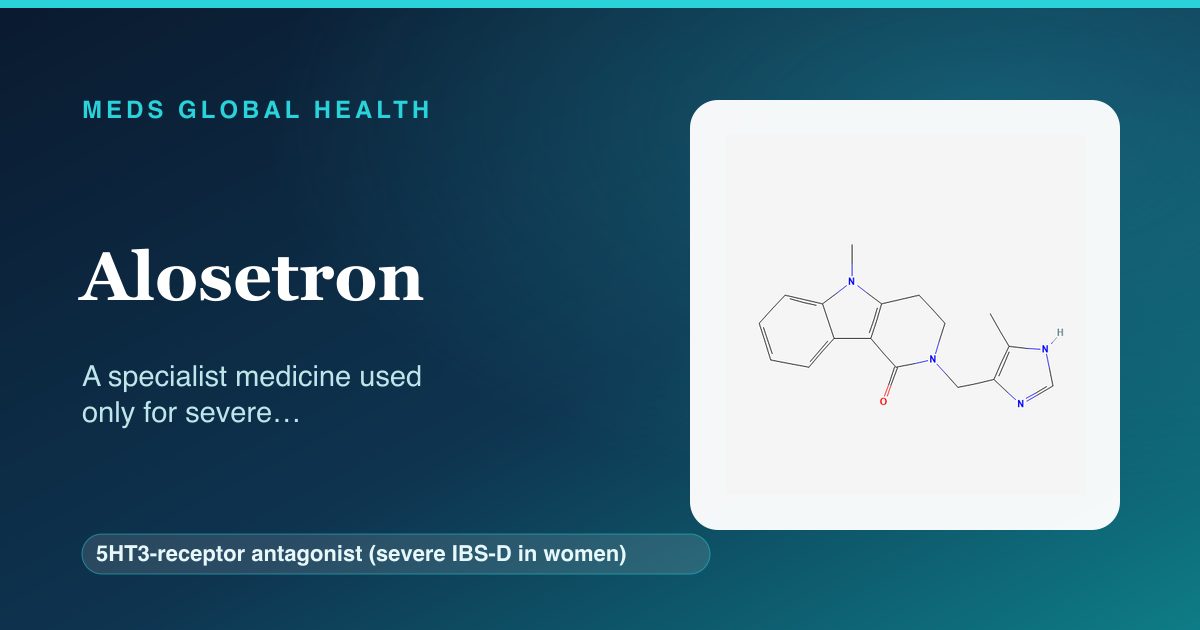
What it is
Alosetron is a specialist medicine used for severe diarrhoea-predominant irritable bowel syndrome (IBS-D) in women who have not been helped by other treatments. It is not a first-choice IBS medicine; it is reserved for severe, long-standing symptoms because of its risk profile. It is taken by mouth and is used under a restricted-use programme, meaning it is prescribed only after careful assessment, with clear counselling about its serious bowel risks and what to watch for. It is used in women only, as this is where benefit has been shown and where it is licensed.
How it works
Alosetron blocks 5HT3 receptors in the bowel, which are involved in how the gut moves, how sensitive it feels and how much fluid it handles. By blocking these receptors it slows the passage of food through the bowel, reduces the urgency and frequency of diarrhoea, and can ease the cramping pain of IBS. The same slowing effect, however, is behind its main risks: it can slow the bowel too much, causing severe constipation, and rarely it can reduce blood flow to the bowel lining, leading to ischaemic colitis. This is why it is used cautiously and only in carefully selected people.
Company & origin
A specialist medicine used, under a restricted-use programme, for severe diarrhoea-predominant irritable bowel syndrome in women when other treatments have not helped.
What it treats
Conditions Alosetron is used for
Practical use
How to take Alosetron
General, dose-free guidance — always follow your prescriber's and the leaflet's specific instructions.
- Take it by mouth exactly as your specialist has prescribed, and do not increase the amount yourself.
- Learn the warning signs you are given, and stop the medicine straight away if you develop new tummy pain, constipation or any bleeding from the back passage.
- Tell your prescriber if you become constipated, as the dose may need to be reduced or the medicine stopped.
- Do not use it for milder bowel symptoms or share it with anyone else, as it is only for severe IBS in women.
- Keep your review appointments so the benefit and risks can be checked regularly.
Weighing it up
Advantages & disadvantages of Alosetron
Advantages
- Can help severe diarrhoea-predominant IBS in women when other treatments have failed.
- Eases urgency, frequent diarrhoea and cramping pain in carefully selected people.
- Taken by mouth as part of a structured, supervised treatment plan.
Disadvantages
- Can cause ischaemic colitis, a serious loss of blood flow to the bowel.
- Can cause severe constipation that may lead to dangerous bowel complications.
- Used only in women, only for severe IBS-D, and only under a restricted-use programme.
Practical use
Good to know
The most important thing to understand about alosetron is that it is a restricted, last-line medicine because of two serious bowel risks. The first is ischaemic colitis, where blood flow to the bowel lining is reduced; the second is severe, complicated constipation, which can cause blockage or tearing of the bowel. Both can be serious, which is why you are counselled carefully before starting and given clear warning signs to watch for. You must stop the medicine and seek urgent medical help if you develop new or worsening tummy pain, constipation, or any bleeding from the back passage or blood in your stool. It is licensed for women only and only for severe diarrhoea-predominant IBS that has not responded to other treatments. Because of all this, it is prescribed and monitored by, or with the advice of, a specialist, and you should not share it or use it for milder symptoms.
Who should not take it / use with caution
- People who have had a serious allergic reaction to alosetron should not take it.
- People with current or previous bowel problems such as constipation, ischaemic colitis, Crohn's disease, ulcerative colitis, diverticulitis or a bowel blockage should not take it.
- It is not used in men, as it is licensed and shown to help in women only.
- It is used with great caution, and only under specialist supervision, with careful counselling about serious bowel risks.
Monitoring
- Regular review of whether symptoms are improving and whether the medicine should continue.
- Watching closely for constipation, tummy pain or any sign of bowel bleeding.
- Stopping the medicine promptly if serious bowel symptoms develop.
Side effects
- Constipation, which can become severe and is an important warning sign to report.
- Tummy pain, nausea or bloating.
- Rarely but seriously, ischaemic colitis (reduced blood flow to the bowel) or complications of severe constipation, which need urgent medical attention.
Key interactions
- Medicines that slow the bowel, such as some painkillers, can add to the risk of severe constipation.
- Some medicines can change how alosetron is broken down by the body, so tell your prescriber everything you take.
- Always give your full medicines list, as alosetron needs careful handling alongside other treatments.
Available as: Tablets taken by mouth.
Answers
Alosetron: frequently asked questions
What is alosetron used for?
It is used only for women with severe diarrhoea-predominant irritable bowel syndrome whose symptoms have not been helped by other treatments.
Why is it a restricted medicine?
It can cause serious bowel problems, including ischaemic colitis and severe constipation, so it is only used under a restricted programme with careful selection and counselling.
What warning signs should I watch for?
Stop it and seek urgent help if you get new or worsening tummy pain, constipation, or any bleeding from the back passage or blood in your stool.
Can men take it?
No. Alosetron is licensed and shown to help in women only, so it is not used in men.
Is it a first treatment for IBS?
No. It is a last-line option reserved for severe IBS-D after other treatments have failed, because of its serious risks.
The wider class
About 5HT3-receptor antagonist (severe IBS-D in women)
Alosetron belongs to the 5ht3-receptor antagonist (severe ibs-d in women) class. For how the class as a whole works, its shared safety principles and monitoring, see the full guide.
Browse by body system
Authoritative sources
- BNF
- NICE CKS
Building a medicines information resource?
We create evidence-led, dose-free drug and formulary references for teams.