A long-acting antibiotic for skin infections
Dalbavancin
A long-acting glycopeptide-type antibiotic given as one or two drips, used for serious skin and soft-tissue infections.
What is Dalbavancin?
Dalbavancin is a long-acting antibiotic given as a drip into a vein, used to treat serious skin and soft-tissue infections, including some caused by resistant bacteria such as MRSA. Because it lasts a long time in the body, a whole course can often be given as just one or two infusions, which can reduce time in hospital. It can occasionally cause an allergic reaction, and a reaction during the infusion, sometimes called a 'red man'-type reaction with flushing and itching, can occur if it is given too quickly, so it is infused slowly. It is used under specialist guidance.
Education and reference only. This is a plain-language guide to Dalbavancin — it deliberately contains no doses. Doses depend on the person, the brand and the reason for treatment, and belong with your prescriber. Always check the BNF, the product labelling (SmPC) and follow medical advice.
What it is
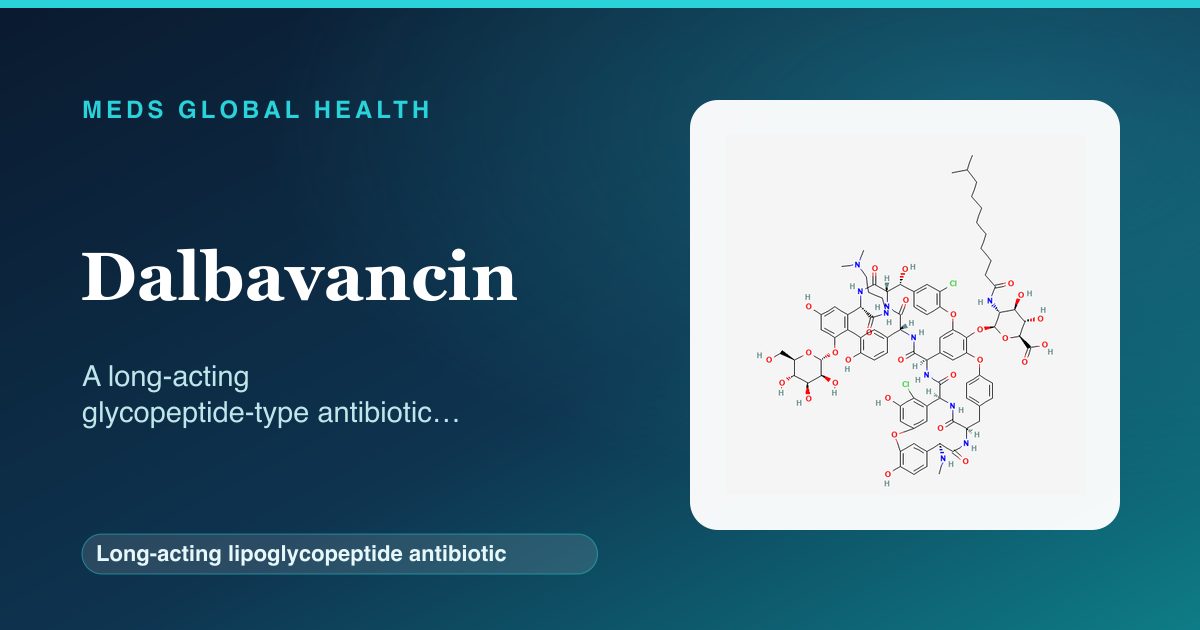
Dalbavancin is a lipoglycopeptide antibiotic, a relative of the glycopeptide family that includes vancomycin, used in hospital to treat serious skin and soft-tissue infections. It is active against many bacteria that cause these infections, including resistant ones such as MRSA. Its standout feature is that it lasts a long time in the body, so a full course can often be completed with only one or two drips, which can shorten or avoid a hospital stay. It is given into a vein and used under specialist guidance.
How it works
Dalbavancin works by stopping bacteria from building their cell walls, which they need to stay intact, so the bacteria break down and die. It is particularly effective against the Gram-positive bacteria, including resistant ones such as MRSA, that commonly cause skin and soft-tissue infections. Because it stays in the body and keeps working for a long time after it is given, a single infusion, or two infusions a week apart, can cover a whole course of treatment. This long action is what makes it different from antibiotics that have to be given every day.
Company & origin
A hospital antibiotic used in the UK, given as a drip for serious skin and soft-tissue infections, with a long-lasting effect.
Practical use
How to take Dalbavancin
General, dose-free guidance — always follow your prescriber's and the leaflet's specific instructions.
- It is given as a drip into a vein by hospital staff, usually as one or sometimes two infusions.
- The drip is given slowly to reduce the chance of a flushing or 'red man'-type reaction.
- Tell the team about any allergy to vancomycin or similar glycopeptide antibiotics before treatment.
- Report any rash, flushing, itching or breathing difficulty during the infusion.
- Attend any follow-up appointments to check the infection is clearing, as the medicine keeps working after the drip.
Weighing it up
Advantages & disadvantages of Dalbavancin
Advantages
- Long-acting, so a whole course can often be given as just one or two drips.
- Can reduce or avoid time in hospital for people who are otherwise well enough.
- Active against many skin-infection bacteria, including resistant ones such as MRSA.
Disadvantages
- Only given as a drip, not as a tablet at home.
- Can cause an allergic reaction or a flushing 'red man'-type reaction if infused too quickly.
- Because it lasts a long time, it cannot be removed quickly once given.
Practical use
Good to know
The most useful feature of dalbavancin is its long action: because one or two drips can cover a whole course, it can reduce or avoid time in hospital, which suits people who are otherwise well enough to go home. Because it is related to the glycopeptide antibiotics, it can cause allergic reactions, and a reaction during the infusion itself, sometimes called a 'red man'-type reaction with flushing, itching or rash, can happen if it is given too quickly; for this reason it is infused slowly. The flip side of its long action is that, once given, it cannot be removed quickly, so the decision to use it is made carefully. Tell the team about any allergy to vancomycin or similar antibiotics, and report any rash, flushing or breathing difficulty during the drip.
Who should not take it / use with caution
- People who have had a serious allergic reaction to dalbavancin should not be given it.
- It is used with care in people who have reacted to vancomycin or other glycopeptide antibiotics.
- It is used with care in people with significant kidney or liver problems, under specialist guidance.
Monitoring
- Checking how the infection responds at follow-up, as the medicine keeps working after the drip.
- Watching for infusion reactions such as flushing or rash.
- Reviewing kidney and liver function where appropriate.
Side effects
- Nausea, diarrhoea or headache.
- A flushing, itching or rash reaction during the infusion, especially if given too quickly.
- Allergic reactions, which can rarely be serious, and changes in some blood tests.
Key interactions
- Tell the team about all your medicines, as some may need monitoring alongside it.
- Other medicines that affect the kidneys may need review when used together.
- It can affect some blood tests, so labs should know you have received it.
Available as: A powder made up into a solution and given as a drip into a vein.
Answers
Dalbavancin: frequently asked questions
What is dalbavancin used for?
It is a hospital antibiotic used to treat serious skin and soft-tissue infections, including some caused by resistant bacteria such as MRSA.
Why is it given as only one or two drips?
Dalbavancin lasts a long time in the body, so a single infusion, or two a week apart, can cover a whole course of treatment.
What is a 'red man'-type reaction?
It is a flushing, itching or rash reaction that can occur if the drip is given too quickly, which is why dalbavancin is infused slowly.
Can it help me avoid a hospital stay?
Often yes, because its long action means a full course can be given as one or two drips, which can reduce or avoid time in hospital.
Should I mention a vancomycin allergy?
Yes, tell the team about any allergy to vancomycin or similar glycopeptide antibiotics, as dalbavancin is related to them.
The wider class
About Long-acting lipoglycopeptide antibiotic
Dalbavancin belongs to the long-acting lipoglycopeptide antibiotic class. For how the class as a whole works, its shared safety principles and monitoring, see the full guide.
Browse by body system
Authoritative sources
- BNF
- NICE CKS
Building a medicines information resource?
We create evidence-led, dose-free drug and formulary references for teams.