An alcohol-deterrent medicine
Disulfiram
A medicine that causes an unpleasant reaction if alcohol is taken, used to support staying alcohol-free.
What is Disulfiram?
Disulfiram is a medicine that helps people stay off alcohol by making drinking very unpleasant. If alcohol is taken while on it, it causes flushing, a throbbing headache, nausea and vomiting, a fast heartbeat and feeling unwell, which acts as a strong deterrent. It works best as part of a wider plan with support, and is often most effective when someone helps supervise the daily dose. The key thing is to avoid all alcohol, including hidden sources such as some foods, mouthwashes and toiletries, while taking it and for a couple of weeks after stopping. The liver is usually checked during treatment.
Education and reference only. This is a plain-language guide to Disulfiram — it deliberately contains no doses. Doses depend on the person, the brand and the reason for treatment, and belong with your prescriber. Always check the BNF, the product labelling (SmPC) and follow medical advice.
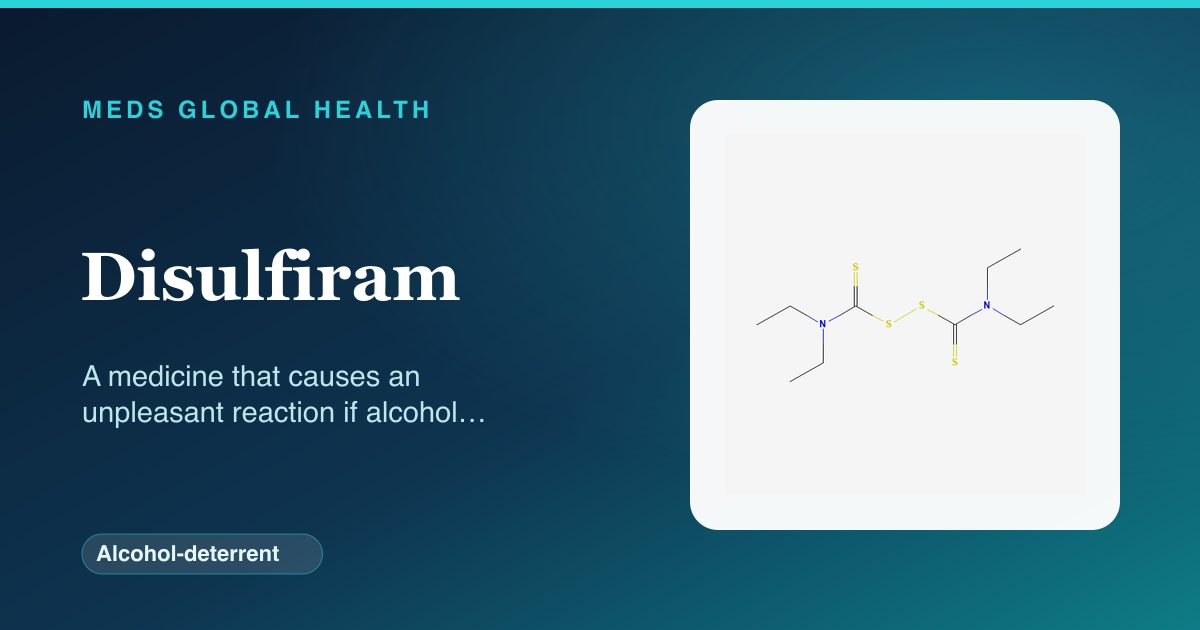
What it is
Disulfiram is a medicine used to support people who have decided to stay alcohol-free. Rather than reducing craving, it works as a deterrent: while you are taking it, drinking even a small amount of alcohol causes a deliberately unpleasant reaction. It is taken once a day by mouth, usually as part of a structured plan with counselling or other support, and many people find it most helpful when someone they trust supervises the dose so the commitment is shared.
How it works
When the body breaks down alcohol, it briefly forms a substance called acetaldehyde, which is normally cleared quickly. Disulfiram blocks the step that clears it, so acetaldehyde builds up if alcohol is taken. This build-up causes the very unpleasant disulfiram-alcohol reaction: flushing, a pounding headache, nausea and vomiting, a racing heart and feeling generally unwell. Knowing this reaction will happen acts as a strong reason not to drink, which can support the decision to stay alcohol-free while other support is in place.
Company & origin
A long-established medicine used in the UK to support people staying alcohol-free by causing a very unpleasant reaction if alcohol is taken.
Practical use
How to take Disulfiram
General, dose-free guidance — always follow your prescriber's and the leaflet's specific instructions.
- Take it once a day exactly as prescribed; many people find it helps to have someone supervise the daily dose.
- Avoid all alcohol while taking it and for about two weeks after stopping, as the reaction can still happen after the last dose.
- Check labels and avoid hidden alcohol in some foods, mouthwashes, perfumes, aftershaves, skin products and certain liquid medicines.
- Never drink alcohol to 'see what happens', as the reaction can be severe; seek urgent help if a strong reaction occurs.
- Attend your liver blood tests and report any yellowing of the skin or eyes, dark urine or unusual tiredness.
Weighing it up
Advantages & disadvantages of Disulfiram
Advantages
- Provides a strong, practical deterrent that can support the decision to stay alcohol-free.
- Taken once a day and often more effective when the dose is supervised by someone trusted.
- Works alongside counselling and support as part of a wider plan.
Disadvantages
- Causes a deliberately unpleasant, and sometimes severe, reaction if any alcohol is taken.
- Requires careful avoidance of all alcohol, including hidden sources, which takes planning.
- Can occasionally affect the liver, so blood tests are needed, and it is not suitable for everyone.
Practical use
Good to know
Disulfiram works best alongside support and is tailored to the person; it is a tool to back up the decision to stay alcohol-free, not a cure on its own. The most important point is to avoid all alcohol while taking it and for about two weeks after stopping, because the reaction can occur even with small or hidden amounts. Hidden alcohol can be in some foods and sauces, certain mouthwashes, perfumes, aftershaves and skin products, and some liquid medicines, so it is worth checking labels. The reaction can be severe, so it is never used to 'test' how much can be tolerated. The liver is checked before and during treatment, because disulfiram can occasionally affect it, and any yellowing of the skin or eyes, dark urine or unusual tiredness should be reported promptly. It is not suitable for everyone, particularly people with significant heart disease.
Who should not take it / use with caution
- It is not suitable for people who are still drinking or who have alcohol in their system when starting.
- It is avoided in people with significant heart disease, severe liver problems or certain mental health conditions such as psychosis.
- It is generally not used in pregnancy, and should be used with caution in several other conditions, so a full assessment is needed first.
Monitoring
- Liver blood tests before and during treatment.
- Reviewing avoidance of alcohol, including hidden sources, and overall progress with support.
- Watching for signs of liver problems, mood changes or excessive drowsiness.
Side effects
- Drowsiness, tiredness, a metallic or garlic-like taste and reduced sex drive can occur, often easing over time.
- If alcohol is taken, the deliberate reaction includes flushing, headache, nausea, vomiting and a fast heartbeat.
- Less often, liver problems (such as yellowing of the skin or eyes) or mood changes, which should be reported promptly.
Key interactions
- All forms of alcohol, including hidden sources, can trigger the unpleasant reaction.
- It can increase the effect of warfarin and some other medicines, such as certain epilepsy treatments.
- It should not be combined with metronidazole and is used cautiously with several other medicines, so always tell your prescriber what you take.
Available as: Tablets taken by mouth, which can be dispersed in water.
Answers
Disulfiram: frequently asked questions
What happens if I drink alcohol on disulfiram?
It causes a deliberately unpleasant reaction with flushing, a throbbing headache, nausea and vomiting and a fast heartbeat; this can be severe, so all alcohol should be avoided.
How long after stopping do I need to avoid alcohol?
For about two weeks after your last dose, as disulfiram stays in the body for a time and the reaction can still happen during that period.
Can hidden alcohol cause a reaction?
Yes. Alcohol in some foods, mouthwashes, perfumes, aftershaves, skin products and certain liquid medicines can trigger a reaction, so it is worth checking labels.
Why do I need liver blood tests?
Disulfiram can occasionally affect the liver, so it is checked before and during treatment; report any yellowing of the skin or eyes, dark urine or unusual tiredness.
Does disulfiram cure alcohol dependence?
No. It is a deterrent that supports the decision to stay alcohol-free and works best alongside counselling and other support, rather than being a cure on its own.
The wider class
About Alcohol-deterrent
Disulfiram belongs to the alcohol-deterrent class. For how the class as a whole works, its shared safety principles and monitoring, see the full guide.
Browse by body system
Authoritative sources
- BNF
- NICE CKS
Building a medicines information resource?
We create evidence-led, dose-free drug and formulary references for teams.