An opioid blocker used to prevent relapse in opioid and alcohol dependence
Naltrexone
A medicine that blocks the effects of opioids, used to help prevent relapse in opioid and alcohol dependence.
What is Naltrexone?
Naltrexone is a medicine that blocks the effects of opioids, used to help people who have stopped using opioids stay off them, and to help people with alcohol dependence cut down or stay off drinking. The most important safety point is that you must be completely free of opioids before starting it, because taking it while opioids are still in the body can trigger a sudden, severe withdrawal reaction. While taking it, ordinary opioid painkillers will not work, which matters in an emergency or before surgery. It can affect the liver, so liver blood tests are checked. After stopping naltrexone, tolerance to opioids is reduced, so going back to a previous dose of an opioid can cause a dangerous, even fatal, overdose.
Education and reference only. This is a plain-language guide to Naltrexone — it deliberately contains no doses. Doses depend on the person, the brand and the reason for treatment, and belong with your prescriber. Always check the BNF, the product labelling (SmPC) and follow medical advice.
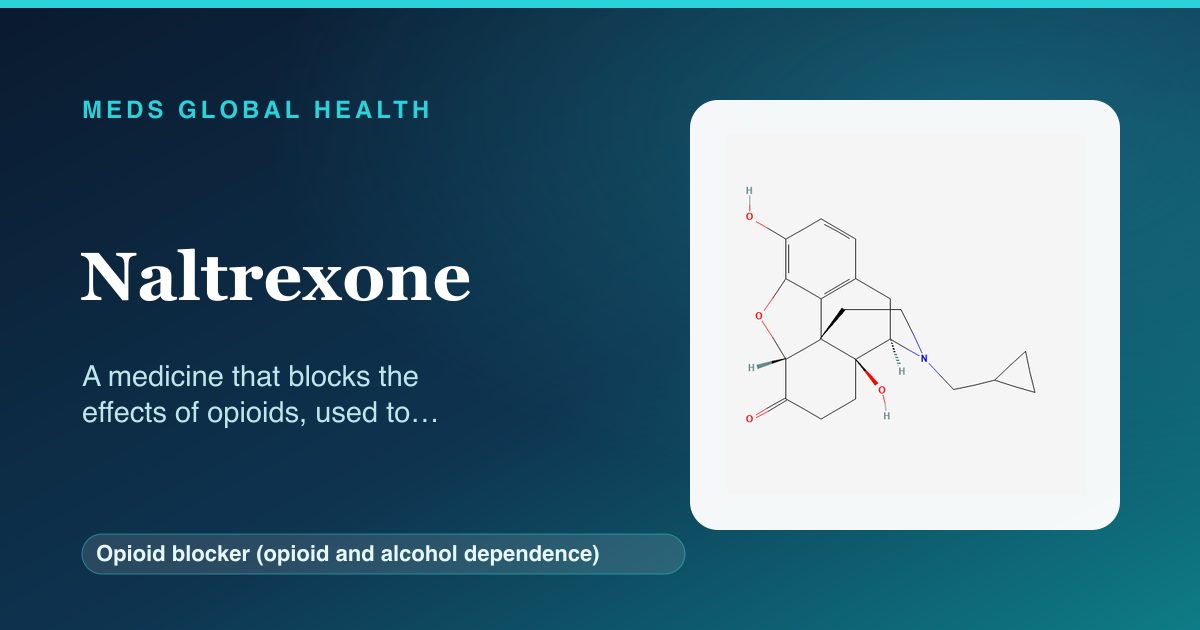
What it is
Naltrexone is a medicine that blocks the brain's opioid receptors, the places where opioids and the body's own feel-good chemicals act. It is used in two main ways: to help people who have come off opioids avoid going back to them, and to help people with alcohol dependence reduce their drinking or stay off alcohol. It is usually a tablet taken by mouth, used as one part of a wider treatment programme that includes support and counselling. It is prescribed and supervised within drug and alcohol services or by a specialist.
How it works
Naltrexone sits on the brain's opioid receptors and blocks them, so opioids cannot produce their usual effects of pain relief or a 'high'. For opioid dependence, this removes the reward from using opioids, which helps people stay off them. For alcohol dependence, blocking these receptors is thought to reduce the pleasurable feelings and cravings linked to drinking, helping people cut down. Because it occupies the receptors that opioids would normally use, it both prevents opioids working and, crucially, can pull opioids off the receptors if any are present, which is why being opioid-free first is essential.
Company & origin
A medicine used in the UK to help people stay free of opioids or reduce drinking, as part of a wider treatment programme.
Practical use
How to take Naltrexone
General, dose-free guidance — always follow your prescriber's and the leaflet's specific instructions.
- Take it exactly as prescribed, only after you are completely free of opioids, to avoid triggering withdrawal.
- Carry a card or warning that you take naltrexone, and tell any doctor, dentist or hospital, as ordinary opioid painkillers will not work.
- Have your liver blood tests done before and during treatment as advised.
- Use it alongside the counselling and support offered, as it works best as part of a wider programme.
- Never take opioids to try to overcome the block, and be aware that overdose risk is high if you use opioids after stopping.
Weighing it up
Advantages & disadvantages of Naltrexone
Advantages
- Helps people who have come off opioids stay off them by removing the reward from using.
- Helps some people with alcohol dependence reduce their drinking and cravings.
- Taken by mouth as part of a wider treatment and support programme.
Disadvantages
- Must only be started once a person is completely opioid-free, or it triggers severe withdrawal.
- Blocks ordinary opioid painkillers, which complicates pain relief and surgery.
- Can affect the liver, needing blood tests, and overdose risk is high if opioids are used after stopping.
Practical use
Good to know
The single most important point with naltrexone is that you must be completely free of opioids before you start it. If opioids are still in your body, naltrexone pushes them off their receptors and can cause a sudden and severe withdrawal reaction, so a gap after the last opioid is required and sometimes a test is done first. While taking naltrexone, normal opioid painkillers will not work, so you must tell any doctor, dentist or hospital that you take it, especially before surgery or in an emergency, and carry a warning so the right pain relief can be planned. It can affect the liver, so liver blood tests are usually done before and during treatment. A serious danger comes after stopping: your tolerance to opioids drops, so if you go back to a dose you once used, it can cause a life-threatening overdose. It works best as part of a wider programme with counselling and support.
Who should not take it / use with caution
- People who are still using opioids, or not yet fully opioid-free, must not take it, as it triggers withdrawal.
- People who have had a serious allergic reaction to naltrexone should not take it.
- It is used with caution, or avoided, in people with significant liver problems, under medical guidance.
Monitoring
- Liver blood tests before and during treatment.
- Checking the person is fully opioid-free before starting.
- Reviewing progress, mood and engagement with the wider support programme.
Side effects
- Nausea, headache, dizziness or tiredness, especially early in treatment.
- Trouble sleeping, anxiety or low mood in some people.
- Tummy pain or joint and muscle aches.
- Less commonly, effects on the liver, which blood tests are designed to catch.
Key interactions
- It blocks opioid painkillers and opioid-containing cough or diarrhoea medicines, so these will not work normally.
- It must not be combined with ongoing opioid use, as this risks severe withdrawal.
- Tell your prescriber about all your medicines, including any that affect the liver.
Available as: Tablets taken by mouth (a long-acting injection is used in some countries).
Answers
Naltrexone: frequently asked questions
What is naltrexone used for?
It is used to help people who have come off opioids stay off them, and to help people with alcohol dependence cut down or stay off drinking, as part of a wider programme.
Why must I be opioid-free before starting?
If opioids are still in your body, naltrexone pushes them off their receptors and can cause a sudden, severe withdrawal reaction, so a gap after your last opioid is essential.
Will painkillers still work while I take it?
Ordinary opioid painkillers will not work while you take naltrexone, so tell any doctor, dentist or hospital, especially before surgery or in an emergency, so other pain relief can be planned.
Does it affect my liver?
It can affect the liver, so liver blood tests are usually done before and during treatment to make sure it is safe for you.
Why is overdose risk higher after stopping?
After stopping naltrexone your tolerance to opioids is reduced, so going back to a dose you once used can cause a dangerous and even fatal overdose.
The wider class
About Opioid blocker (opioid and alcohol dependence)
Naltrexone belongs to the opioid blocker (opioid and alcohol dependence) class. For how the class as a whole works, its shared safety principles and monitoring, see the full guide.
Browse by body system
Authoritative sources
- BNF
- NICE CKS
Building a medicines information resource?
We create evidence-led, dose-free drug and formulary references for teams.