A progestogen used in HRT
Dydrogesterone
A progestogen given alongside oestrogen in HRT to protect the lining of the womb, and used in some other hormone-related conditions.
What is Dydrogesterone?
Dydrogesterone is a progestogen, a synthetic version of progesterone. In hormone replacement therapy (HRT) it is given together with oestrogen to protect the lining of the womb, because oestrogen on its own can thicken that lining. It is taken as a tablet, sometimes combined with oestrogen in the same product, and like other progestogens it can affect bleeding and mood.
Education and reference only. This is a plain-language guide to Dydrogesterone — it deliberately contains no doses. Doses depend on the person, the brand and the reason for treatment, and belong with your prescriber. Always check the BNF, the product labelling (SmPC) and follow medical advice.
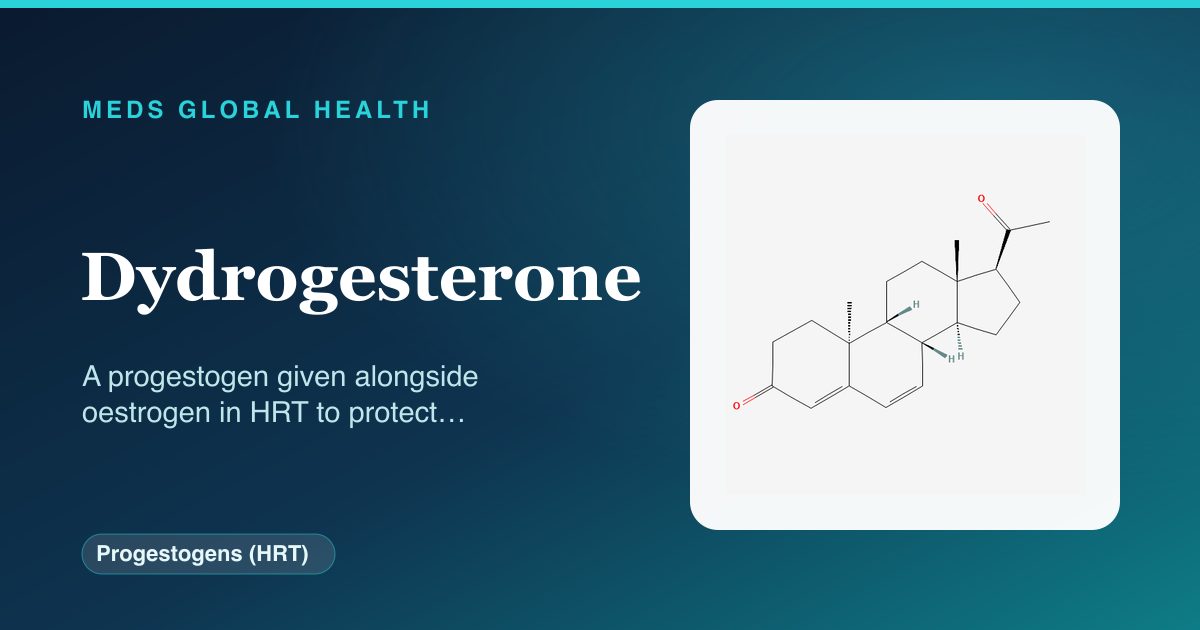
What it is
Dydrogesterone is a progestogen, a man-made version of the natural hormone progesterone. Its main role is as the progestogen part of hormone replacement therapy (HRT): for women who still have a womb, a progestogen is given alongside oestrogen to keep the womb lining healthy. It is taken as a tablet, sometimes on its own and sometimes combined with oestrogen in a single HRT product.
How it works
Oestrogen, the main hormone in HRT, can cause the lining of the womb to thicken if it is given on its own, which over time is not safe for women who still have a womb. Dydrogesterone acts like the body's own progesterone to keep this lining in check and protect it, which is why it is added to oestrogen in HRT. It does not provide the oestrogen benefits itself; its job is to balance and protect.
Company & origin
Originated / developed by: A widely used progestogen.
A progestogen used in the UK alongside oestrogen in hormone replacement therapy (HRT) to protect the lining of the womb.
What it treats
Conditions Dydrogesterone is used for
Practical use
How to take Dydrogesterone
General, dose-free guidance — always follow your prescriber's and the leaflet's specific instructions.
- Take it as part of your HRT regimen, exactly as your prescriber directs.
- It may be taken every day, or for only part of each cycle, depending on your stage of menopause.
- Try to take it at around the same time each day to keep things steady.
- Do not stop your HRT abruptly without advice; discuss any changes with your prescriber.
- Keep your regular HRT review appointments so your treatment can be checked.
Weighing it up
Advantages & disadvantages of Dydrogesterone
Advantages
- Protects the lining of the womb when oestrogen is taken in HRT.
- Available combined with oestrogen in a single HRT tablet for convenience.
- Generally well tolerated as the progestogen part of HRT.
Disadvantages
- Mainly needed by women who still have a womb, as a partner to oestrogen.
- Like other progestogens, it can affect bleeding and mood.
- Forms part of the overall clot-risk discussion that comes with HRT.
Practical use
Good to know
Dydrogesterone is usually taken as part of an HRT regimen, either continuously every day or for part of each cycle, depending on whether you are around or past the menopause. It is the womb-protecting partner to oestrogen, so it is generally only needed by women who still have a womb. Like other progestogens it can affect bleeding patterns and mood, and progestogens are part of the overall clot-risk discussion that goes with HRT. Your prescriber will review your HRT regularly to make sure it still suits you.
Who should not take it / use with caution
- Women who are pregnant or who think they could be pregnant.
- People with a current or past blood clot, certain cancers, serious liver disease, or unexplained vaginal bleeding before it is checked.
- Used with caution where there are particular risk factors for HRT — your history will be reviewed first.
Monitoring
- Your bleeding pattern, particularly any new or unexpected bleeding, which should be reported.
- Blood pressure and a regular review of whether your HRT still suits you.
- Any new symptoms, especially anything that could suggest a blood clot.
Side effects
- Changes in bleeding, such as spotting or breakthrough bleeding, especially early on.
- Breast tenderness, headaches, bloating or changes in mood.
- Less commonly, effects linked to HRT overall, including the clot-risk considerations your prescriber discusses.
Key interactions
- Some medicines for epilepsy and St John's wort can affect how progestogens work.
- Tell your prescriber about all your medicines and herbal products before starting it.
- It is taken with oestrogen in HRT, and any other hormone treatments should be supervised.
Available as: Tablets, including products that combine it with oestrogen for HRT.
Answers
Dydrogesterone: frequently asked questions
Why is dydrogesterone added to HRT?
Oestrogen on its own can thicken the lining of the womb, which is not safe over time. Dydrogesterone, a progestogen, protects this lining, so it is given alongside oestrogen for women who still have a womb.
Do I need it if I've had a hysterectomy?
Usually not. The progestogen part of HRT is mainly to protect the womb lining, so women without a womb often take oestrogen alone. Your prescriber will advise.
Will it cause bleeding?
It can. Some bleeding or spotting is common, especially early in HRT. Any new, heavy or unexpected bleeding should be reported to your GP so it can be checked.
Is it the same as natural progesterone?
It is a progestogen, a synthetic hormone that acts like the body's natural progesterone. There is also a body-identical progesterone option; your prescriber can discuss which suits you.
Can I stop my HRT suddenly?
It is best not to stop abruptly without advice, as symptoms can return. Talk to your prescriber if you want to change or stop, so it can be managed properly.
The wider class
About Progestogens (HRT)
Dydrogesterone belongs to the progestogens (hrt) class. For how the class as a whole works, its shared safety principles and monitoring, see the full guide.
Browse by body system
Authoritative sources
- BNF
- NICE CKS
Building a medicines information resource?
We create evidence-led, dose-free drug and formulary references for teams.