A type of hormone replacement therapy (HRT)
Tibolone
A single-tablet form of HRT that eases menopausal symptoms in women who are past the menopause.
What is Tibolone?
Tibolone is a type of hormone replacement therapy (HRT) taken as a single daily tablet. It has oestrogen-, progestogen- and androgen-like effects, which ease menopausal symptoms such as hot flushes and can help with low sex drive. It is used by women who are past the menopause and, like other HRT, carries small risks of blood clots, stroke and breast cancer that should be discussed.
Education and reference only. This is a plain-language guide to Tibolone — it deliberately contains no doses. Doses depend on the person, the brand and the reason for treatment, and belong with your prescriber. Always check the BNF, the product labelling (SmPC) and follow medical advice.
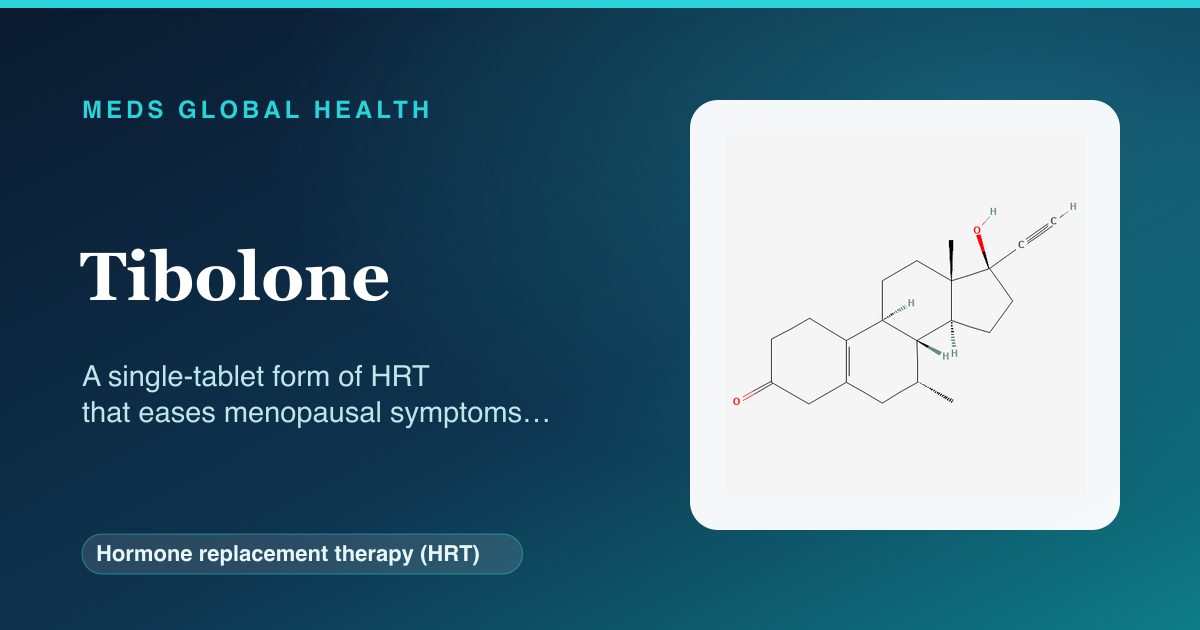
What it is
Tibolone is a synthetic hormone medicine used as a form of HRT to relieve symptoms of the menopause. In the body it produces effects similar to oestrogen, progestogen and a small amount of testosterone, all from a single tablet, so a separate progestogen is not needed. It is used by women who are at least a year past their last period. It can ease hot flushes, night sweats and vaginal dryness, and may help with low sex drive.
How it works
After it is taken, tibolone is broken down in the body into substances that act like the three main sex hormones — oestrogen, progestogen and an androgen (a testosterone-like hormone). The oestrogen-like effect relieves menopausal symptoms such as hot flushes and helps protect bone strength. The progestogen-like effect protects the lining of the womb, which is why no separate progestogen is required. The androgen-like effect can help with low mood, energy and sex drive.
Company & origin
Originated / developed by: Originally developed by Organon and now available from several manufacturers..
A synthetic hormone medicine introduced for menopausal symptoms in postmenopausal women, combining oestrogen-, progestogen- and androgen-like effects in one tablet.
What it treats
Conditions Tibolone is used for
Practical use
How to take Tibolone
General, dose-free guidance — always follow your prescriber's and the leaflet's specific instructions.
- Take one tablet once a day at about the same time, with a drink of water.
- Take it regularly without a break, as it is a continuous form of HRT.
- It is intended for women who are well past their last period; it is not suitable around the time of the menopause.
- Report any unexpected or ongoing vaginal bleeding to your clinician.
- If you miss a dose, take it as soon as you remember unless the next is due soon, then skip it — never take two at once.
Weighing it up
Advantages & disadvantages of Tibolone
Advantages
- Relieves menopausal symptoms such as hot flushes and night sweats from a single daily tablet.
- Combines all the hormone effects needed, so no separate progestogen is required.
- Can help with low sex drive, mood and energy thanks to its androgen-like effect, and helps protect bone strength.
Disadvantages
- Carries small increases in the risk of blood clots, stroke and breast cancer, like other HRT; the stroke risk is greater in older women, so it is used with particular caution over the age of 60.
- Only suitable for women who are clearly past the menopause.
- Can cause vaginal bleeding or spotting, weight changes and other side effects.
Practical use
Good to know
Tibolone is taken once a day, every day, as a single tablet that combines all the hormone effects needed, so it can be simpler than taking separate oestrogen and progestogen. It is only suitable for women who are clearly past the menopause. Like other HRT, it carries small increases in the risk of blood clots, stroke and breast cancer, which are weighed against the benefit of symptom relief. Any unexpected vaginal bleeding should always be reported.
Who should not take it / use with caution
- Women with a current or past hormone-sensitive cancer (such as breast cancer), or unexplained vaginal bleeding.
- Women with a history of blood clots, stroke, heart attack or angina, or certain clotting disorders.
- Women with active liver disease, or who are pregnant.
Monitoring
- Regular review of symptoms, blood pressure and whether continuing HRT is still right for you.
- Attendance at breast-screening appointments, and prompt reporting of any breast changes.
- Investigation of any unexpected vaginal bleeding.
Side effects
- Vaginal bleeding or spotting, especially early on, and breast tenderness.
- Weight changes, tummy pain, headache and skin changes.
- Rarely, blood clots, stroke or other serious problems — seek urgent help for a swollen painful leg, chest pain, breathlessness or sudden weakness.
Key interactions
- Medicines that speed up the liver (such as some anti-epileptics, rifampicin and St John's wort) can reduce its effect.
- It can increase the effect of blood-thinning medicines, so clotting may need closer monitoring.
- Tell your clinician about all medicines and supplements, as some can interact with hormone treatment.
Available as: Tablets.
Answers
Tibolone: frequently asked questions
How is tibolone different from ordinary HRT?
Most HRT uses oestrogen plus a separate progestogen, whereas tibolone is a single substance that produces oestrogen-, progestogen- and androgen-like effects once it is in the body. This means one tablet does the work of a combined preparation, and it is only used by women who are clearly past the menopause.
Can tibolone help with low sex drive?
Its androgen-like effect can help some women with low sex drive, energy and mood, in addition to easing hot flushes and night sweats. Results vary from person to person. Discuss your main symptoms with your clinician so the most suitable treatment can be chosen.
Does tibolone increase the risk of breast cancer?
Like other forms of HRT, tibolone is associated with a small increase in the risk of breast cancer with longer use, which is why regular breast screening and reporting any changes matter. The risk is weighed against the benefit of symptom relief, and your clinician can talk you through it.
Is tibolone safe if I have had a blood clot?
Tibolone is not suitable for women who have had blood clots, stroke or certain heart problems, as HRT can raise the risk of clots. Tell your clinician about any such history so a safer option can be considered. Seek urgent help for a swollen painful leg, chest pain or sudden breathlessness.
When can I start tibolone after the menopause?
It is intended for women who are well past their last period, rather than at the start of the menopause, because starting too early can cause irregular bleeding. Your clinician will advise on timing and whether tibolone or another type of HRT suits you best.
The wider class
About Hormone replacement therapy (HRT)
Tibolone belongs to the hormone replacement therapy (hrt) class. For how the class as a whole works, its shared safety principles and monitoring, see the full guide.
Browse by body system
Authoritative sources
- BNF: Tibolone.
- electronic Medicines Compendium (SmPC): Livial (tibolone).
- NICE CKS: Hormone replacement therapy (HRT).
Building a medicines information resource?
We create evidence-led, dose-free drug and formulary references for teams.