The main oestrogen used in HRT
Estradiol
The main oestrogen in hormone replacement therapy (HRT), used to relieve menopausal symptoms such as hot flushes and night sweats.
What is Estradiol?
Oestradiol (estradiol) is the main form of oestrogen used in hormone replacement therapy (HRT). It replaces the oestrogen the body makes less of around the menopause, easing symptoms such as hot flushes, night sweats and vaginal dryness.
Education and reference only. This is a plain-language guide to Estradiol — it deliberately contains no doses. Doses depend on the person, the brand and the reason for treatment, and belong with your prescriber. Always check the BNF, the product labelling (SmPC) and follow medical advice.
What it is
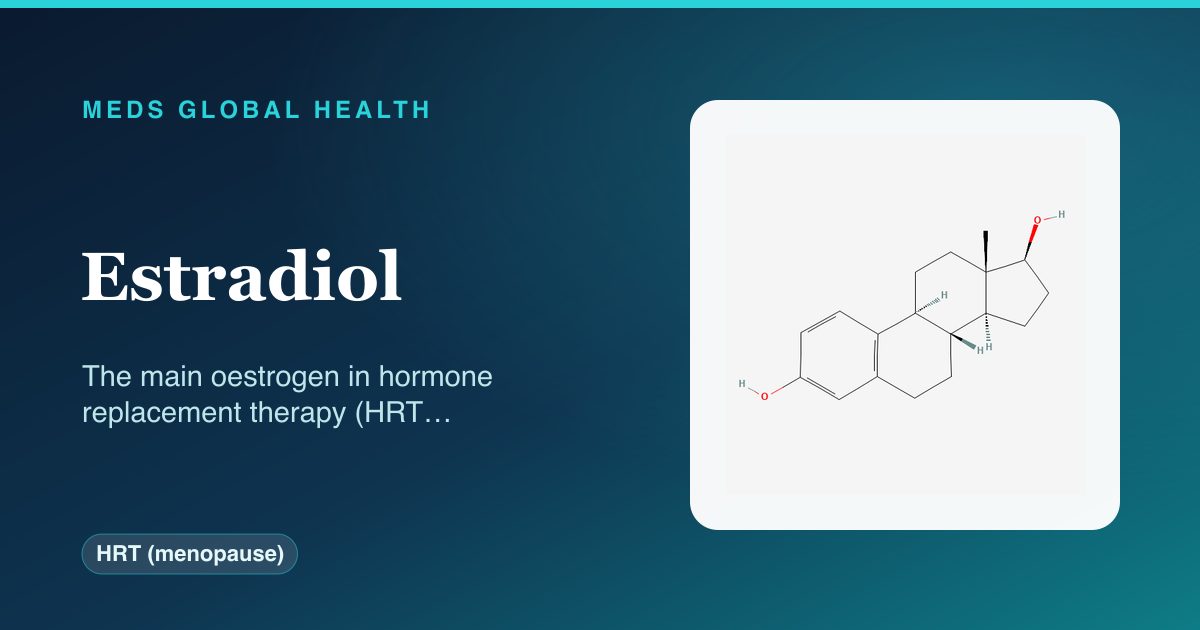
Estradiol (spelled oestradiol in the UK) is the main form of oestrogen used in hormone replacement therapy (HRT). It replaces the oestrogen the body makes less of around the menopause, relieving symptoms such as hot flushes, night sweats, mood changes, sleep problems and vaginal dryness, and helping protect the bones. It comes as skin patches (such as Evorel and Estradot), gels and sprays applied to the skin, and tablets (such as Elleste; Estrace is a US tablet brand). A key principle: if you still have a womb, oestrogen is given together with a progestogen (combined HRT) to protect the womb lining; oestrogen on its own is used only if you have had a hysterectomy.
How it works
Estradiol is the same hormone the ovaries produce in greatest amount before menopause. Replacing it tops up oestrogen levels in the body, which settles the temperature-control disturbance behind hot flushes and night sweats, improves vaginal and bladder tissues, supports mood and sleep, and helps maintain bone strength. When the skin route (patch, gel or spray) is used, the oestrogen passes straight into the bloodstream without first going through the gut and liver, which is why this route carries a lower risk of blood clots than tablets.
Company & origin
Originated / developed by: Not attributable to a single originator (natural hormone).
Estradiol is a natural human estrogen hormone; it was first isolated and characterized in 1935 by Edward Doisy in the United States, building on estrogen work from the 1920s-30s, and has since been produced by many manufacturers for hormone replacement therapy.
What it treats
Conditions Estradiol is used for
Practical use
How to take Estradiol
General, dose-free guidance — always follow your prescriber's and the leaflet's specific instructions.
- It comes as tablets, skin patches, gels and sprays, and as vaginal preparations for local symptoms — your clinician will help you choose.
- Apply gels and sprays to clean, dry skin and let them dry, and stick patches to smooth skin below the waist, rotating the site.
- If you still have a womb, oestrogen is usually combined with a progestogen to protect the womb lining.
- Use it regularly and have periodic reviews of benefits, symptoms and any changes.
- Report unexpected vaginal bleeding, breast lumps, or signs of a blood clot such as a swollen, painful calf or sudden breathlessness.
- Tell your clinician about migraine, clotting risk or a history of certain cancers before starting.
Weighing it up
Advantages & disadvantages of Estradiol
Advantages
- Effectively relieves hot flushes, night sweats and other menopausal symptoms.
- Helps protect bone strength and reduce fracture risk.
- Available in patch, gel and spray forms that avoid swallowing and lower clot risk compared with tablets.
- Vaginal forms target dryness and discomfort with minimal whole-body effect.
Disadvantages
- Can cause breast tenderness, bloating, nausea and irregular bleeding.
- Tablet forms carry a small increased risk of blood clots.
- Associated with a small change in the risk of certain cancers, depending on the type and duration.
- Not suitable for everyone and needs regular review.
Practical use
Good to know
HRT is individualised — the form, route and combination are matched to your symptoms, your health and your preferences, and the benefits and risks are reviewed over time. The risk of blood clots (and, in older women, of stroke) is lower with patches, gels and sprays than with tablets, so the skin route is often preferred, especially if you have clot risk factors. If you have a womb, the progestogen part is essential to protect the lining — never use oestrogen alone in that situation. Gels and sprays are left to dry and applied to clean skin away from the breasts; patches are placed below the waist and rotated.
Who should not take it / use with caution
- People with a current or past oestrogen-sensitive cancer (such as certain breast cancers), unexplained vaginal bleeding, or active liver disease.
- People with a current or recent blood clot, certain clotting disorders, or untreated high blood pressure need careful assessment — the skin route is often safer where HRT is appropriate.
- Anyone with a womb must take a progestogen alongside the oestrogen; oestrogen-only HRT is reserved for those who have had a hysterectomy.
Monitoring
- Symptom relief and any side effects
- Blood pressure and a regular review of whether to continue
- Any unscheduled or persistent vaginal bleeding, which is always investigated; routine breast and cervical screening
Side effects
- Breast tenderness, bloating, nausea, headache, or leg cramps, especially at first — often settling over a few weeks.
- Irregular bleeding or spotting when starting or changing HRT; persistent or new bleeding should always be checked.
- A small increase in the risk of blood clots (lower with skin forms than tablets) and, depending on type and duration, of breast cancer — discussed individually as part of the benefit/risk picture.
Key interactions
- Certain enzyme-inducing medicines (such as some epilepsy treatments and the herbal remedy St John's wort) can lower oestrogen levels and reduce HRT's effect.
- HRT is not a contraceptive; if pregnancy is still possible, separate contraception is needed.
- Care alongside some medicines for clotting, and tell prescribers you are on HRT before surgery or long periods of immobility.
Available as: Skin patches, gels and sprays, and tablets. Vaginal forms of oestrogen are also available for local symptoms. Patches, gels and sprays carry a lower clot risk than tablets.
Answers
Estradiol: frequently asked questions
Why do I need a progestogen as well as estradiol?
If you still have a womb, taking oestrogen on its own would thicken the womb lining and raise the risk of womb cancer. Adding a progestogen protects the lining, which is why combined HRT is used. Oestrogen-only HRT is only suitable if you have had a hysterectomy.
Are patches and gels safer than HRT tablets?
For blood clots, yes — oestrogen taken through the skin as a patch, gel or spray does not raise clot risk in the way tablets can, because it bypasses the gut and liver. This is why the skin route is often preferred, particularly if you have risk factors for clots. The best option overall is decided with you, based on your full health picture.
Does HRT cause breast cancer?
HRT can slightly increase breast cancer risk depending on the type taken and how long it is used, while oestrogen-only HRT carries little or no increase. For many women, especially around the time of menopause, the benefits for symptoms and quality of life outweigh this small risk. It is reviewed individually, and continuing on routine breast screening is important.
Can I use HRT as contraception?
No — standard HRT does not prevent pregnancy. If there is any chance you could still conceive, you need separate contraception. Your clinician can advise on suitable methods and when contraception is no longer needed.
What is the difference between estradiol and brands like Evorel or Estrace?
They contain the same active hormone — estradiol (oestradiol). Evorel and Estradot are patch brands and Elleste is a tablet brand in the UK, while Estrace is a US tablet brand. The main difference is the form and route (patch, gel, spray or tablet), which affects clot risk and convenience.
The wider class
About HRT (menopause)
Estradiol belongs to the hrt (menopause) class. For how the class as a whole works, its shared safety principles and monitoring, see the full guide.
Browse by body system
Authoritative sources
- BNF: Estradiol.
- NICE NG23: Menopause — diagnosis and management.
- NICE CKS: Hormone replacement therapy (HRT).
Building a medicines information resource?
We create evidence-led, dose-free drug and formulary references for teams.