A hepatitis B antiviral
Entecavir
A long-term hepatitis B tablet that suppresses the virus and protects the liver, though it does not usually cure the infection.
What is Entecavir?
Entecavir is an antiviral tablet used to control chronic hepatitis B. It suppresses the virus and protects the liver, but it usually keeps the infection under control rather than curing it, so it is often taken long term. It is best taken on an empty stomach for proper absorption. Two important points: do not stop it suddenly, as this can trigger a flare of hepatitis, and you must be tested for HIV before starting, because entecavir alone is not enough to treat HIV and could encourage resistance. It is prescribed and supervised by a specialist liver or infection team.
Education and reference only. This is a plain-language guide to Entecavir — it deliberately contains no doses. Doses depend on the person, the brand and the reason for treatment, and belong with your prescriber. Always check the BNF, the product labelling (SmPC) and follow medical advice.
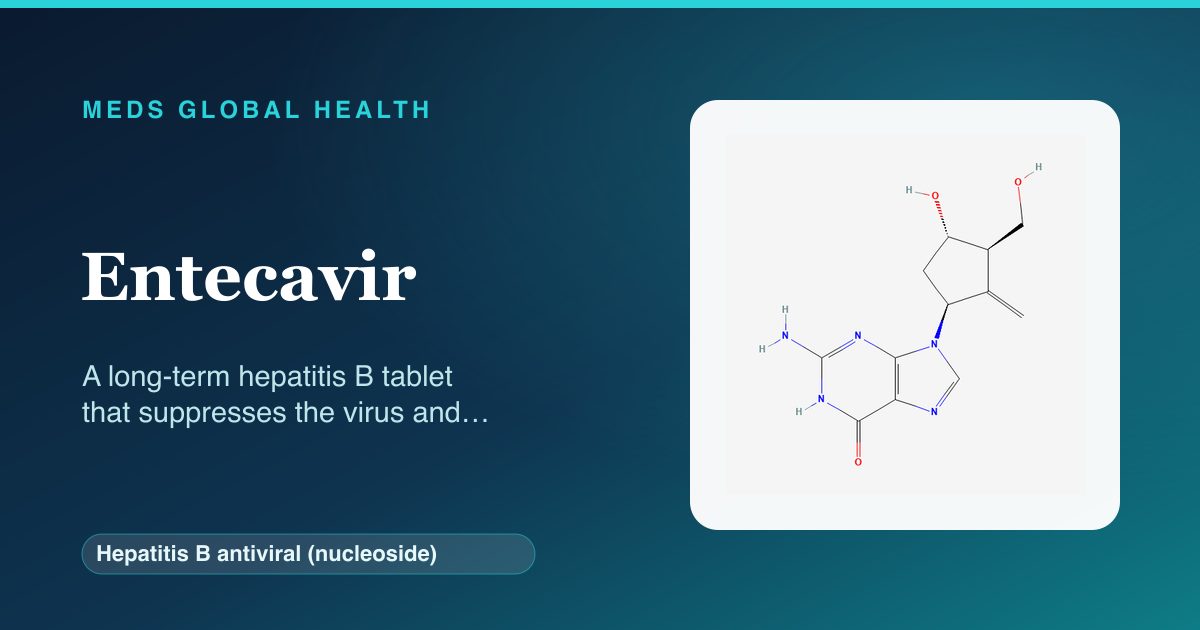
What it is
Entecavir is an antiviral medicine used to treat long-term (chronic) hepatitis B, a virus that infects the liver and, over many years, can cause scarring (cirrhosis) and liver cancer. Unlike hepatitis C treatments, which usually cure the infection, hepatitis B medicines such as entecavir usually keep the virus suppressed and the liver protected rather than clearing it altogether, so treatment is often long term. It is taken as a once-daily tablet (the brand Baraclude is well known) and is started and overseen by a specialist liver or infectious-diseases team.
How it works
Hepatitis B copies its genetic material inside liver cells using an enzyme. Entecavir blocks that enzyme, so the virus can no longer reproduce effectively. As the amount of virus in the blood falls, the inflammation in the liver settles and the risk of long-term damage drops. Because the virus is suppressed rather than fully eradicated, it can become active again if treatment stops, which is why entecavir is usually continued long term and should not be stopped without specialist advice.
Company & origin
Originated / developed by: Bristol Myers Squibb.
An antiviral developed for chronic hepatitis B and used long term in the UK to keep the virus under control.
Practical use
How to take Entecavir
General, dose-free guidance — always follow your prescriber's and the leaflet's specific instructions.
- Take it once a day on an empty stomach, usually at least two hours before or after food, as food reduces absorption.
- Take it at around the same time each day and do not stop it without your specialist team's advice, as stopping can trigger a hepatitis flare.
- Make sure you have been tested for HIV before starting, as entecavir alone is not enough to treat HIV.
- Keep up with your regular blood tests, which check both the virus and your liver.
- Tell your team about any kidney problems, as the dose may need adjusting.
Weighing it up
Advantages & disadvantages of Entecavir
Advantages
- Effectively suppresses chronic hepatitis B and protects the liver over the long term.
- Taken as a simple once-daily tablet and generally very well tolerated.
- Reduces the long-term risk of liver scarring and liver cancer when taken consistently.
Disadvantages
- Usually controls rather than cures the infection, so it is often needed long term.
- Must be taken on an empty stomach and not stopped suddenly, as a flare can follow.
- Requires an HIV test first and ongoing blood-test monitoring.
Practical use
Good to know
Chronic hepatitis B is usually controlled rather than cured, and entecavir is one of the main medicines used to do that safely over many years. A few practical points matter. It is taken on an empty stomach — food reduces how much is absorbed — so it is usually taken well before or after eating. It must not be stopped suddenly, because the virus can rebound and cause a flare of hepatitis that occasionally becomes severe; any stopping is planned and monitored by your team. Before starting, you should be tested for HIV, because entecavir has some activity against HIV but is not a complete HIV treatment, and using it alone in someone with undiagnosed HIV can encourage drug resistance. It is generally well tolerated, with regular blood tests to track the virus and the liver.
Who should not take it / use with caution
- People with undiagnosed or untreated HIV should not take it alone, as it can encourage HIV drug resistance.
- It is used with an adjusted dose, and care, in significant kidney impairment.
- Stopping it is avoided except under specialist supervision because of the risk of a hepatitis flare.
Monitoring
- Regular blood tests to track the hepatitis B virus and liver function over time.
- An HIV test before starting, as entecavir alone is not enough to treat HIV.
- Kidney function checks, as the dose may need adjusting in kidney impairment.
Side effects
- Headache, tiredness and nausea are the most common effects and are usually mild.
- Dizziness or trouble sleeping in some people.
- Rarely, a flare of hepatitis if the medicine is stopped suddenly, which needs urgent attention.
Key interactions
- It is largely cleared by the kidneys, so medicines that affect kidney function can change its levels.
- Care is needed with other medicines handled by the kidneys, which your team will review.
- It has activity against HIV, so its use must be coordinated if HIV treatment is also needed.
Available as: Tablets and an oral liquid taken by mouth on an empty stomach.
Answers
Entecavir: frequently asked questions
Will entecavir cure my hepatitis B?
It usually keeps the virus suppressed and protects the liver rather than curing the infection, so it is often taken long term.
Why do I take it on an empty stomach?
Food reduces how much entecavir your body absorbs, so it is taken well before or after eating to work properly.
Can I stop it once I feel well?
No. Stopping suddenly can cause the virus to rebound and trigger a flare of hepatitis, so any change is planned and monitored by your specialist team.
Why was I tested for HIV first?
Entecavir has some activity against HIV but is not a full HIV treatment, so using it alone in undiagnosed HIV could encourage resistance; an HIV test rules this out.
How long will I need to take it?
Because it controls rather than cures hepatitis B, treatment is often long term; your specialist team will guide how long you need it.
The wider class
About Hepatitis B antiviral (nucleoside)
Entecavir belongs to the hepatitis b antiviral (nucleoside) class. For how the class as a whole works, its shared safety principles and monitoring, see the full guide.
Browse by body system
Authoritative sources
- BNF
- NICE CKS
Building a medicines information resource?
We create evidence-led, dose-free drug and formulary references for teams.