A hepatitis C antiviral
Ledipasvir
A hepatitis C antiviral combined with sofosbuvir (Harvoni) to cure the infection in a short course.
What is Ledipasvir?
Ledipasvir is a direct-acting antiviral used to cure hepatitis C. It is given combined with sofosbuvir in a single tablet known as Harvoni, taken as a short course lasting weeks, and it cures most people. It is usually well tolerated. One practical point is that acid-lowering medicines, such as antacids and stomach-protecting drugs (proton pump inhibitors), reduce how much ledipasvir the body absorbs, so these need careful timing or adjusting. It is prescribed and supervised by a specialist liver or infection team.
Education and reference only. This is a plain-language guide to Ledipasvir — it deliberately contains no doses. Doses depend on the person, the brand and the reason for treatment, and belong with your prescriber. Always check the BNF, the product labelling (SmPC) and follow medical advice.
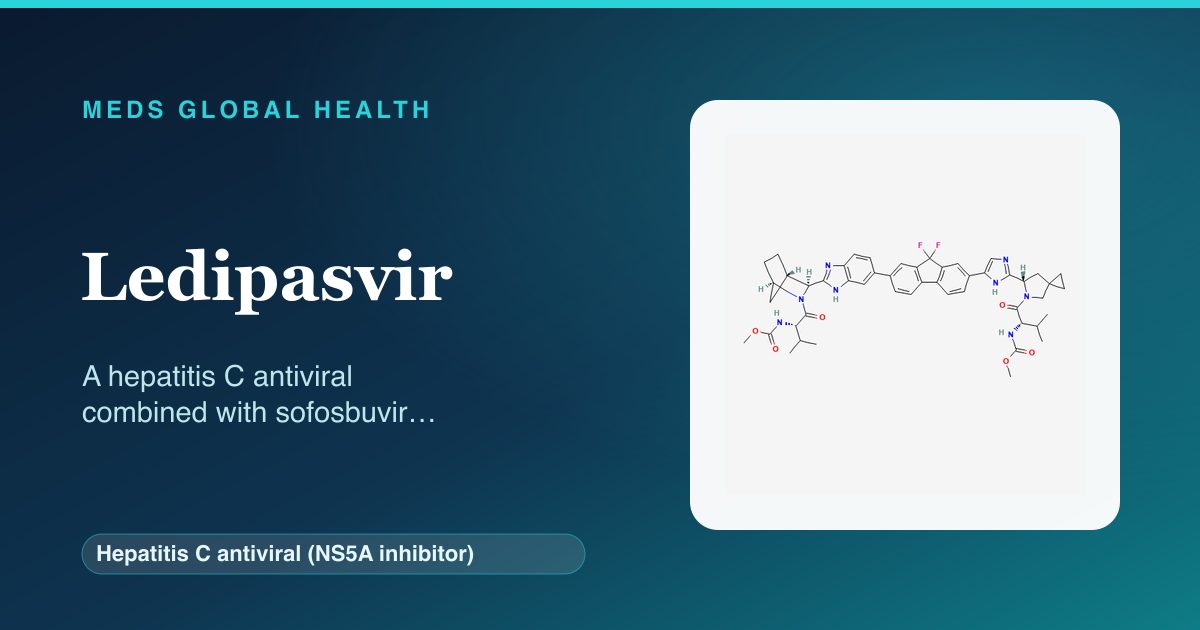
What it is
Ledipasvir is one of the direct-acting antivirals used to cure hepatitis C, a virus that infects the liver. It is not used alone; it is combined with sofosbuvir in a single tablet called Harvoni, so the two medicines attack the virus together. Hepatitis C, left untreated over many years, can lead to liver scarring (cirrhosis) and liver cancer, but a short course of tablets now clears it in most people. Treatment lasts a number of weeks and is started and overseen by a specialist liver or infectious-diseases team.
How it works
Ledipasvir blocks a protein the hepatitis C virus needs to copy itself and assemble new virus particles (called NS5A). Sofosbuvir, its partner in the Harvoni tablet, blocks a different viral enzyme, so the two together stop the virus reproducing from more than one direction. This combined attack is highly effective and helps prevent the virus becoming resistant. Over the weeks of treatment the virus in the blood falls to undetectable levels, and a blood test after the course confirms whether it has been cleared for good.
Company & origin
Originated / developed by: Gilead Sciences.
A direct-acting antiviral developed for hepatitis C and used in the UK combined with sofosbuvir as the Harvoni tablet.
Practical use
How to take Ledipasvir
General, dose-free guidance — always follow your prescriber's and the leaflet's specific instructions.
- Take the Harvoni tablet exactly as your specialist team directs, usually once a day, and complete the full course.
- Separate antacids from your dose by several hours, as they reduce how much ledipasvir your body absorbs.
- If you take a stomach-protecting medicine such as a proton pump inhibitor, follow your team's advice on timing or dose, as it can lower the medicine's effect.
- Tell your team about every medicine, supplement and herbal remedy you take before you start.
- Attend your follow-up blood test after the course, as this confirms whether the virus has been cleared.
Weighing it up
Advantages & disadvantages of Ledipasvir
Advantages
- Combined with sofosbuvir in one tablet, it cures the great majority of people with hepatitis C.
- Taken as a simple short course of weeks, with just one tablet a day.
- Generally very well tolerated, with mostly mild side effects.
Disadvantages
- Acid-lowering medicines reduce how much is absorbed, so timing has to be managed carefully.
- Only available through specialist services and needs a follow-up test to confirm cure.
- Can interact with some other medicines, so the full medicine list must be reviewed.
Practical use
Good to know
Hepatitis C is now curable for the great majority of people, and the ledipasvir-with-sofosbuvir (Harvoni) course is a well-established way to achieve that. It is usually very well tolerated, with tiredness and headache being most common. A particular practical point is absorption: ledipasvir needs a certain level of stomach acid to be taken up properly, so acid-lowering medicines reduce its effect. Antacids should be separated by a few hours, and stomach-protecting drugs such as proton pump inhibitors need careful timing or may need to be reduced, always on your team's advice. As with all hepatitis C treatment, finishing the whole course and attending the follow-up test give the best chance of cure.
Who should not take it / use with caution
- It is used with care in people who need regular acid-lowering medicines, which may have to be timed or adjusted.
- It is avoided alongside certain medicines (such as some epilepsy drugs, rifampicin and St John's wort) that stop it working.
- The combination is chosen carefully in advanced liver or kidney disease.
Monitoring
- A blood test some weeks after finishing to confirm the virus has been cleared.
- Checks on liver function and response during treatment.
- Review of acid-lowering and other medicines to manage absorption and interactions.
Side effects
- Tiredness and headache are the most common effects and are usually mild.
- Nausea or trouble sleeping in some people.
- Rarely, more troublesome effects that should be reported to your team.
Key interactions
- Antacids, and stomach-protecting drugs such as proton pump inhibitors, reduce how much ledipasvir is absorbed.
- Some epilepsy medicines, rifampicin and St John's wort can lower its levels and stop it working.
- It can affect certain heart and cholesterol medicines, so your team will review everything you take.
Available as: Tablets taken by mouth, as a fixed combination with sofosbuvir (Harvoni).
Answers
Ledipasvir: frequently asked questions
Is ledipasvir the same as Harvoni?
Harvoni is the tablet that combines ledipasvir with sofosbuvir; the two antivirals work together to cure hepatitis C.
Can I take my indigestion remedy with it?
Antacids should be separated by several hours and stronger acid-lowering drugs may need adjusting, as they reduce how much ledipasvir your body absorbs; follow your team's advice.
Will it cure my hepatitis C?
The ledipasvir-and-sofosbuvir course cures the great majority of people; a blood test some weeks after the course confirms the virus has gone.
How long will I take it?
The course usually lasts a number of weeks; your specialist team will tell you the exact length and it is important to finish it all.
Why is it only given combined with another medicine?
Attacking the virus from two directions at once is far more effective and helps stop it becoming resistant, which is why ledipasvir is paired with sofosbuvir.
The wider class
About Hepatitis C antiviral (NS5A inhibitor)
Ledipasvir belongs to the hepatitis c antiviral (ns5a inhibitor) class. For how the class as a whole works, its shared safety principles and monitoring, see the full guide.
Browse by body system
Authoritative sources
- BNF
- NICE CKS
Building a medicines information resource?
We create evidence-led, dose-free drug and formulary references for teams.