An antiviral for cytomegalovirus (CMV)
Ganciclovir
A specialist antiviral, given by drip or as an eye gel, for cytomegalovirus (CMV) infection in people with weakened immunity.
What is Ganciclovir?
Ganciclovir is a specialist antiviral used to treat cytomegalovirus (CMV) infection, mainly in people whose immune system is weakened, such as those who have had an organ or bone-marrow transplant or who have advanced HIV. It is usually given as a drip into a vein in hospital, and sometimes as an eye gel for CMV affecting the eye. Its main risk is that it can lower the blood counts, raising the chance of infection and bleeding, so blood tests are needed. It can harm an unborn baby, so reliable contraception is advised.
Education and reference only. This is a plain-language guide to Ganciclovir — it deliberately contains no doses. Doses depend on the person, the brand and the reason for treatment, and belong with your prescriber. Always check the BNF, the product labelling (SmPC) and follow medical advice.
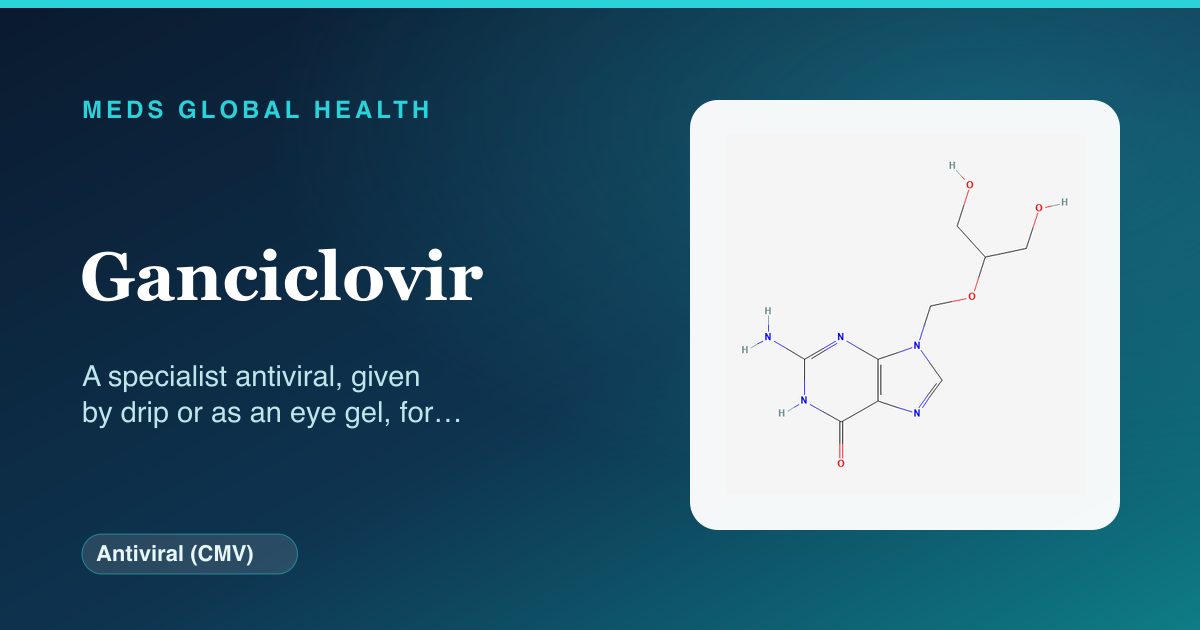
What it is
Ganciclovir is an antiviral medicine used to treat infection with cytomegalovirus (CMV), a common virus that usually causes no trouble in healthy people but can cause serious illness when the immune system is weakened. This includes people who have had an organ or bone-marrow transplant or who have advanced HIV, where CMV can affect the eyes, lungs, gut or other organs. It is a specialist, hospital-prescribed medicine, given mainly as a drip into a vein, and sometimes as an eye gel for CMV in the eye.
How it works
Ganciclovir gets taken up inside virus-infected cells and converted into an active form that blocks the enzyme the virus uses to copy its genetic material. This slows or stops the virus from multiplying, giving the body's own defences a chance to bring the infection under control. Because it interferes with cells that are dividing, it can also affect the bone marrow where blood cells are made, which is why it can lower the blood counts and needs careful monitoring.
Company & origin
A specialist antiviral used in UK hospitals to treat cytomegalovirus (CMV) infection, mainly in people whose immune system is weakened.
Practical use
How to take Ganciclovir
General, dose-free guidance — always follow your prescriber's and the leaflet's specific instructions.
- It is given mainly as a drip into a vein by a hospital team, or sometimes as an eye gel for CMV affecting the eye.
- Attend all your blood tests, as the dose depends on your blood counts and kidney function.
- Drink enough fluids as advised, since staying well hydrated helps protect the kidneys.
- Use reliable contraception during treatment and for the period afterwards that your team advises, as it can harm an unborn baby.
- Report any fever, sore throat, unusual bruising or bleeding straight away, as these can signal low blood counts.
Weighing it up
Advantages & disadvantages of Ganciclovir
Advantages
- An effective treatment for serious CMV infection in people with weakened immunity.
- Can be used for CMV affecting different organs, including the eye.
- Given and closely monitored by a specialist team, so problems can be picked up early.
Disadvantages
- Can suppress the bone marrow and lower blood counts, raising the risk of infection and bleeding.
- Can affect the kidneys and needs regular blood tests and monitoring.
- Can harm an unborn baby and may affect fertility, so contraception is needed.
Practical use
Good to know
The most important thing to know is that ganciclovir can suppress the bone marrow and lower the blood counts, which can leave you more prone to infection (low white cells), bleeding or bruising (low platelets) and tiredness (anaemia), so regular blood tests are essential and the dose may be adjusted. Report any fever, sore throat, unusual bruising or bleeding promptly. It can also affect the kidneys, so kidney function is checked and good hydration matters. Because it can harm an unborn baby and may affect fertility, reliable contraception is advised during treatment and for a period afterwards, for both women and men as directed. It is given and monitored by a specialist team, often with treatment continued until the infection is controlled.
Who should not take it / use with caution
- It is avoided in pregnancy unless essential, because it can harm an unborn baby.
- Used with great caution, and with extra monitoring, in people who already have very low blood counts.
- People with significant kidney problems need dose adjustment and close supervision.
Monitoring
- Regular blood counts to watch for suppression of white cells, platelets and red cells.
- Kidney function tests, as the dose may need adjusting.
- Checking the response of the infection, with eye reviews if CMV is affecting the eye.
Side effects
- Low blood counts are common, causing tiredness, a higher risk of infection, and easier bruising or bleeding.
- Nausea, diarrhoea, fever and changes in kidney blood tests.
- Less commonly, rash, headache or, with the eye gel, temporary stinging or blurred vision.
Key interactions
- Combining it with other medicines that lower blood counts or affect the bone marrow can increase the risk.
- Taking it with medicines that can harm the kidneys may add to that effect.
- It can interact with certain other antivirals and some HIV medicines, so your team checks your full medicine list.
Available as: A drip into a vein, given in hospital, and an eye gel for CMV affecting the eye.
Answers
Ganciclovir: frequently asked questions
What is ganciclovir used for?
It is a specialist antiviral used to treat cytomegalovirus (CMV) infection, mainly in people whose immune system is weakened, such as transplant recipients or those with advanced HIV.
Why do I need so many blood tests?
Ganciclovir can lower the blood counts by affecting the bone marrow, so regular blood tests let your team adjust the dose and pick up problems early.
Is it safe in pregnancy?
It can harm an unborn baby, so it is avoided in pregnancy unless essential, and reliable contraception is advised during treatment and for a period afterwards.
How is it given?
It is given mainly as a drip into a vein in hospital, and sometimes as an eye gel when CMV is affecting the eye.
What signs should I report straight away?
Tell your team promptly about any fever, sore throat, unusual bruising or bleeding, as these can be signs of low blood counts.
The wider class
About Antiviral (CMV)
Ganciclovir belongs to the antiviral (cmv) class. For how the class as a whole works, its shared safety principles and monitoring, see the full guide.
Browse by body system
Authoritative sources
- BNF
- NICE CKS
Building a medicines information resource?
We create evidence-led, dose-free drug and formulary references for teams.