A statin that lowers cholesterol
Lovastatin
A statin used to lower cholesterol and reduce the risk of heart attacks and strokes.
What is Lovastatin?
Lovastatin is a statin, a medicine that lowers cholesterol in the blood and so reduces the risk of heart attacks and strokes. It is taken by mouth as a tablet, often in the evening, and works gradually over weeks. The most talked-about side effect is muscle aches, and very rarely a serious form of muscle breakdown called rhabdomyolysis can occur, so unexplained muscle pain, tenderness or weakness should be reported. It can occasionally affect the liver, which is checked with blood tests. Grapefruit can raise its levels and should be avoided, and statins should not be taken in pregnancy.
Education and reference only. This is a plain-language guide to Lovastatin — it deliberately contains no doses. Doses depend on the person, the brand and the reason for treatment, and belong with your prescriber. Always check the BNF, the product labelling (SmPC) and follow medical advice.
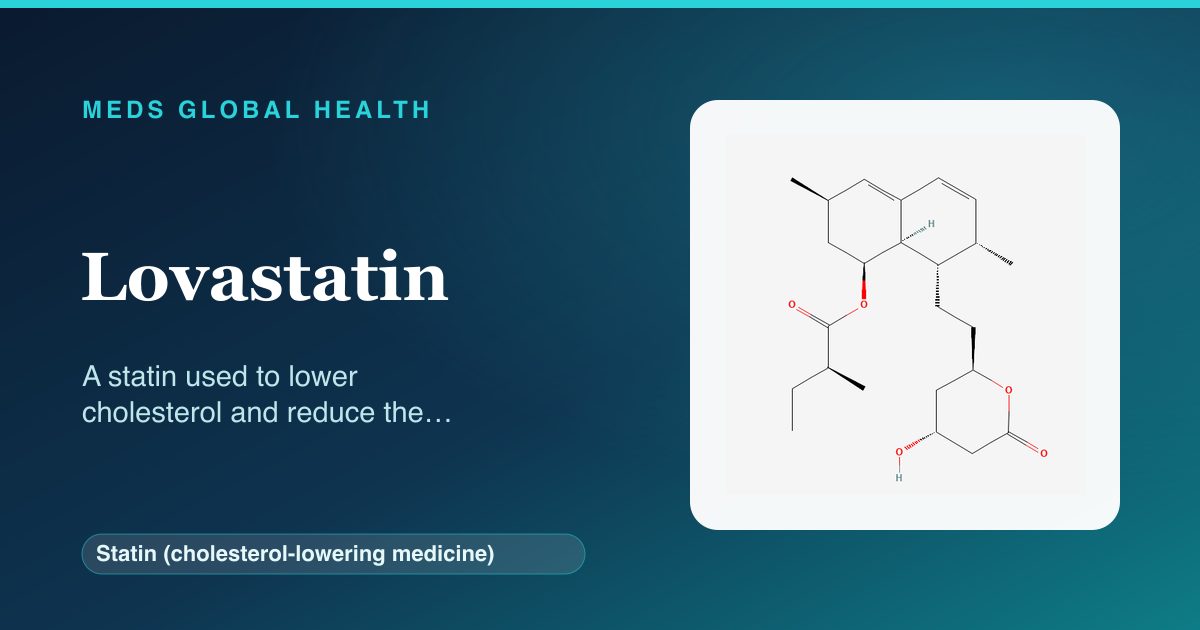
What it is
Lovastatin belongs to the group of cholesterol-lowering medicines known as statins. It is used to lower raised cholesterol, particularly the harmful LDL or 'bad' cholesterol, which over time can build up in the arteries and lead to heart attacks and strokes. By lowering cholesterol, it helps protect the heart and blood vessels, both in people who already have heart or artery disease and in those at higher risk of developing it. It is taken by mouth as a tablet, usually once a day, often with the evening meal, as part of long-term treatment alongside a healthy diet and lifestyle.
How it works
Lovastatin blocks an enzyme in the liver that the body uses to make cholesterol. With less cholesterol being produced, the liver pulls more cholesterol out of the blood, which lowers the level of harmful cholesterol circulating in the body. Over time this slows the build-up of fatty deposits in the arteries and reduces the chance of a clot blocking blood flow to the heart or brain. Because it works steadily in the liver, it is taken every day and its full benefit builds up over several weeks, which is why it is continued long term even when you feel well.
Company & origin
A statin medicine used to lower cholesterol and reduce the risk of heart attacks and strokes, taken by mouth as a tablet.
What it treats
Conditions Lovastatin is used for
Practical use
How to take Lovastatin
General, dose-free guidance — always follow your prescriber's and the leaflet's specific instructions.
- Take it once a day as prescribed, often with your evening meal, as cholesterol is mainly made overnight.
- Swallow the tablet whole with water and take it at about the same time each day.
- Avoid grapefruit and grapefruit juice, which can raise the medicine's level and increase side effects.
- Report any unexplained muscle pain, tenderness or weakness to your prescriber promptly.
- Keep taking it long term, even when you feel well, as cholesterol tends to rise again if it is stopped.
Weighing it up
Advantages & disadvantages of Lovastatin
Advantages
- Effectively lowers harmful cholesterol and reduces the risk of heart attacks and strokes.
- Taken as a simple once-a-day tablet that fits easily into a daily routine.
- A long-established statin with decades of experience behind cholesterol-lowering treatment.
Disadvantages
- Can cause muscle aches, and very rarely a serious form of muscle breakdown (rhabdomyolysis).
- Can occasionally affect the liver, so blood tests may be needed.
- Interacts with grapefruit and several medicines, and must not be taken in pregnancy.
Practical use
Good to know
Statins like lovastatin are usually well tolerated, but the side effect people most often ask about is muscle aches. Mild muscle pains are common and not usually serious, but a rare and important risk is a severe form of muscle breakdown called rhabdomyolysis, so any unexplained muscle pain, tenderness or weakness, especially with dark urine or feeling generally unwell, should be reported promptly. The medicine can also occasionally affect the liver, so liver blood tests are usually done before and sometimes during treatment. Grapefruit and grapefruit juice can raise lovastatin levels in the body and increase side effects, so they are best avoided. Statins should not be taken in pregnancy or while trying to conceive. It works best alongside a healthy diet, regular activity and not smoking, and it is taken long term because cholesterol tends to rise again if it is stopped.
Who should not take it / use with caution
- People who are pregnant, breastfeeding or trying to conceive should not take it.
- People with active liver disease should not take it.
- People who have had a serious allergic reaction to lovastatin or other statins should not take it.
- It is used with extra caution in people with kidney or thyroid problems or a history of muscle disorders.
Monitoring
- Checking cholesterol levels to see how well treatment is working.
- Liver blood tests before and sometimes during treatment.
- Reviewing for muscle symptoms and checking a muscle blood test if these occur.
Side effects
- Muscle aches or tenderness, which are usually mild but should be reported if unexplained.
- Headache, tummy upset, wind or constipation in some people.
- Occasionally, changes in liver blood tests or a slight rise in blood sugar.
- Rarely but seriously, severe muscle breakdown (rhabdomyolysis) or liver problems, which need urgent attention.
Key interactions
- Grapefruit and grapefruit juice can raise lovastatin levels and increase the risk of muscle side effects.
- Some antibiotics, antifungals and other medicines can raise its level and the risk of muscle problems.
- Combining it with certain other cholesterol or heart medicines, such as fibrates, can increase muscle side effects.
Available as: Tablets taken by mouth.
Answers
Lovastatin: frequently asked questions
What is lovastatin used for?
It is a statin used to lower harmful cholesterol in the blood, which reduces the risk of heart attacks and strokes over time.
Why should I take it in the evening?
The body makes most of its cholesterol overnight, so taking lovastatin with the evening meal can make it work more effectively.
What should I do about muscle aches?
Mild muscle aches are common, but report any unexplained muscle pain, tenderness or weakness, especially with dark urine, as a rare but serious muscle problem can occur.
Why must I avoid grapefruit?
Grapefruit and grapefruit juice can raise the level of lovastatin in your body, which increases the chance of side effects such as muscle problems.
Can I stop taking it once my cholesterol is normal?
No. Your cholesterol is likely to rise again if you stop, so it is taken long term to keep protecting your heart and blood vessels; do not stop without advice.
The wider class
About Statin (cholesterol-lowering medicine)
Lovastatin belongs to the statin (cholesterol-lowering medicine) class. For how the class as a whole works, its shared safety principles and monitoring, see the full guide.
Browse by body system
Authoritative sources
- BNF
- NICE CKS
Building a medicines information resource?
We create evidence-led, dose-free drug and formulary references for teams.