A statin (cholesterol-lowering medicine)
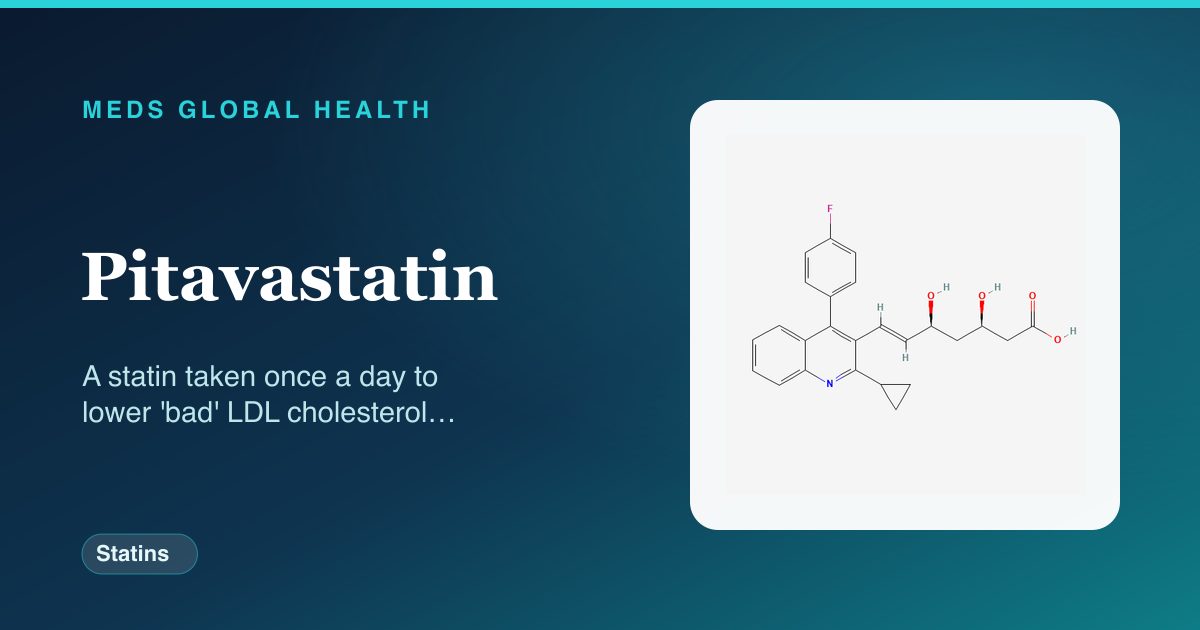
Pitavastatin
A statin taken once a day to lower 'bad' LDL cholesterol and cut the risk of heart attack and stroke, with muscle aches and occasional liver-test changes the main things to watch.
What is Pitavastatin?
Pitavastatin is a statin used to lower harmful LDL cholesterol and reduce the risk of heart attacks and strokes. It is taken once a day, usually in the evening, and is generally well tolerated, with muscle aches and occasional changes in liver blood tests being the main things to watch for.
Education and reference only. This is a plain-language guide to Pitavastatin — it deliberately contains no doses. Doses depend on the person, the brand and the reason for treatment, and belong with your prescriber. Always check the BNF, the product labelling (SmPC) and follow medical advice.
What it is
Pitavastatin is a statin, a type of medicine that lowers cholesterol. It is used to reduce high cholesterol and to lower the risk of cardiovascular disease such as heart attack and stroke. In the UK it is sold as Livazo.
How it works
Pitavastatin blocks an enzyme in the liver called HMG-CoA reductase, which the body uses to make cholesterol. With less cholesterol being produced, the liver pulls more LDL ('bad') cholesterol out of the blood, lowering blood cholesterol levels and reducing the build-up of fatty deposits in the arteries.
Company & origin
Originated / developed by: Developed in Japan and sold in the UK as Livazo..
Pitavastatin is a statin developed in Japan and introduced in the UK as Livazo to lower cholesterol and reduce cardiovascular risk.
What it treats
Conditions Pitavastatin is used for
Practical use
How to take Pitavastatin
General, dose-free guidance — always follow your prescriber's and the leaflet's specific instructions.
- Take it once a day, usually in the evening or at bedtime.
- It can be taken with or without food.
- Swallow the tablet whole with a drink of water.
- Try to take it at the same time each day so it becomes part of your routine.
- If you miss a dose, skip it and take the next one as normal; do not take two together.
- Keep taking it long term unless your doctor advises otherwise, even though you will not feel a difference.
Weighing it up
Advantages & disadvantages of Pitavastatin
Advantages
- Effectively lowers LDL cholesterol and reduces heart attack and stroke risk.
- Taken just once a day.
- Generally well tolerated, with a relatively low risk of drug interactions compared with some statins.
- A useful alternative for people who cannot tolerate other statins.
Disadvantages
- Can cause muscle aches and, rarely, serious muscle damage.
- Needs liver blood tests before and during treatment.
- Usually needs to be taken long term to keep cholesterol down.
- Not suitable in pregnancy or breastfeeding.
- Some people experience headache or digestive upset.
Practical use
Good to know
Pitavastatin is taken once a day and works best alongside a healthy diet, regular activity and not smoking. It is usually a long-term medicine, and the benefit comes from taking it consistently rather than from feeling any immediate effect.
Who should not take it / use with caution
- Women who are pregnant, planning pregnancy or breastfeeding.
- People with active liver disease or unexplained, persistently raised liver enzymes.
- Anyone who has had a serious muscle reaction to a statin in the past.
- People taking certain interacting medicines such as ciclosporin (your doctor will check).
- Those who drink alcohol heavily, who need extra caution because of liver risk.
Monitoring
- A cholesterol blood test to check the medicine is working.
- Liver function tests before starting and during the first months of treatment.
- A muscle-enzyme (creatine kinase) test if you develop unexplained muscle pain.
- Review of any new medicines for possible interactions.
Side effects
- Muscle aches, tenderness or weakness.
- Headache, or stomach upset such as constipation or diarrhoea.
- Cold-like symptoms or back and joint pain.
- Rare but serious: severe, widespread muscle pain with dark urine, which can signal muscle breakdown; or signs of liver problems such as yellowing of the skin or eyes.
- Tell your doctor promptly about severe or unexplained muscle pain, especially with feeling unwell or dark urine.
Key interactions
- Ciclosporin, which should not be combined with pitavastatin.
- Certain antibiotics such as erythromycin, which can raise statin levels.
- Other lipid-lowering medicines such as fibrates and ezetimibe, which can add to muscle risk.
- Some HIV medicines and the gout medicine colchicine.
- Heavy alcohol use, which adds to the strain on the liver.
Available as: Tablets.
Answers
Pitavastatin: frequently asked questions
When should I take pitavastatin?
It is usually taken once a day in the evening or at bedtime, with or without food. Taking it at the same time daily helps you remember.
What muscle symptoms should I watch for?
Mild aches are common, but tell your doctor straight away about severe or widespread muscle pain, tenderness or weakness, especially with dark urine or feeling generally unwell.
Can I drink grapefruit juice with pitavastatin?
Pitavastatin is less affected by grapefruit than some other statins, but it is still sensible to mention your usual intake to your pharmacist or doctor.
Do I need to take pitavastatin forever?
Cholesterol tends to rise again if treatment stops, so it is usually a long-term medicine. Keep taking it unless your doctor advises you to stop.
Can I take pitavastatin in pregnancy?
No. Statins are not recommended in pregnancy or breastfeeding. Tell your doctor if you are pregnant or planning to be.
The wider class
About Statins
Pitavastatin belongs to the statins class. For how the class as a whole works, its shared safety principles and monitoring, see the full guide.
Browse by body system
Authoritative sources
- BNF
- NICE CKS
Building a medicines information resource?
We create evidence-led, dose-free drug and formulary references for teams.