A progestogen hormone
Norethisterone
A progestogen hormone used in the progestogen-only pill, to delay or settle heavy periods, and as part of some hormone replacement therapy.
What is Norethisterone?
Norethisterone is a progestogen, a synthetic version of the natural hormone progesterone. It is used in several ways: as a progestogen-only contraceptive pill, to delay a period or to control heavy or painful periods, and as part of some hormone replacement therapy. Like other progestogens it carries some caution around blood clots, and it can cause changes in bleeding and mood.
Education and reference only. This is a plain-language guide to Norethisterone — it deliberately contains no doses. Doses depend on the person, the brand and the reason for treatment, and belong with your prescriber. Always check the BNF, the product labelling (SmPC) and follow medical advice.
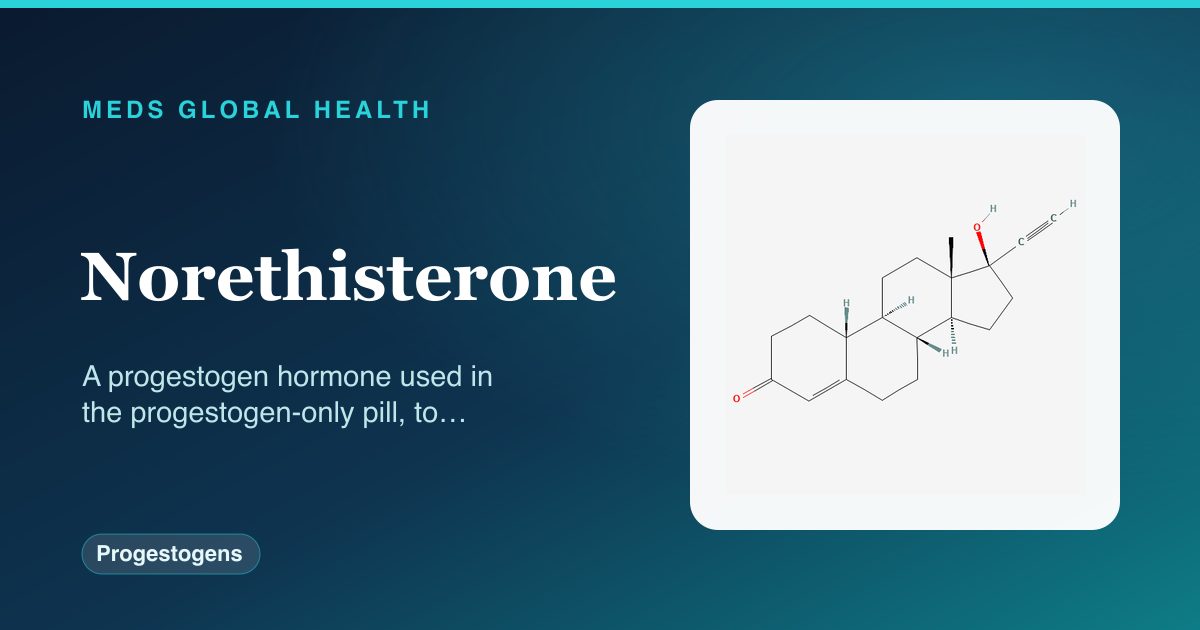
What it is
Norethisterone is a progestogen, which is a man-made version of the natural female hormone progesterone. It is a versatile hormone used in several situations: in some progestogen-only contraceptive pills, to delay a period for a special occasion, to help control heavy or painful periods, and as part of some hormone replacement therapy (HRT). Because it acts like the body's own progesterone, it influences the lining of the womb and the menstrual cycle.
How it works
Progesterone is the hormone that prepares and stabilises the lining of the womb each cycle. Norethisterone mimics progesterone, so keeping it topped up can hold the womb lining steady and delay a period, or help settle heavy bleeding. In contraception it works mainly by thickening cervical mucus and affecting the womb lining to make pregnancy less likely, and in HRT it protects the womb lining from the effects of oestrogen.
Company & origin
Originated / developed by: A long-established progestogen.
A synthetic progestogen used in the UK for many years in contraception, to delay or manage periods, and as part of some HRT.
Practical use
How to take Norethisterone
General, dose-free guidance — always follow your prescriber's and the leaflet's specific instructions.
- Take it exactly as your prescriber explains, as the pattern depends on whether it is for contraception, period delay, heavy periods or HRT.
- To delay a period it is usually started a few days before the period is due and stopped when you want it to come.
- Try to take it at around the same time each day to keep the hormone level steady.
- If you miss a dose, follow the advice for your particular use, and ask your pharmacist if you are unsure.
- Tell your prescriber if you could be pregnant, as it is not taken during pregnancy.
Weighing it up
Advantages & disadvantages of Norethisterone
Advantages
- A flexible progestogen that can delay a period, settle heavy bleeding, or be used in contraception and HRT.
- Taken as a tablet, so it is straightforward to use.
- Long established with a well-understood pattern of effects.
Disadvantages
- Like other progestogens, it carries some caution around blood clots.
- Irregular bleeding or spotting between periods is common.
- Can affect mood, and some people get breast tenderness, bloating or headaches.
Practical use
Good to know
How norethisterone is taken depends on why it is being used — for example, to delay a period it is usually started a few days before the period is due and stopped when you want the period to come. Like other progestogens, it carries some caution around blood clots, so your prescriber will weigh up your personal risk factors first; when it is used to delay a period it is taken at a higher dose, so people with risk factors for clots (for example being overweight, smoking, or older) should mention this, as a different option may be safer. Changes in bleeding, such as spotting between periods, and effects on mood are among the more common experiences. It is not a suitable medicine to take during pregnancy, so let your prescriber know if you could be pregnant.
Who should not take it / use with caution
- Women who are pregnant or who think they could be pregnant.
- People with a current or past blood clot, or certain clotting conditions, unless specifically assessed and advised.
- Used with caution in those with a history of certain cancers, liver disease, or some heart and circulation problems — discuss your history first.
Monitoring
- Your bleeding pattern and whether the treatment is achieving what it is meant to.
- Blood pressure and a review of your clot risk factors as advised.
- Any new symptoms, especially signs that could suggest a blood clot.
Side effects
- Changes in bleeding, such as spotting between periods or a change in your usual pattern.
- Breast tenderness, bloating, headaches or changes in mood.
- Less commonly, effects linked to blood clots — seek urgent help for a swollen, painful calf, chest pain or sudden breathlessness.
Key interactions
- Some medicines for epilepsy and certain antibiotics, and the herbal remedy St John's wort, can reduce how well it works.
- Tell your prescriber about all your medicines, including anything bought over the counter or herbal.
- Other hormone treatments should be combined only under medical guidance.
Available as: Tablets.
Answers
Norethisterone: frequently asked questions
What is norethisterone used for?
It is a progestogen used in several ways: in some progestogen-only contraceptive pills, to delay a period, to help control heavy or painful periods, and as part of some HRT.
Can it delay my period for a holiday?
Yes, it is commonly used for this. It is usually started a few days before your period is due and stopped when you want your period to come; your pharmacist or GP can advise.
Does it stop me getting pregnant?
Some progestogen-only contraceptive pills contain norethisterone, but when it is used simply to delay a period it should not be relied on as contraception. Check with your prescriber.
Can it cause blood clots?
Like other progestogens it carries some caution around clots, which is why your prescriber checks your risk factors. Seek urgent help for a swollen painful leg, chest pain or sudden breathlessness.
Why am I spotting between periods?
Irregular bleeding or spotting is a common effect of progestogens. If it is heavy, persistent or troubling, mention it to your GP or pharmacist.
The wider class
About Progestogens
Norethisterone belongs to the progestogens class. For how the class as a whole works, its shared safety principles and monitoring, see the full guide.
Browse by body system
Authoritative sources
- BNF
- NICE CKS
Building a medicines information resource?
We create evidence-led, dose-free drug and formulary references for teams.