A 5-ASA aminosalicylate
Olsalazine
An aminosalicylate (5-ASA) taken by mouth to keep ulcerative colitis in remission.
What is Olsalazine?
Olsalazine is an aminosalicylate, often called a 5-ASA, used mainly to keep ulcerative colitis in remission so that flare-ups are less likely. It works directly on the lining of the bowel to reduce inflammation. A notable point with olsalazine is that it can cause watery diarrhoea, particularly at the start, which taking it with food and building up gradually can help. It is taken regularly by mouth, and blood and urine checks are usually arranged to keep an eye on the kidneys and blood counts.
Education and reference only. This is a plain-language guide to Olsalazine — it deliberately contains no doses. Doses depend on the person, the brand and the reason for treatment, and belong with your prescriber. Always check the BNF, the product labelling (SmPC) and follow medical advice.
What it is
Olsalazine is one of the aminosalicylate medicines, a group that delivers the active 5-ASA to the lining of the large bowel to reduce inflammation. It is used in ulcerative colitis, a type of inflammatory bowel disease, mainly to maintain remission and reduce the chance of a flare. It is taken as a capsule or tablet by mouth, regularly and long term.
How it works
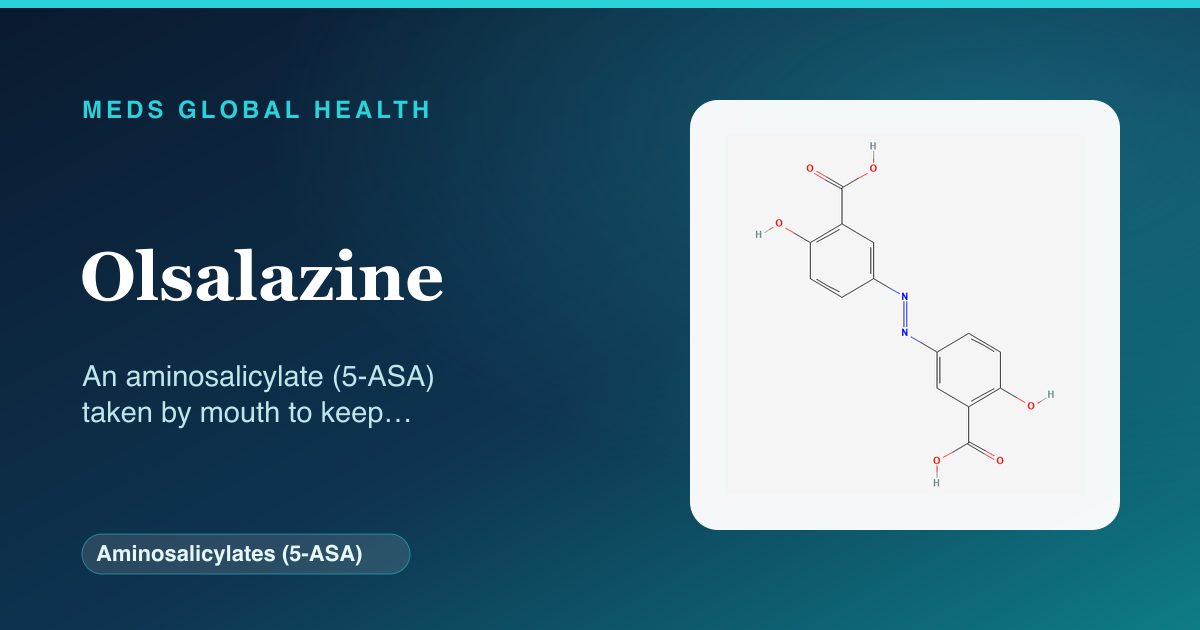
Olsalazine is made of two linked 5-ASA molecules that are split apart by bacteria in the large bowel, releasing the active medicine where it is needed. The 5-ASA then acts directly on the inflamed bowel lining to calm inflammation. Because it works locally in the colon, it helps settle ulcerative colitis and keep it in remission. Releasing the medicine in the bowel in this way can also draw water into the gut, which is why watery diarrhoea is a recognised effect.
Company & origin
An aminosalicylate (5-ASA) medicine used in the UK to maintain remission in ulcerative colitis.
Practical use
How to take Olsalazine
General, dose-free guidance — always follow your prescriber's and the leaflet's specific instructions.
- Take it regularly by mouth, with food, which can also help reduce the watery diarrhoea it sometimes causes.
- If your team advises building the dose up gradually, follow that, as it can help your bowel settle.
- Keep taking it even when you feel well, as it is mainly used to prevent flare-ups of colitis.
- Attend the blood and urine tests arranged to check your kidneys and blood counts.
- Report unexplained bruising, bleeding, sore throat or fever, which should be checked promptly.
- Tell your team if you develop worsening tummy pain, cramps or bloody diarrhoea, which may signal a flare.
Weighing it up
Advantages & disadvantages of Olsalazine
Advantages
- Effectively helps keep ulcerative colitis in remission, reducing the chance of flares.
- Works directly on the bowel lining and is generally well tolerated long term.
- An established aminosalicylate option, useful for people who suit a 5-ASA maintenance medicine.
Disadvantages
- Can cause watery diarrhoea, particularly when first started.
- Needs to be taken regularly and long term to keep working.
- Requires occasional blood and urine tests to monitor the kidneys and blood counts.
Practical use
Good to know
The most distinctive thing about olsalazine is that it can cause watery diarrhoea, especially when first started; taking it with food and increasing the dose gradually, as advised, often helps the bowel settle. It is mainly a maintenance medicine, used regularly to prevent flares rather than to treat a severe attack on its own. As with other aminosalicylates, occasional blood and urine tests are usually arranged to monitor kidney function and blood counts. You should report any unexplained bruising, bleeding, sore throat or fever, which could rarely signal a blood problem, and worsening tummy pain, cramps or bloody diarrhoea, which may mean a flare. It is generally well tolerated and is taken long term to keep the condition stable.
Who should not take it / use with caution
- People with a known allergy to aminosalicylates or aspirin-type medicines (salicylates) should avoid it.
- It is used cautiously in people with significant kidney problems, with closer monitoring.
- Those who have had blood-count problems with similar medicines should be assessed first.
Monitoring
- Blood and urine tests to check kidney function and blood counts during treatment.
- Watching for worsening symptoms that suggest a flare, or troublesome diarrhoea.
- Reviewing how well remission is maintained and whether the medicine still suits you.
Side effects
- Watery diarrhoea, particularly at the start, along with nausea, tummy cramps or headache.
- Rash or joint aches in some people.
- Rarely, blood-count or kidney problems, which is why monitoring tests are arranged.
Key interactions
- Other medicines that can affect the kidneys or blood counts may need extra monitoring alongside it.
- It may interact with some medicines used for blood thinning, so tell your prescriber what you take.
- Tell your team about all your medicines and supplements, including other inflammatory bowel disease treatments.
Available as: Capsules and tablets taken by mouth.
Answers
Olsalazine: frequently asked questions
What is olsalazine used for?
It is an aminosalicylate (5-ASA) used mainly to keep ulcerative colitis in remission, so that flare-ups are less likely.
Why is it giving me watery diarrhoea?
Watery diarrhoea is a recognised effect of olsalazine, especially at the start; taking it with food and building the dose up gradually often helps your bowel settle.
Do I need blood tests?
Yes, occasional blood and urine tests are usually arranged to keep an eye on your kidney function and blood counts.
Should I keep taking it when I feel well?
Yes. It is mainly a maintenance medicine, so taking it regularly even when you feel well helps prevent flare-ups.
What should I report straight away?
Report unexplained bruising, bleeding, sore throat or fever, and worsening tummy pain or bloody diarrhoea, as these need prompt checking.
The wider class
About Aminosalicylates (5-ASA)
Olsalazine belongs to the aminosalicylates (5-asa) class. For how the class as a whole works, its shared safety principles and monitoring, see the full guide.
Browse by body system
Authoritative sources
- BNF
- NICE CKS
Building a medicines information resource?
We create evidence-led, dose-free drug and formulary references for teams.