A disease-modifying medicine for arthritis and bowel inflammation
Sulfasalazine
A disease-modifying medicine that calms inflammation in rheumatoid arthritis and inflammatory bowel disease, needing blood monitoring.
What is Sulfasalazine?
Sulfasalazine is a disease-modifying anti-rheumatic drug (DMARD) used in rheumatoid arthritis and in inflammatory bowel disease. It dampens the inflammation that damages joints or the bowel. It is taken long-term, needs regular blood tests for blood disorders and liver effects, can turn urine orange, and may temporarily reduce sperm count in men.
Education and reference only. This is a plain-language guide to Sulfasalazine — it deliberately contains no doses. Doses depend on the person, the brand and the reason for treatment, and belong with your prescriber. Always check the BNF, the product labelling (SmPC) and follow medical advice.
What it is
Sulfasalazine is a long-established medicine used to control rheumatoid arthritis and to treat inflammatory bowel conditions such as ulcerative colitis. In rheumatoid arthritis it is a disease-modifying drug, meaning it works to slow the underlying disease and protect the joints, not just to ease symptoms. It is taken regularly over the long term and takes some weeks to show its full effect.
How it works
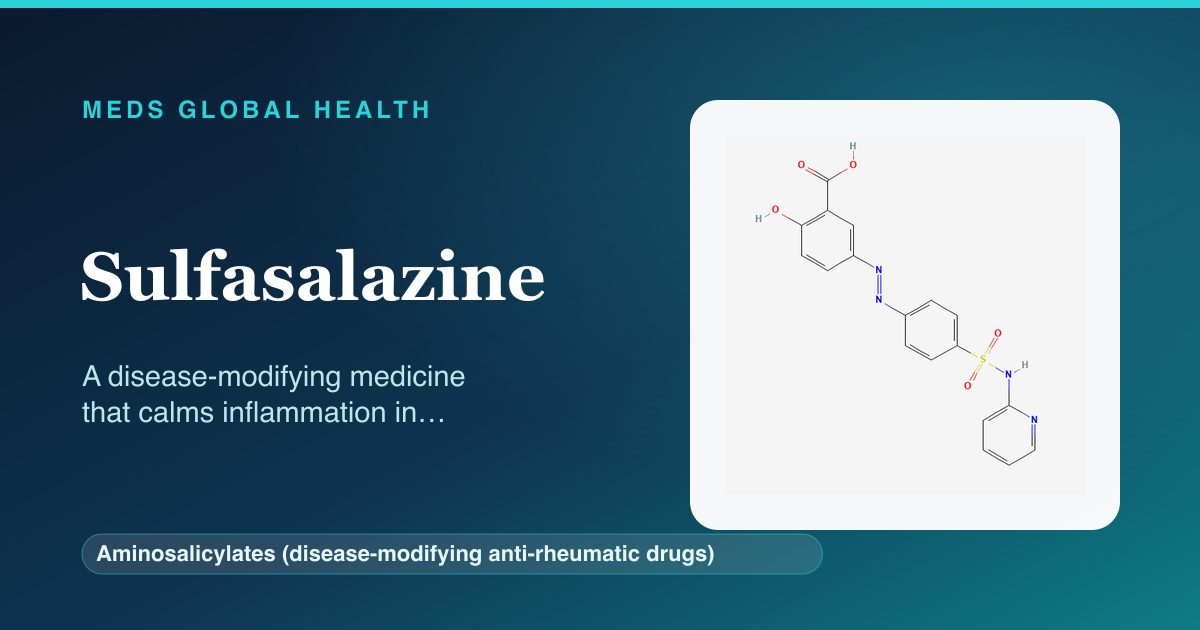
Sulfasalazine is made of two linked parts — a 5-aminosalicylate component that acts locally in the bowel, and a sulfapyridine component. Its anti-inflammatory and immune-calming actions reduce the inflammation that drives joint damage in rheumatoid arthritis and bowel inflammation in colitis. Because it works on the disease process, the benefit builds gradually over weeks rather than immediately.
Company & origin
Originated / developed by: Pharmacia (originator).
A combined sulfapyridine and 5-aminosalicylic acid medicine developed in the 1940s, used in rheumatoid arthritis and inflammatory bowel disease.
What it treats
Conditions Sulfasalazine is used for
Practical use
How to take Sulfasalazine
General, dose-free guidance — always follow your prescriber's and the leaflet's specific instructions.
- Take it at the same times each day, with or without food, with plenty of water.
- Swallow any enteric-coated tablets whole — do not crush or chew them.
- Keep taking it regularly, as the benefit builds gradually over weeks.
- Keep up with your blood tests and report sore throat, fever or unusual bruising.
- If you miss a dose, take it when you remember unless it is nearly time for the next one — do not double up.
Weighing it up
Advantages & disadvantages of Sulfasalazine
Advantages
- A long-established, well-understood disease-modifying treatment.
- Helps protect joints in rheumatoid arthritis and calms inflammatory bowel disease.
- Generally suitable in pregnancy when needed, unlike some other DMARDs.
Disadvantages
- Requires regular blood monitoring for blood-count and liver effects.
- Commonly causes nausea, headache and harmless orange discolouration.
- Can temporarily reduce sperm count and fertility in men.
Practical use
Good to know
Sulfasalazine can affect the blood count and liver, so regular blood tests are needed, especially in the first months. Report any signs of infection, unexplained bruising, bleeding, sore throat or fever promptly, as these can signal a blood problem. It commonly turns urine — and sometimes skin, tears and soft contact lenses — an orange-yellow colour, which is harmless. In men it can temporarily lower sperm count and fertility, which reverses after stopping; drinking enough fluid is advised.
Who should not take it / use with caution
- People allergic to sulfonamides, aspirin or salicylates.
- People with certain blood disorders or severe kidney or liver problems.
- Used with caution in people with the enzyme deficiency G6PD because of red-blood-cell breakdown.
Monitoring
- Full blood count, especially in the first months of treatment.
- Liver function (blood tests) at intervals.
- Symptoms of infection, bruising or bleeding to report promptly.
Side effects
- Nausea, loss of appetite, headache or dizziness, often early on.
- Harmless orange-yellow colouring of urine, skin, tears and soft contact lenses.
- Less commonly, blood disorders or liver upset — report fever, sore throat, bruising or yellowing of the skin.
Key interactions
- It can reduce the absorption of some medicines, such as digoxin and certain antibiotics.
- Combined with other medicines that affect the blood count (such as methotrexate), monitoring is needed.
- It may add to the effect of some blood-thinning and diabetes medicines.
Available as: Tablets, including enteric-coated tablets; a suppository and enema form are also available for bowel disease.
Answers
Sulfasalazine: frequently asked questions
Why has my urine turned orange on sulfasalazine?
Sulfasalazine commonly colours urine — and sometimes skin, tears and soft contact lenses — an orange-yellow shade. This is harmless and expected. It is wise to avoid wearing soft contact lenses if staining is a problem.
Why do I need regular blood tests?
Sulfasalazine can occasionally affect the blood count or the liver, especially in the first months. Blood tests catch any problem early, before it causes harm. Report a sore throat, fever, unusual bruising or bleeding between tests.
Will sulfasalazine affect my fertility?
In men it can temporarily lower sperm count and fertility while taken, but this reverses within a few months of stopping. It does not have this effect in women. If you are a man trying to conceive, discuss it with your team.
How long does sulfasalazine take to work?
Because it works on the underlying disease rather than just symptoms, it usually takes several weeks to show its full benefit in arthritis. Keep taking it regularly even if you do not feel a difference at first.
Can I take sulfasalazine in pregnancy?
Sulfasalazine is one of the disease-modifying medicines that can often be continued in pregnancy when needed, usually with a folic acid supplement. Always confirm with your specialist team, who will weigh up the benefits and any risks for you.
The wider class
About Aminosalicylates (disease-modifying anti-rheumatic drugs)
Sulfasalazine belongs to the aminosalicylates (disease-modifying anti-rheumatic drugs) class. For how the class as a whole works, its shared safety principles and monitoring, see the full guide.
Browse by body system
Authoritative sources
- BNF
- NICE CKS
Building a medicines information resource?
We create evidence-led, dose-free drug and formulary references for teams.