A topical antibiotic ointment
Retapamulin
A topical antibiotic ointment for impetigo and small infected areas of skin.
What is Retapamulin?
Retapamulin is an antibiotic ointment that is rubbed onto the skin to treat impetigo and other small, shallow areas of bacterial skin infection. It is applied as a thin layer to the affected area, usually twice a day for a short course. Because it is used on the skin rather than swallowed, it mainly acts where it is put and very little gets into the rest of the body. It is meant for small areas; a doctor may choose a tablet antibiotic instead if the infection is widespread, deep or not improving.
Education and reference only. This is a plain-language guide to Retapamulin — it deliberately contains no doses. Doses depend on the person, the brand and the reason for treatment, and belong with your prescriber. Always check the BNF, the product labelling (SmPC) and follow medical advice.
What it is
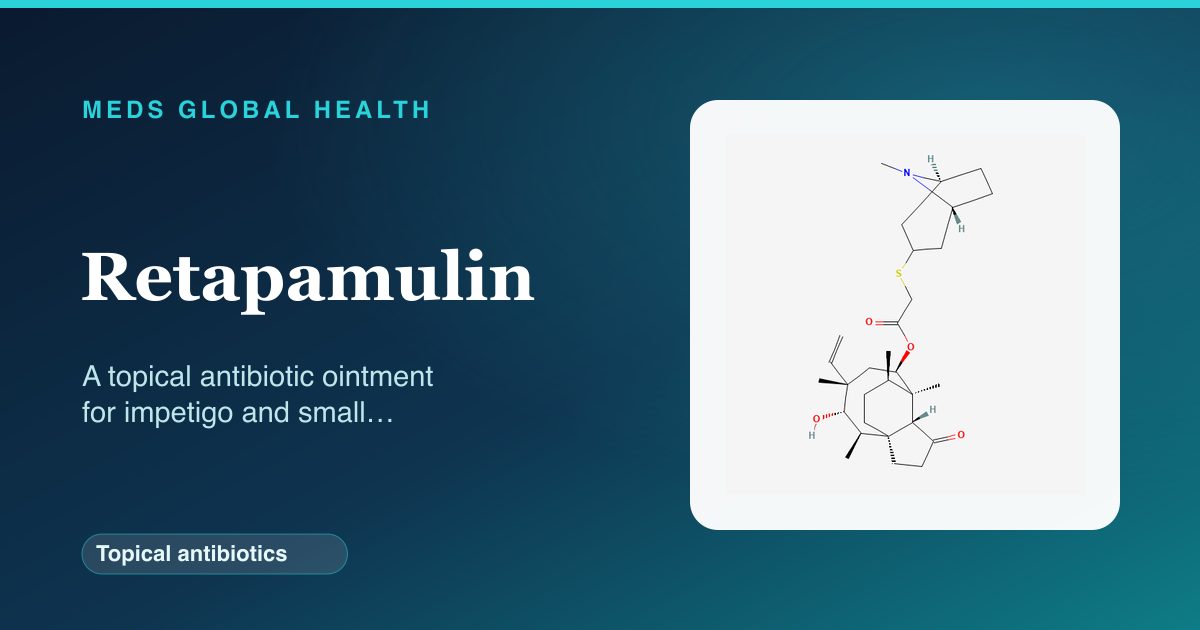
Retapamulin is a topical antibiotic, which means it is an antibiotic applied directly to the skin as an ointment rather than taken by mouth. It is used to treat impetigo (a common, contagious skin infection that causes golden-crusted sores) and other small, shallow areas of infected skin, such as small infected cuts, grazes or stitched wounds. It works on bacteria living in the surface layers of the skin and is intended for limited areas rather than large or deep infections. It is applied directly to the affected skin for a short course.
How it works
Retapamulin gets into the bacteria living in the affected skin and blocks the machinery they use to build proteins, which they need in order to grow and multiply. With this blocked, the bacteria stop spreading and the body can clear the infection, helping the sores crust over and heal. Because it is applied to the surface, it concentrates where the infection is and very little is absorbed into the bloodstream, so it mainly acts locally. Keeping it to small areas helps it work well while limiting the chance of resistance developing.
Company & origin
Originated / developed by: Generic (originator GlaxoSmithKline).
A topical antibiotic ointment used in the UK for impetigo and small areas of infected skin.
Practical use
How to take Retapamulin
General, dose-free guidance — always follow your prescriber's and the leaflet's specific instructions.
- Wash and gently dry the area, then apply a thin layer of the ointment to the affected skin as directed, usually twice a day.
- Wash your hands before and after, and cover the area with a light dressing or gauze if your prescriber advises.
- Avoid getting it in the eyes, nose or mouth, and use it only on the small areas it is meant for.
- Keep towels, flannels and bedding separate, as impetigo is contagious until the sores crust or heal.
- Finish the short course advised, and go back to your prescriber if it is not clearly improving within a few days or is spreading.
Weighing it up
Advantages & disadvantages of Retapamulin
Advantages
- Delivers the antibiotic straight to small infected skin areas, with very little absorbed into the body.
- Effective for impetigo and minor infected skin, avoiding the need for a tablet antibiotic in limited cases.
- Simple short course applied at home as a thin layer of ointment.
Disadvantages
- Only suitable for small, shallow areas, not for widespread, deep or severe skin infections.
- Can cause local irritation, redness or itching at the site where it is applied.
- If the infection does not improve, a different or oral antibiotic may be needed instead.
Practical use
Good to know
Retapamulin is handy for small patches of impetigo or minor infected skin because it puts the antibiotic right where it is needed. Wash your hands before and after applying it, cover the area with a light dressing or gauze if advised, and avoid getting it in the eyes, nose, mouth or on broken-down large areas. Impetigo is contagious, so keep towels and flannels separate and stay off school or work until the sores have crusted or healed or as advised. It is meant for a short course; if the infection is widespread, getting worse, very painful, or has not improved within the expected few days, go back to your prescriber, who may switch to an antibiotic taken by mouth. Stop and seek advice if the treated skin becomes more red, itchy or irritated, which could be a reaction to the ointment.
Who should not take it / use with caution
- People with a known allergy to retapamulin or any ingredient in the ointment should not use it.
- It should not be used on large, deep or widespread skin infections, which need different treatment.
- Avoid getting it into the eyes, nose, mouth or other moist linings.
Monitoring
- Checking that the infection is clearly improving within the expected few days.
- Watching for irritation or an allergic reaction at the site of application.
- Reviewing whether a tablet antibiotic is needed if the infection spreads or does not settle.
Side effects
- Irritation, redness, itching or stinging of the treated skin is the most common effect.
- Occasionally a localised allergic-type reaction where it is applied.
- Rarely, the infection may worsen or spread, which means a different treatment is needed.
Key interactions
- Because so little is absorbed, it is very unlikely to interact with tablets or other medicines.
- Avoid applying other creams or ointments to the same area at the same time unless advised.
- Tell your prescriber about any other skin treatments you are using on or near the area.
Available as: Ointment applied to the skin.
Answers
Retapamulin: frequently asked questions
What is retapamulin used for?
It is a topical antibiotic ointment used to treat impetigo and other small, shallow areas of infected skin, such as minor infected cuts or grazes.
How do I apply it?
Apply a thin layer to the affected area as directed, usually twice a day, washing your hands before and after and covering with a light dressing if advised.
Is it suitable for a large infected area?
No. It is meant for small areas; widespread, deep or severe skin infections usually need a different treatment, often a tablet antibiotic.
Is impetigo contagious while I use it?
Yes, until the sores crust or heal, so keep towels and flannels separate and follow advice about staying off school or work.
What if it is not getting better?
Go back to your prescriber if the infection is not clearly improving within a few days or is spreading, as a different antibiotic may be needed.
The wider class
About Topical antibiotics
Retapamulin belongs to the topical antibiotics class. For how the class as a whole works, its shared safety principles and monitoring, see the full guide.
Browse by body system
Authoritative sources
- BNF
- NICE CKS
Building a medicines information resource?
We create evidence-led, dose-free drug and formulary references for teams.