An anti-inflammatory mouth and throat treatment
Benzydamine
An anti-inflammatory mouthwash and throat spray used to relieve the pain of a sore mouth or throat, such as from ulcers or a throat infection.
What is Benzydamine?
Benzydamine is an anti-inflammatory mouthwash and throat spray that relieves the pain and soreness of a sore mouth or throat — for example from mouth ulcers, a throat infection or after dental work. It is used on the surface and may sting or numb the area briefly when first applied.
Education and reference only. This is a plain-language guide to Benzydamine — it deliberately contains no doses. Doses depend on the person, the brand and the reason for treatment, and belong with your prescriber. Always check the BNF, the product labelling (SmPC) and follow medical advice.
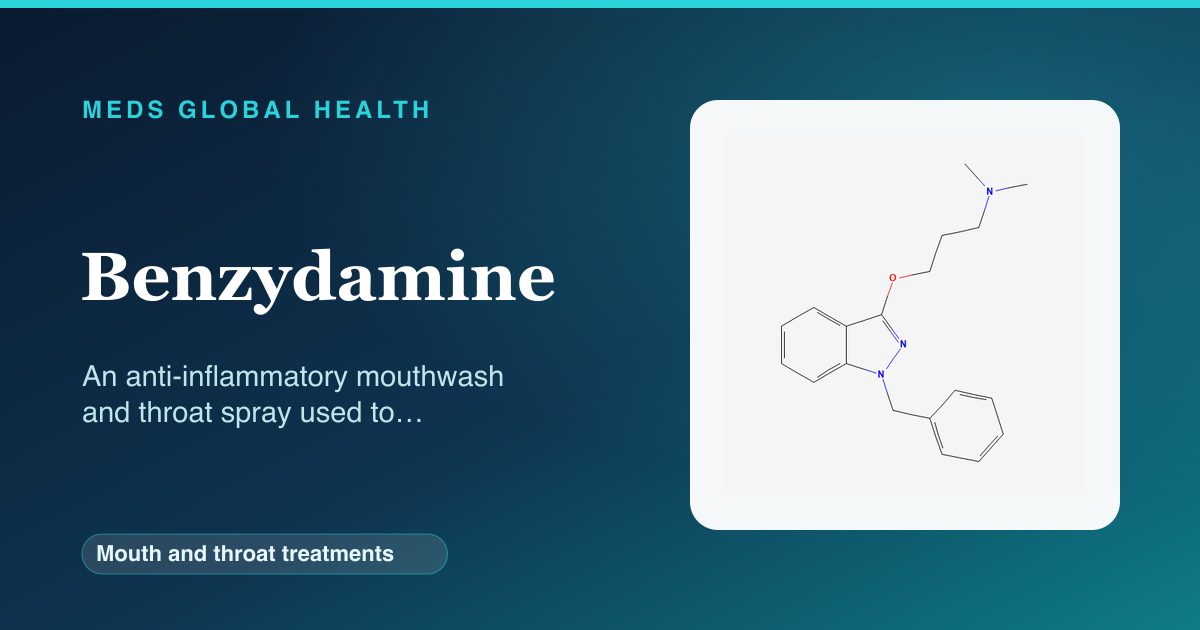
What it is
Benzydamine is an anti-inflammatory medicine used as a mouthwash, throat spray and lozenge to relieve pain and soreness in the mouth and throat. It is used for sore throats, mouth ulcers, gum inflammation, and discomfort after dental treatment or radiotherapy to the mouth. It eases pain and inflammation where it is applied rather than treating any underlying infection.
How it works
Benzydamine has both anti-inflammatory and local pain-relieving and mild numbing actions. Applied directly to the sore area of the mouth or throat, it reduces the inflammation that causes swelling and pain and dulls the local pain signals, so the area feels more comfortable. It works on the surface where it is in contact, rather than being relied on as a medicine taken into the body.
Company & origin
Originated / developed by: Angelini.
Benzydamine is an anti-inflammatory agent developed in Italy and used in the UK as a mouthwash and throat spray for a sore mouth or throat.
Practical use
How to take Benzydamine
General, dose-free guidance — always follow your prescriber's and the leaflet's specific instructions.
- Gargle or rinse the mouthwash around the sore area, or aim the spray at the sore spot, as directed.
- It is for surface use; spit the mouthwash out rather than swallowing large amounts.
- If the mouthwash stings, you can dilute it with an equal amount of water.
- Use it at intervals through the day as the label advises for ongoing relief.
- See a clinician if a sore throat is severe, comes with a high fever or trouble swallowing, or is not improving.
Weighing it up
Advantages & disadvantages of Benzydamine
Advantages
- Relieves the pain of a sore mouth or throat directly where it is applied.
- Combines anti-inflammatory and mild numbing effects for quick comfort.
- Available over the counter and useful alongside simple painkillers.
Disadvantages
- Can sting or briefly numb the area, especially on ulcers or broken skin.
- Relieves symptoms but does not treat the underlying cause of soreness.
- A worsening or severe sore throat still needs proper assessment.
Practical use
Good to know
Benzydamine can sting or cause a brief numb or tingling feeling when first used, especially on broken or ulcerated areas; this usually settles quickly and some people dilute the mouthwash with water if it stings. It relieves pain and inflammation but does not treat the cause, so a sore throat with high fever, difficulty swallowing or that is getting worse still needs review. It is for surface use in the mouth and throat and is gargled or sprayed, then spat out rather than swallowed in large amounts. It can be a helpful add-on alongside simple pain relief such as paracetamol.
Who should not take it / use with caution
- People who have had an allergic reaction to benzydamine.
- Children below the age stated on the pack for the particular product.
- Use as advised in pregnancy and breastfeeding, and seek review if symptoms are severe or persistent.
Monitoring
- No routine monitoring; it is for short-term symptom relief.
- Review if a sore mouth or throat is severe, worsening or not settling.
- Seek prompt help for difficulty swallowing or breathing, or a high fever.
Side effects
- Often a brief stinging, numbness or tingling where it is applied, which usually settles.
- Occasional dry mouth or an unusual taste.
- Rarely, an allergic reaction with rash or swelling, or mouth or throat irritation — stop and seek advice if this happens.
Key interactions
- Few interactions, because it acts on the surface of the mouth and throat.
- Other mouthwashes or sprays used at the same time may add to local stinging.
- Very little is absorbed, so interactions with tablets taken by mouth are unlikely.
Available as: Mouthwash, throat spray and lozenges for the mouth and throat.
Answers
Benzydamine: frequently asked questions
Why does benzydamine sting when I use it?
A brief stinging, numbing or tingling feeling is common, especially on ulcers or broken skin, and usually settles quickly. If the mouthwash stings too much, you can dilute it with an equal amount of water before gargling.
Does benzydamine treat a throat infection?
No. It relieves the pain and inflammation of a sore throat but does not treat the underlying infection. Most sore throats settle on their own; see a clinician if yours is severe, comes with a high fever or trouble swallowing, or is getting worse.
Can I swallow benzydamine mouthwash?
It is meant for surface use in the mouth and throat and should be spat out rather than swallowed in large amounts. The throat spray and lozenges are designed to be used differently — follow the instructions for the particular product.
Can I use it with paracetamol or ibuprofen?
Yes, benzydamine acts locally in the mouth and throat and can be used alongside simple painkillers such as paracetamol for added relief. Check with a pharmacist if you are unsure about combining medicines.
How often can I use benzydamine?
Use it at the intervals stated on the pack, gargling or spraying onto the sore area for ongoing relief. Do not use it more often than the label allows, and seek advice if symptoms persist or worsen.
The wider class
About Mouth and throat treatments
Benzydamine belongs to the mouth and throat treatments class. For how the class as a whole works, its shared safety principles and monitoring, see the full guide.
Browse by body system
Authoritative sources
- BNF: Benzydamine hydrochloride.
- NICE CKS: Sore throat.
Building a medicines information resource?
We create evidence-led, dose-free drug and formulary references for teams.