A mucolytic
Carbocisteine
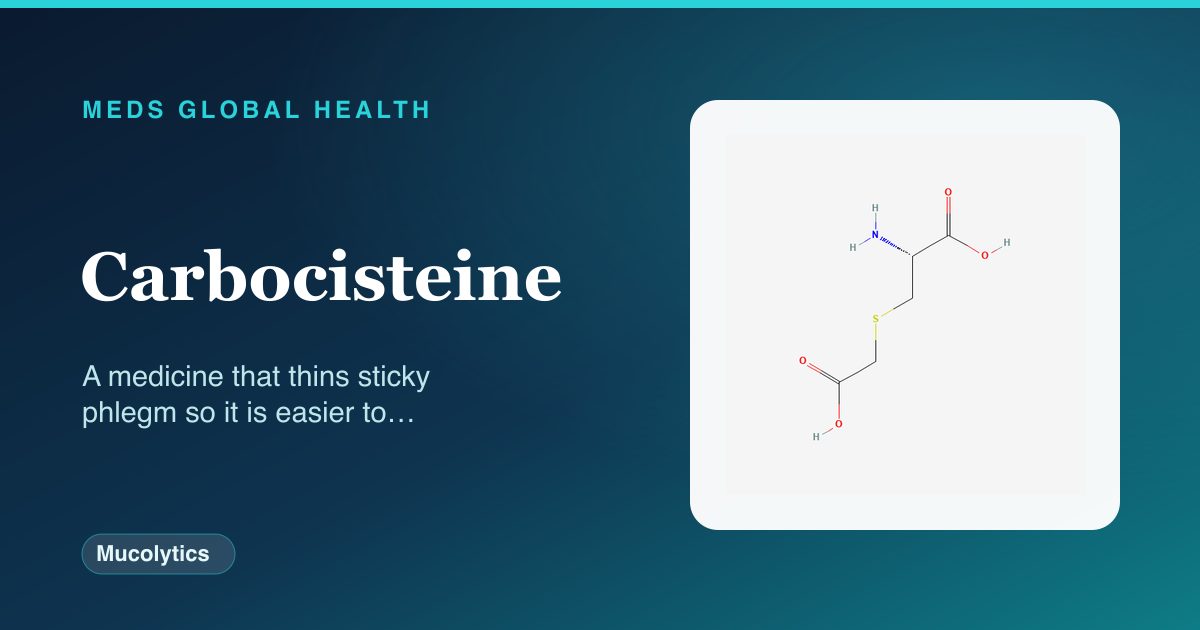
A medicine that thins sticky phlegm so it is easier to cough up, used mainly in COPD and other chesty conditions.
What is Carbocisteine?
Carbocisteine is a mucolytic — a medicine that makes thick, sticky phlegm thinner and easier to cough up. It is used mainly in COPD and other long-term chesty conditions to help clear the airways and reduce troublesome mucus. It is taken regularly as a capsule or liquid, and any sign of stomach bleeding should be reported.
Education and reference only. This is a plain-language guide to Carbocisteine — it deliberately contains no doses. Doses depend on the person, the brand and the reason for treatment, and belong with your prescriber. Always check the BNF, the product labelling (SmPC) and follow medical advice.
What it is
Carbocisteine is an oral medicine that loosens phlegm. It belongs to a group called mucolytics and is used mainly in long-term chest conditions such as COPD where thick, sticky mucus is a problem. By making mucus less sticky, it can make coughing more productive and help keep the airways clearer, which for some people means fewer flare-ups.
How it works
Carbocisteine changes the make-up of mucus in the airways so that it becomes thinner and less sticky. Thinner mucus is easier to move and cough up, which helps clear the airways and can ease a chesty, congested feeling. It does not open the airways like a bronchodilator and does not treat infection — its job is simply to make secretions easier to shift.
Company & origin
A long-established mucolytic used in the UK and Europe for many years.
What it treats
Conditions Carbocisteine is used for
Practical use
How to take Carbocisteine
General, dose-free guidance — always follow your prescriber's and the leaflet's specific instructions.
- Take it regularly as prescribed; your team may start with a higher frequency and then reduce it once it is working.
- It can be taken as a capsule or as an oral liquid, whichever suits you.
- Staying well hydrated helps the medicine keep your phlegm loose and easy to cough up.
- Report any signs of stomach bleeding — such as vomiting blood or black, tarry stools — straight away.
- If it does not seem to be helping after a fair trial, tell your team, who may review or stop it.
Weighing it up
Advantages & disadvantages of Carbocisteine
Advantages
- Makes thick phlegm easier to cough up.
- May help reduce chest flare-ups in some people with COPD.
- Generally well tolerated.
- Available as a capsule or liquid to suit different people.
Disadvantages
- Does not work for everyone, and benefit can be modest.
- Needs to be taken regularly rather than just when symptoms flare.
- Rarely linked to stomach bleeding.
- Does not open the airways or treat infection.
Practical use
Good to know
Carbocisteine is taken regularly to keep mucus thin, often more frequently at first and then less often once it is helping. It works best alongside staying well hydrated. It is generally well tolerated, but because it has rarely been linked to stomach bleeding, any signs such as bringing up blood or black, tarry stools should be reported straight away. If it is not helping after a fair trial, your team may stop it.
Who should not take it / use with caution
- People who have had a serious allergic reaction to carbocisteine.
- People with an active stomach ulcer.
- Use with caution in those with a history of stomach ulcers or bleeding.
Monitoring
- Review of whether it is genuinely helping with phlegm and chest symptoms.
- Watch for any signs of stomach bleeding.
- Reassessment if there is no benefit after a fair trial.
Side effects
- Usually few. Tummy upset, nausea or diarrhoea can occur.
- Skin rash.
- Rarely, bleeding from the stomach or gut.
- Rarely, serious skin reactions — seek help for a spreading rash, blistering or peeling.
Key interactions
- Generally few significant interactions.
- Tell your team about all your medicines, including anything that affects the stomach lining, so it can be reviewed.
Available as: Capsules and oral liquid.
Answers
Carbocisteine: frequently asked questions
What does carbocisteine actually do?
It makes thick, sticky phlegm thinner so it is easier to cough up and clear from your chest. It does not open the airways or treat infection — it simply helps you shift mucus more easily.
How should I take it?
Take it regularly as prescribed. Your team often starts with a higher frequency and then reduces it once it is working. Staying well hydrated helps it keep your phlegm loose.
How long until it works?
Some people notice easier coughing within a week or two. If it is clearly not helping after a fair trial, tell your team, who may review or stop it.
Is it safe for my stomach?
It is usually well tolerated, but it has rarely been linked to stomach bleeding. Report any vomiting of blood or black, tarry stools straight away, and tell your team if you have a history of ulcers.
Can I take it alongside my inhalers?
Yes, it is commonly used alongside inhalers in conditions like COPD because it does a different job — loosening mucus rather than opening the airways. Keep using your inhalers as prescribed.
The wider class
About Mucolytics
Carbocisteine belongs to the mucolytics class. For how the class as a whole works, its shared safety principles and monitoring, see the full guide.
Browse by body system
Authoritative sources
- BNF
- NICE CKS
Building a medicines information resource?
We create evidence-led, dose-free drug and formulary references for teams.