A cough suppressant (antitussive)
Dextromethorphan
An over-the-counter cough suppressant used to calm a dry, tickly cough — not for a chesty cough where you are bringing up phlegm.
What is Dextromethorphan?
Dextromethorphan is a pharmacy cough suppressant for a dry, tickly cough that keeps you awake or wears you down. It is not suitable for a chesty (productive) cough, because suppressing a cough that is clearing phlegm can be unhelpful. Check with a pharmacist if you take antidepressants.
Education and reference only. This is a plain-language guide to Dextromethorphan — it deliberately contains no doses. Doses depend on the person, the brand and the reason for treatment, and belong with your prescriber. Always check the BNF, the product labelling (SmPC) and follow medical advice.
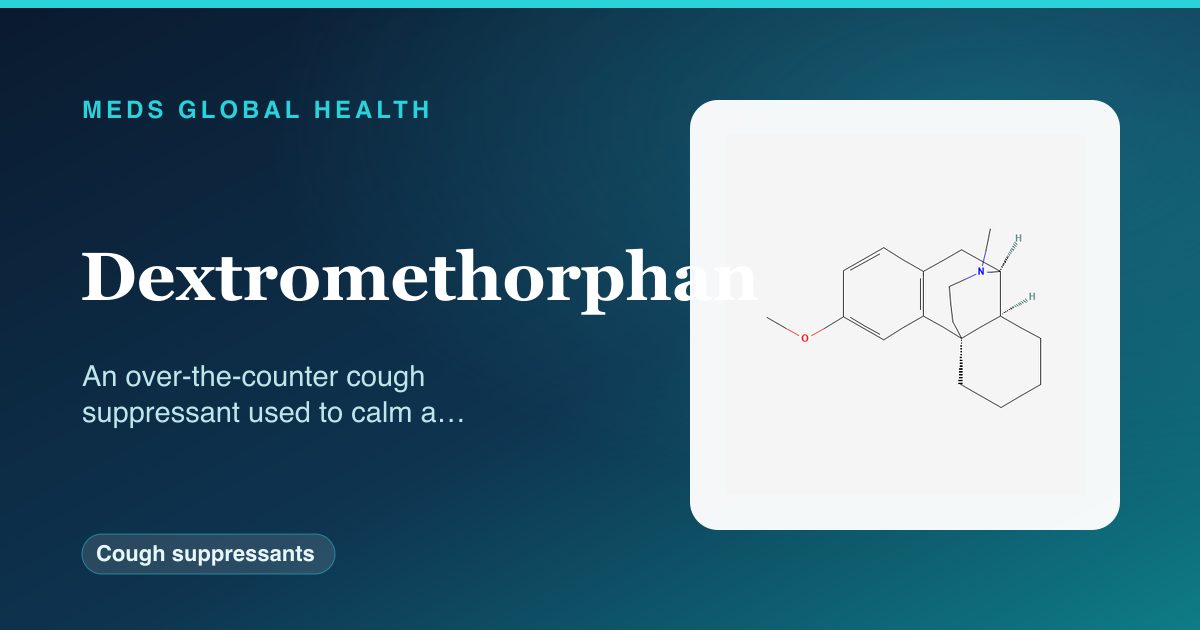
What it is
Dextromethorphan is a non-opioid cough suppressant sold over the counter in many UK pharmacy cough syrups and pastilles. It is used for the short-term relief of a dry, irritating, tickly cough — the kind that is not bringing up any phlegm. It does not treat the cause of a cough; it simply quietens the cough reflex while a self-limiting infection settles.
How it works
A cough is triggered when the brain's "cough centre" responds to irritation in the airways. Dextromethorphan acts on this cough centre in the brain to dampen the signal, so the urge to cough is reduced. Unlike older opioid cough medicines it has little pain-relieving effect at normal doses, but it shares the same broad action of calming the reflex rather than treating any infection.
Company & origin
Originated / developed by: Hoffmann-La Roche.
Dextromethorphan was developed in the 1950s as a non-opioid cough suppressant and has been available in the UK as an over-the-counter cough medicine for decades.
Practical use
How to take Dextromethorphan
General, dose-free guidance — always follow your prescriber's and the leaflet's specific instructions.
- Use it only for a dry, tickly cough — not for a chesty cough where you are coughing up phlegm.
- Take it as directed on the pack and do not take it more often than the label allows.
- It is intended for short-term use; see a pharmacist or GP if a cough lasts more than about three weeks.
- Tell the pharmacist about any antidepressants or other medicines before buying it, as some combinations are unsafe.
- Keep it out of reach of children and never take more than directed in the hope of a faster effect.
Weighing it up
Advantages & disadvantages of Dextromethorphan
Advantages
- Available over the counter without a prescription for short-term relief of a dry cough.
- Non-opioid, so it is non-addictive at normal pharmacy use and causes less constipation than codeine-based cough medicines.
- Can ease a tickly cough enough to help you sleep while a cold settles.
Disadvantages
- Does not treat the cause of a cough and is unsuitable for a chesty, productive cough.
- Can interact seriously with antidepressants and other serotonin-raising medicines.
- Open to misuse at large amounts, which can cause hallucinations and other harm.
Practical use
Good to know
Dextromethorphan suits a dry, tickly cough but not a chesty, productive cough, where coughing is helping to clear mucus from the chest. Most coughs from a cold settle on their own within a couple of weeks, and simple measures such as honey and warm drinks help as much as many remedies. It can interact dangerously with antidepressants and certain other medicines that raise serotonin, so always tell the pharmacist what else you take. It is also known to be misused at large amounts for its mind-altering effects, which can be harmful, so it should only be used as directed.
Who should not take it / use with caution
- People taking, or who have recently taken, MAOI antidepressants — this combination can cause a dangerous reaction.
- Children under 6 years should not be given dextromethorphan cough medicines, and it is used in children aged 6 to 12 only on the advice of a pharmacist or doctor; used with caution in pregnancy or breastfeeding unless advised.
- People with a chesty, productive cough, asthma flare-ups or breathing difficulties should seek advice rather than self-treat.
Monitoring
- No routine monitoring; it is for short-term use only.
- Review if a cough persists beyond about three weeks or comes with fever, breathlessness or coughing up blood.
- Watch for unusual agitation or confusion, especially alongside antidepressants.
Side effects
- Often none with short-term use; sometimes drowsiness, dizziness or feeling sick.
- Occasional constipation or stomach upset.
- Rarely, agitation, confusion or a serotonin reaction when combined with certain antidepressants — seek advice if these occur.
Key interactions
- MAOI antidepressants must not be combined with it, and care is needed with SSRI and SNRI antidepressants because of the risk of serotonin syndrome.
- Other sedating medicines and alcohol can add to drowsiness.
- Some medicines that affect how the liver breaks it down can raise its levels, so check with a pharmacist.
Available as: Oral liquids (syrups), pastilles and lozenges, often combined with other ingredients in cold and flu remedies.
Answers
Dextromethorphan: frequently asked questions
Is dextromethorphan good for a chesty cough?
No. It is a cough suppressant for a dry, tickly cough, and suppressing a chesty (productive) cough can be unhelpful because coughing is clearing mucus from the chest. For a chesty cough a pharmacist may suggest a different type of remedy.
Can I take it with antidepressants?
Not without checking first. Dextromethorphan can interact dangerously with several antidepressants, including MAOIs and SSRIs, raising the risk of a serious reaction called serotonin syndrome. Always tell the pharmacist what medicines you take before buying it.
How long should I use it for?
It is intended for short-term relief only. Most coughs from a cold settle within a couple of weeks; if a cough lasts more than about three weeks, or comes with fever, breathlessness or blood, see a GP rather than carrying on with cough medicine.
Is dextromethorphan addictive?
At normal pharmacy use it is non-opioid and not addictive. However, it is known to be misused at very large amounts for mind-altering effects, which can be harmful, so it should only ever be used as directed on the pack.
Does cough medicine actually cure a cough?
No medicine cures the cold or virus behind most coughs. Dextromethorphan only calms the cough reflex while the infection settles on its own. Simple measures such as honey, warm drinks and rest are often just as helpful.
The wider class
About Cough suppressants
Dextromethorphan belongs to the cough suppressants class. For how the class as a whole works, its shared safety principles and monitoring, see the full guide.
Browse by body system
Authoritative sources
- BNF: Dextromethorphan.
- NICE CKS: Cough medicines and treatments.
Building a medicines information resource?
We create evidence-led, dose-free drug and formulary references for teams.