An SGLT2 inhibitor (a 'flozin')
Canagliflozin
A once-daily type 2 diabetes tablet that lowers blood sugar by removing glucose in the urine, and can also help the heart and kidneys.
What is Canagliflozin?
Canagliflozin is an SGLT2 inhibitor (a 'flozin') used in type 2 diabetes. It works by making the kidneys pass extra glucose out in the urine, which lowers blood sugar and can modestly reduce weight and blood pressure. It can also protect the heart and kidneys, but it raises the risk of genital thrush and, rarely, of diabetic ketoacidosis.
Education and reference only. This is a plain-language guide to Canagliflozin — it deliberately contains no doses. Doses depend on the person, the brand and the reason for treatment, and belong with your prescriber. Always check the BNF, the product labelling (SmPC) and follow medical advice.
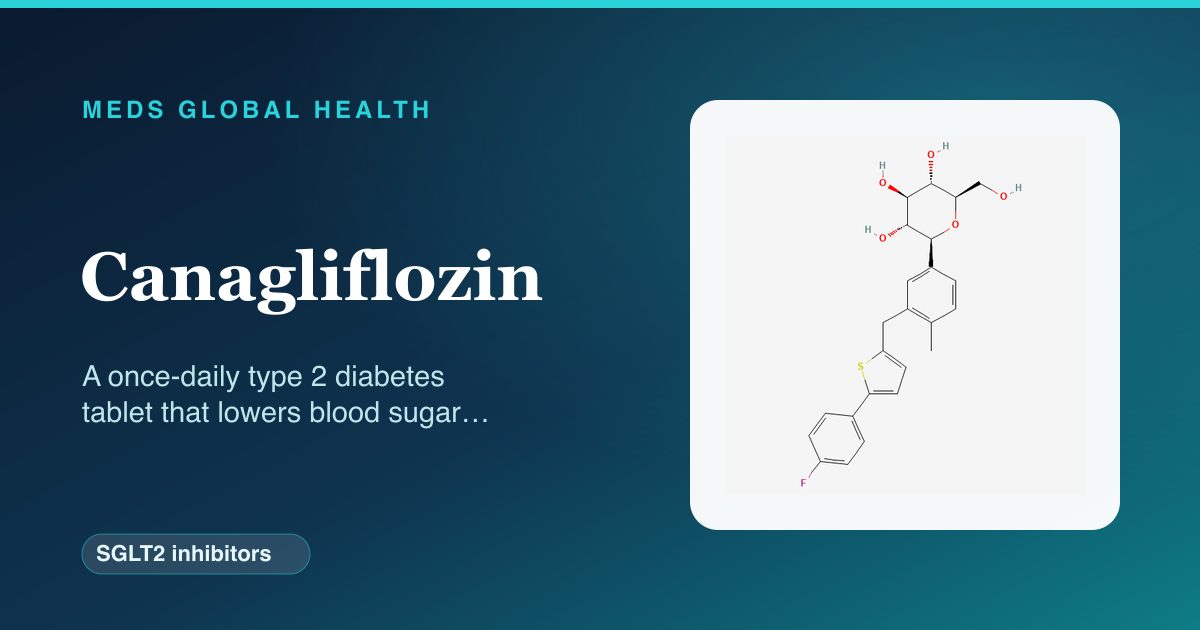
What it is
Canagliflozin is an oral medicine for type 2 diabetes, taken once a day. It belongs to the SGLT2 inhibitors, a group valued not only for lowering blood sugar but also for benefits to the heart and kidneys in suitable people. Because it removes glucose (and some fluid) through the urine, it can also lead to modest weight loss and a small fall in blood pressure.
How it works
The kidneys filter glucose out of the blood and then reabsorb almost all of it back, using a transporter called SGLT2. Canagliflozin blocks SGLT2, so more glucose is passed out in the urine instead of being returned to the bloodstream. This lowers blood sugar in a way that does not depend on insulin, and the loss of glucose and fluid also contributes to weight and blood-pressure benefits.
Company & origin
Originated / developed by: Janssen (Johnson & Johnson).
Developed by Janssen and first approved in 2013 (United States).
What it treats
Conditions Canagliflozin is used for
Practical use
How to take Canagliflozin
General, dose-free guidance — always follow your prescriber's and the leaflet's specific instructions.
- Take it once a day, usually before your first meal; keep to a regular time.
- Drink enough fluids — it makes you pass more urine and can cause dehydration, especially in hot weather or illness.
- Watch for genital thrush or burning when passing urine; tell your team if these happen, as they are usually treatable.
- Seek urgent help if you feel very unwell, are vomiting, breathless, or have tummy pain — this can be diabetic ketoacidosis even if your blood sugar is not high.
- Look after your feet and check them regularly; report any new sores, ulcers or infections promptly.
- If you become acutely unwell or cannot eat or drink, ask your team whether to pause it temporarily ('sick-day' advice).
Weighing it up
Advantages & disadvantages of Canagliflozin
Advantages
- Can protect the heart and kidneys in suitable people, not just lower blood sugar.
- Often leads to modest weight loss and a small fall in blood pressure.
- Low risk of hypos when used on its own.
- Simple once-daily tablet.
Disadvantages
- Raises the risk of genital thrush and urinary infections.
- Small but serious risk of diabetic ketoacidosis, sometimes with near-normal blood sugar.
- Can cause dehydration and dizziness, especially in older or frail people.
- Linked to a raised risk of foot and lower-limb problems, so foot care is important.
Practical use
Good to know
Canagliflozin is taken once a day, usually before the first meal. Because it works through the urine, it makes genital thrush and urinary infections more likely, so good genital hygiene helps. It also has a small but important risk of diabetic ketoacidosis (DKA) — a serious condition that can occur even when blood sugar looks near normal. Looking after your feet matters, as this class has been linked to a raised risk of foot and lower-limb problems.
Who should not take it / use with caution
- People with type 1 diabetes or a history of diabetic ketoacidosis (unless a specialist decides otherwise).
- People who are significantly dehydrated or acutely unwell.
- Use with caution in those with active foot disease, recurrent genital infections, or markedly reduced kidney function.
Monitoring
- Blood sugar control (including HbA1c) and kidney function checks.
- Watch for signs of dehydration, genital infection or foot problems.
- Awareness of ketoacidosis symptoms, with urgent review if suspected.
Side effects
- Genital thrush and urinary tract infections.
- Passing more urine, thirst and, sometimes, dizziness from dehydration.
- Rarely, diabetic ketoacidosis — a medical emergency that can occur with near-normal blood sugar.
- Rarely, a serious genital infection called Fournier's gangrene — seek urgent help for genital pain, swelling or redness.
Key interactions
- Hypo risk increases when combined with a sulfonylurea or insulin.
- Water tablets (diuretics) add to the fluid-loss and dehydration effect.
- Tell your team about all your medicines so the combination can be reviewed.
Available as: Oral tablets.
Answers
Canagliflozin: frequently asked questions
Why does canagliflozin make me pass more urine?
It works by sending extra glucose out in the urine, which pulls water with it. This is normal but means you should drink enough fluids and be alert to dehydration, especially when it is hot or you are unwell.
Can I get diabetic ketoacidosis on canagliflozin?
Rarely, yes — and it can happen even when your blood sugar looks near normal. Seek urgent help if you feel very unwell, are vomiting, breathless or have tummy pain, and tell staff you take an SGLT2 inhibitor.
Why am I getting thrush?
Extra glucose in the urine makes genital thrush and urinary infections more likely. Good hygiene helps, and these infections are usually easily treated — tell your team if they recur.
Does it help with weight and the heart?
It often leads to modest weight loss and a small drop in blood pressure, and in suitable people it can also protect the heart and kidneys. Your team will explain whether these benefits apply to you.
Should I stop it if I am ill?
If you become acutely unwell, are vomiting or cannot eat and drink normally, ask your team about 'sick-day' rules — they may advise pausing it temporarily to reduce the risk of ketoacidosis and dehydration.
The wider class
About SGLT2 inhibitors
Canagliflozin belongs to the sglt2 inhibitors class. For how the class as a whole works, its shared safety principles and monitoring, see the full guide.
Browse by body system
Authoritative sources
- BNF
- NICE CKS
- MHRA Drug Safety Update
Building a medicines information resource?
We create evidence-led, dose-free drug and formulary references for teams.