An SGLT2 inhibitor ("flozin")
Dapagliflozin
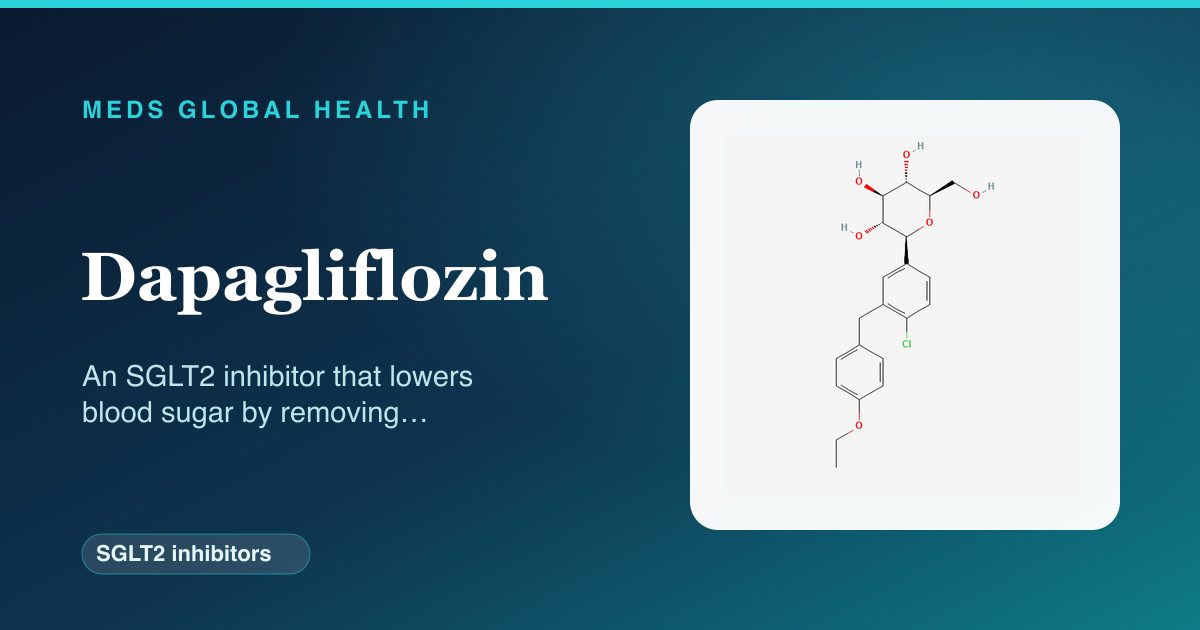
An SGLT2 inhibitor that lowers blood sugar by removing glucose in the urine, and also protects the heart and kidneys — used in type 2 diabetes, heart failure and chronic kidney disease.
What is Dapagliflozin?
Dapagliflozin is an SGLT2 inhibitor (one of the 'flozin' medicines) that makes the kidneys remove excess sugar through the urine. It is used for type 2 diabetes and also to treat heart failure and protect kidneys in chronic kidney disease.
Education and reference only. This is a plain-language guide to Dapagliflozin — it deliberately contains no doses. Doses depend on the person, the brand and the reason for treatment, and belong with your prescriber. Always check the BNF, the product labelling (SmPC) and follow medical advice.
What it is
Dapagliflozin is an SGLT2 inhibitor (one of the "flozin" medicines). It began as a type 2 diabetes treatment but is now also used to treat heart failure and to slow the progression of chronic kidney disease — including in some people who do not have diabetes — because large trials showed it protects the heart and kidneys. It is a long-term, once-daily tablet that works through the kidneys.
How it works
Dapagliflozin blocks a transporter in the kidney (SGLT2) that normally reabsorbs glucose back into the blood. By blocking it, more glucose — and some salt and water — is passed out in the urine, so blood sugar falls and the body sheds a little fluid. The fluid and pressure changes ease the workload on the heart and reduce the strain inside the kidney's filters, which is how it helps in heart failure and chronic kidney disease quite separately from its effect on sugar.
Company & origin
Originated / developed by: Bristol-Myers Squibb (later developed/marketed with AstraZeneca).
Dapagliflozin was discovered by Bristol-Myers Squibb in the United States and developed under a diabetes collaboration with AstraZeneca formed in 2007. It was the first-in-class SGLT2 inhibitor approved, gaining EU approval (as Forxiga) in November 2012 and US FDA approval (as Farxiga) in January 2014; AstraZeneca now markets it.
What it treats
Conditions Dapagliflozin is used for
Practical use
How to take Dapagliflozin
General, dose-free guidance — always follow your prescriber's and the leaflet's specific instructions.
- Taken once a day by mouth, with or without food, at a time you can stick to consistently.
- Because it works by passing sugar into the urine, drink enough fluids and look after personal hygiene to reduce the risk of genital and urine infections.
- If you become unwell with vomiting, diarrhoea, dehydration or are unable to eat, follow 'sick day' advice and speak to your team, as the medicine may need to be paused temporarily.
- If you miss a dose, take it when you remember that day, but skip it if it is nearly time for the next one rather than doubling up.
- Do not stop or restart it around surgery or serious illness without checking with your healthcare team.
Weighing it up
Advantages & disadvantages of Dapagliflozin
Advantages
- Lowers blood sugar with a low risk of causing hypos on its own.
- Can support modest weight loss and a small reduction in blood pressure.
- Protects the heart in heart failure and slows decline in chronic kidney disease.
- Taken once daily by mouth, which is convenient.
Disadvantages
- Increases the risk of genital thrush and urinary infections.
- Carries a risk of diabetic ketoacidosis (DKA), a serious condition that can occur even when blood sugar is not very high, so warning signs must be taken seriously.
- Can cause dehydration and dizziness, especially in older people or those on water tablets.
- May need to be paused during acute illness, dehydration or before surgery.
Practical use
Good to know
Because it passes sugar into the urine, genital thrush and urinary infections are more common — good genital hygiene helps, and these are usually easy to treat. It causes a small loss of fluid, so dizziness can occur, especially alongside water tablets. The most important safety point is "sick-day rules": rarely it can cause diabetic ketoacidosis (a dangerous build-up of acids), and this can happen even when blood sugar is near normal. If you become unwell, are vomiting, stop eating and drinking normally, or are dehydrated, stop the tablet and seek advice. It is also usually paused before surgery or during serious illness.
Who should not take it / use with caution
- People with type 1 diabetes are not generally given it for blood-sugar control because of the higher risk of ketoacidosis.
- People who are acutely unwell, dehydrated, fasting, or undergoing surgery should usually pause it (sick-day rules).
- Used with caution where kidney function is very low, in pregnancy and breastfeeding, and in people prone to genital or urinary infections.
Monitoring
- Blood-glucose control (HbA1c) where used for diabetes
- Kidney function and fluid status
- For genital/urinary infections and any signs of ketoacidosis
Side effects
- Genital thrush and urinary-tract infections (more common because of the sugar in the urine) — usually treatable.
- Dizziness or light-headedness from mild fluid loss, especially with diuretics or when dehydrated.
- Rarely, diabetic ketoacidosis — which can occur even with near-normal blood sugar; seek urgent help if you feel very unwell, sick, breathless or unusually drowsy. Very rarely, a serious genital infection (Fournier's gangrene) — severe genital pain, swelling or redness with fever needs emergency care.
Key interactions
- Water tablets (diuretics) add to fluid loss and the risk of dehydration and dizziness.
- Insulin and sulfonylureas raise the chance of low blood sugar when combined, so those may be adjusted.
- Being unwell, dehydrated or fasting raises ketoacidosis risk — the reason for sick-day rules.
Available as: Tablets, taken once a day.
Answers
Dapagliflozin: frequently asked questions
Why might I get thrush or urine infections on dapagliflozin?
The medicine works by passing extra glucose out in your urine, and that sugar makes genital thrush and urinary infections more likely. Good hygiene reduces the risk, and both are usually straightforward to treat. Tell your team if infections keep coming back so they can advise.
What are "sick-day rules" and why do they matter?
If you become unwell — for example with vomiting, diarrhoea, a fever, or you stop eating and drinking normally — you should usually pause dapagliflozin and seek advice, because illness and dehydration raise the risk of diabetic ketoacidosis. Your team will give you a personal plan. Restart only once you are eating, drinking and feeling better.
Can I get ketoacidosis even if my blood sugar is normal?
Yes — and this is the important part. With SGLT2 inhibitors, ketoacidosis can occasionally happen even when blood sugar looks near normal, so you cannot rely on a high reading to warn you. Feeling very unwell, sick, breathless or unusually drowsy needs urgent medical help, especially during illness.
I don't have diabetes — why have I been given it?
Dapagliflozin protects the heart and kidneys through effects that are separate from its action on blood sugar, so it is now used for heart failure and chronic kidney disease even in some people without diabetes. The same sick-day and infection advice still applies.
What is the difference between dapagliflozin and Forxiga?
They are the same medicine — dapagliflozin is the generic (active-ingredient) name and Forxiga is a brand name. Generic dapagliflozin contains the identical active ingredient.
The wider class
About SGLT2 inhibitors
Dapagliflozin belongs to the sglt2 inhibitors class. For how the class as a whole works, its shared safety principles and monitoring, see the full guide.
Browse by body system
Authoritative sources
- BNF: Dapagliflozin.
- electronic Medicines Compendium (SmPC): Dapagliflozin (Forxiga).
- NICE CKS: Dapagliflozin.
Keep reading
Related articles
Building a medicines information resource?
We create evidence-led, dose-free drug and formulary references for teams.