A dual SGLT1/SGLT2 inhibitor for heart failure and diabetes
Sotagliflozin
A medicine that blocks two sugar-handling transporters, used in heart failure and in diabetes with kidney disease.
What is Sotagliflozin?
Sotagliflozin is a medicine that blocks two sugar-handling transporters in the body, SGLT1 (in the gut) and SGLT2 (in the kidneys). It is used in heart failure and in people with type 2 diabetes and kidney disease, to reduce the risk of hospital admission and worsening of these conditions. An important risk is diabetic ketoacidosis, a serious problem that can occur even when blood sugar is near normal. It can also cause genital and urinary infections, dehydration and diarrhoea, and is used under medical supervision.
Education and reference only. This is a plain-language guide to Sotagliflozin — it deliberately contains no doses. Doses depend on the person, the brand and the reason for treatment, and belong with your prescriber. Always check the BNF, the product labelling (SmPC) and follow medical advice.
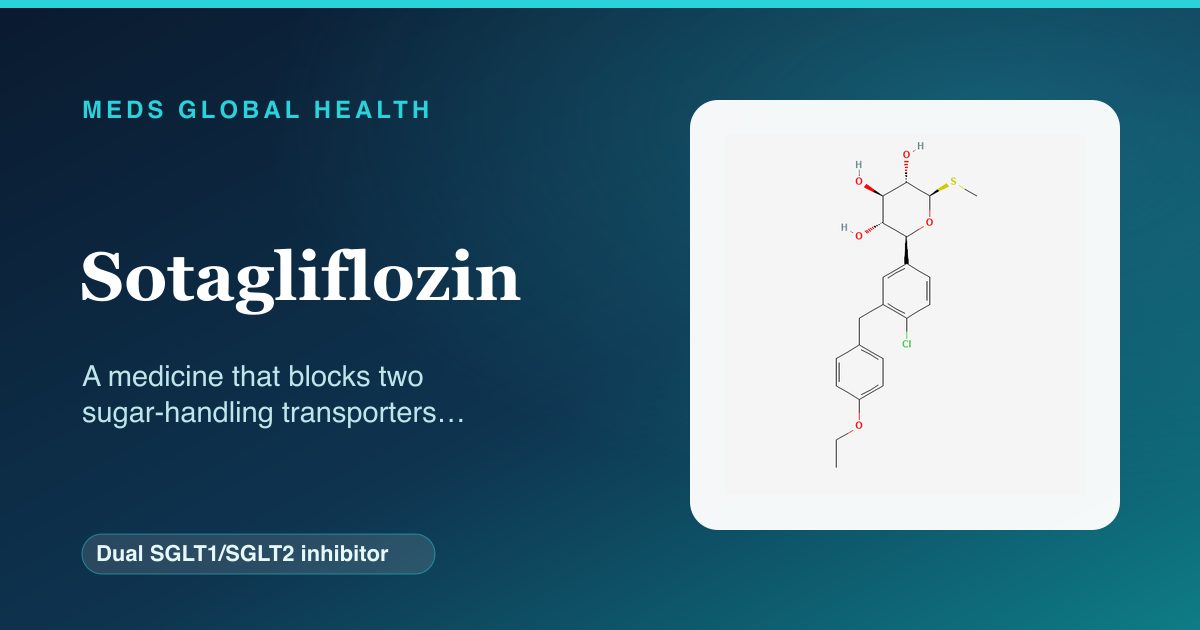
What it is
Sotagliflozin is a medicine in the broad family of SGLT inhibitors, but it is unusual in blocking two related transporters: SGLT2 in the kidneys and SGLT1 in the gut. It is used to treat heart failure and to help people who have type 2 diabetes together with chronic kidney disease, where it lowers the risk of being admitted to hospital and of these conditions getting worse. It is taken by mouth as a tablet. It is prescribed under medical supervision, with attention to the risk of diabetic ketoacidosis and to infections and fluid balance.
How it works
By blocking SGLT2 in the kidneys, sotagliflozin makes the kidneys pass more sugar and some salt and water out in the urine; by also blocking SGLT1 in the gut, it slows the absorption of sugar after meals. These actions help the heart and kidneys in heart failure and kidney disease through effects on fluid, blood pressure and the workload on these organs, and they modestly lower blood sugar in diabetes. Because the body shifts towards burning fat for energy, ketones can build up, which is the basis of the ketoacidosis risk. It works on the day it is taken.
Company & origin
A medicine that blocks two sugar-handling transporters (SGLT1 and SGLT2), used in heart failure and in diabetes with kidney disease.
What it treats
Conditions Sotagliflozin is used for
Practical use
How to take Sotagliflozin
General, dose-free guidance — always follow your prescriber's and the leaflet's specific instructions.
- Take it by mouth as prescribed, at about the same time each day.
- Learn the signs of diabetic ketoacidosis and seek urgent help if you feel very unwell with sickness, tummy pain, fast breathing or fruity-smelling breath.
- Keep well hydrated, especially in hot weather or if you are unwell, to reduce the risk of dehydration.
- Follow any 'sick-day rules' you are given, which may mean pausing it during serious illness, and ask if unsure.
- Look after genital and urinary hygiene, and tell your prescriber about any infections or persistent diarrhoea.
Weighing it up
Advantages & disadvantages of Sotagliflozin
Advantages
- Reduces the risk of hospital admission and worsening in heart failure and in diabetes with kidney disease.
- Works on both the kidney (SGLT2) and the gut (SGLT1), giving a dual action.
- Taken by mouth as a once-daily tablet.
Disadvantages
- Can cause diabetic ketoacidosis, which can occur even when blood sugar is near normal.
- Makes genital and urinary infections more likely, and can cause dehydration.
- Diarrhoea is more common than with kidney-only SGLT2 inhibitors, owing to its gut action.
Practical use
Good to know
The most important safety point with sotagliflozin is the risk of diabetic ketoacidosis, a serious condition where acids called ketones build up in the blood; a crucial and unusual feature is that it can happen even when blood sugar is only mildly raised or near normal, so symptoms such as feeling very unwell, sickness, tummy pain, fast breathing or a fruity-smelling breath must be acted on urgently. Because it makes the body pass out more sugar in the urine, it makes genital thrush and urinary infections more likely; good hygiene helps. It can also cause dehydration, particularly in hot weather or illness, and diarrhoea is more common than with kidney-only SGLT2 inhibitors because of its gut action. Many people are advised on 'sick-day rules', sometimes pausing it during acute illness. It is used under medical supervision with monitoring.
Who should not take it / use with caution
- People who have had a serious allergic reaction to sotagliflozin should not take it.
- It is paused or avoided in people who are seriously unwell, dehydrated, or at high risk of ketoacidosis.
- It is used with caution around surgery and during acute illness, following sick-day advice.
Monitoring
- Checking kidney function and fluid balance during treatment.
- Watching for signs of diabetic ketoacidosis, infections and dehydration.
- In diabetes, reviewing blood sugar control alongside other treatments.
Side effects
- Genital thrush or urinary infections, and more frequent urination.
- Dehydration, dizziness on standing, or low blood pressure.
- Diarrhoea, and, less commonly but seriously, diabetic ketoacidosis.
Key interactions
- Water tablets (diuretics) can add to the risk of dehydration, so fluid balance is watched.
- In diabetes, combining it with insulin or sulfonylureas can increase the risk of low blood sugar.
- Give a full list of your medicines, as some can affect fluid balance or blood sugar.
Available as: Tablets taken by mouth.
Answers
Sotagliflozin: frequently asked questions
What is sotagliflozin used for?
It is used in heart failure and in people with type 2 diabetes and kidney disease, to lower the risk of hospital admission and worsening of these conditions.
How is it different from other SGLT2 inhibitors?
It blocks two transporters rather than one: SGLT2 in the kidneys and SGLT1 in the gut, which is why diarrhoea can be a bit more common with it.
What is diabetic ketoacidosis and why does it matter?
It is a serious build-up of acids called ketones in the blood; with this medicine it can occur even when blood sugar is near normal, so symptoms such as feeling very unwell, sickness or fast breathing need urgent help.
Why am I getting thrush or urine infections?
Because the medicine makes you pass more sugar in your urine, which makes genital thrush and urinary infections more likely; good hygiene helps and infections can be treated.
Should I stop it if I am ill?
You may be given 'sick-day rules' that advise pausing it during serious illness or dehydration; follow the advice you are given and ask your team if you are unsure.
The wider class
About Dual SGLT1/SGLT2 inhibitor
Sotagliflozin belongs to the dual sglt1/sglt2 inhibitor class. For how the class as a whole works, its shared safety principles and monitoring, see the full guide.
Browse by body system
Authoritative sources
- BNF
- NICE CKS
Building a medicines information resource?
We create evidence-led, dose-free drug and formulary references for teams.