An SGLT2 inhibitor ("flozin")
Empagliflozin
An SGLT2 inhibitor that lowers blood sugar through the kidneys and protects the heart and kidneys — used in type 2 diabetes, heart failure and chronic kidney disease.
What is Empagliflozin?
Empagliflozin is an SGLT2 inhibitor (a 'flozin' medicine) that helps the kidneys clear extra sugar into the urine. As well as lowering blood sugar in type 2 diabetes, it is used to protect the heart in heart failure and to slow the progression of chronic kidney disease.
Education and reference only. This is a plain-language guide to Empagliflozin — it deliberately contains no doses. Doses depend on the person, the brand and the reason for treatment, and belong with your prescriber. Always check the BNF, the product labelling (SmPC) and follow medical advice.
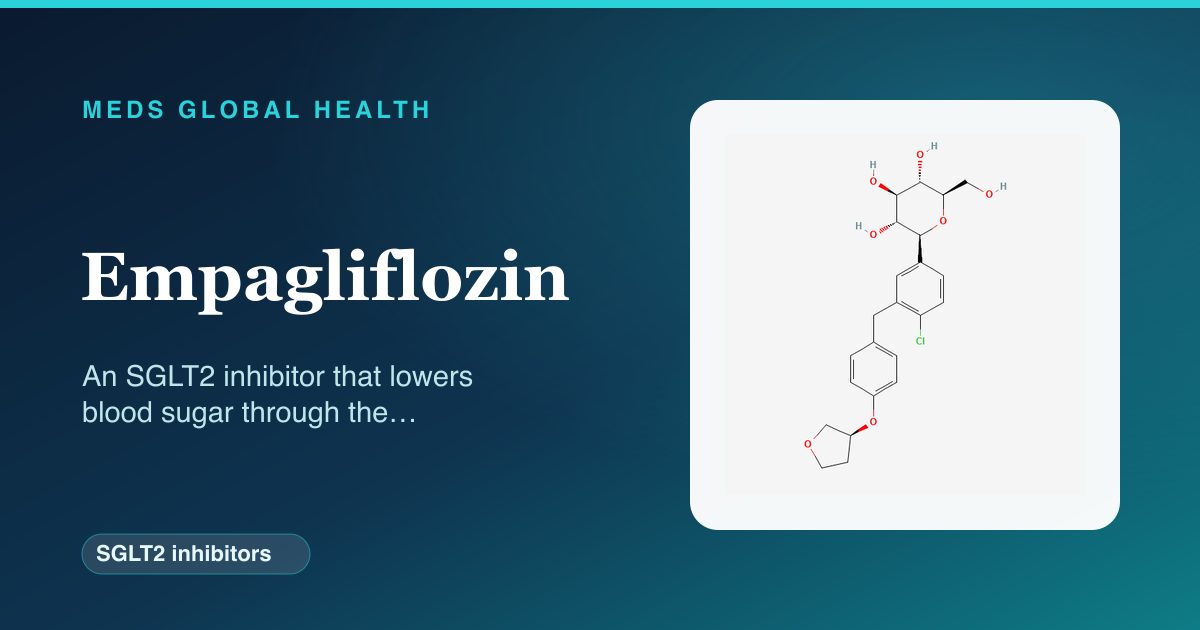
What it is
Empagliflozin is an SGLT2 inhibitor (one of the "flozin" medicines) with a strong track record in heart-protection trials. As well as lowering blood sugar in type 2 diabetes, it is used to treat heart failure and to slow chronic kidney disease — including in some people without diabetes — because it has been shown to reduce hospital admissions and protect kidney function. It is a long-term, once-daily tablet that works through the kidneys.
How it works
Empagliflozin blocks the SGLT2 transporter in the kidney that normally reclaims glucose from the urine back into the blood. With that route blocked, surplus glucose — along with some salt and water — leaves the body in the urine, lowering blood sugar and gently offloading fluid. That fluid shift, together with changes in pressure inside the kidney filters and in the heart's workload, is thought to be behind its benefits in heart failure and kidney disease, which it delivers independently of how much it lowers blood sugar.
Company & origin
Originated / developed by: Boehringer Ingelheim (developed with Eli Lilly).
Empagliflozin is an SGLT2 inhibitor developed by Boehringer Ingelheim in Germany in partnership with Eli Lilly and Company. It was approved by the US FDA in August 2014 and is marketed as Jardiance.
What it treats
Conditions Empagliflozin is used for
Practical use
How to take Empagliflozin
General, dose-free guidance — always follow your prescriber's and the leaflet's specific instructions.
- Taken once daily by mouth, with or without food, ideally at the same time each day.
- Drink adequate fluids and keep good genital hygiene, as the medicine can make thrush and urine infections more likely.
- Follow 'sick day' rules during vomiting, diarrhoea or dehydration, when the medicine may need to be paused on advice.
- If you miss a dose, take it the same day when you remember, but do not double up if your next dose is near.
- Tell your team before any planned surgery, as it is often stopped for a short time beforehand.
Weighing it up
Advantages & disadvantages of Empagliflozin
Advantages
- Strong evidence for protecting the heart in heart failure and reducing related hospital admissions.
- Slows worsening of kidney function in chronic kidney disease.
- Lowers blood sugar with little risk of hypos when used alone.
- Can help with modest weight and blood-pressure reduction, taken just once a day.
Disadvantages
- Raises the risk of genital thrush and urinary tract infections.
- Can rarely cause diabetic ketoacidosis (DKA), which may occur without markedly high blood sugar.
- May lead to dehydration and dizziness, particularly alongside diuretics.
- Usually needs pausing during significant illness or around operations.
Practical use
Good to know
As with others in its class, the extra sugar in the urine makes genital thrush and urinary infections more likely, so hygiene helps and these are usually easy to treat. The mild fluid loss can cause dizziness, particularly alongside water tablets or in hot weather. The key safety message is the same "sick-day rules" point: although uncommon, it can trigger diabetic ketoacidosis — sometimes with blood sugars that look near normal — so if you are vomiting, not eating, dehydrated or otherwise seriously unwell, stop the tablet and get advice. It is usually paused before planned surgery and during major illness too.
Who should not take it / use with caution
- People with type 1 diabetes are not generally given it for blood-sugar control, owing to the ketoacidosis risk.
- People who are acutely ill, dehydrated, fasting or having surgery should normally pause it (sick-day rules).
- Used with caution where kidney function is very low, in pregnancy and breastfeeding, and in those prone to genital or urinary infections.
Monitoring
- Blood-glucose control (HbA1c) where used for diabetes
- Kidney function and fluid status
- For genital/urinary infections and any signs of ketoacidosis
Side effects
- Genital thrush and urinary-tract infections, more common because glucose is passed in the urine — usually treatable.
- Dizziness or light-headedness from mild fluid loss, especially with diuretics, in hot weather or when dehydrated.
- Rarely, diabetic ketoacidosis — possible even with near-normal blood sugar; get urgent help if you feel very unwell, sick, breathless or unusually drowsy. Very rarely, a serious genital infection (Fournier's gangrene) — severe genital pain, swelling or redness with fever needs emergency care.
Key interactions
- Diuretics (water tablets) add to fluid loss and can cause dehydration and dizziness.
- Insulin and sulfonylureas increase the chance of low blood sugar when combined, so those may be reduced.
- Illness, dehydration and fasting raise ketoacidosis risk — the basis of sick-day rules.
Available as: Tablets, taken once a day.
Answers
Empagliflozin: frequently asked questions
How is empagliflozin different from dapagliflozin?
They are both SGLT2 inhibitors and work in the same way, with the same key benefits and the same safety advice (infections, fluid loss and sick-day rules). The differences are mainly in the specific trials behind each and the exact licensed uses; your prescriber chooses based on your heart, kidney and diabetes situation. Don't switch between them yourself.
Why am I more likely to get thrush or urine infections?
Empagliflozin lowers blood sugar by removing glucose in your urine, and that sugar makes genital thrush and urinary infections more likely. Good hygiene helps, both are usually easy to treat, and you should tell your team if they keep returning.
What should I do if I get ill while taking it?
Follow sick-day rules: if you are vomiting, have diarrhoea, a fever, or stop eating and drinking normally, pause empagliflozin and seek advice, because illness and dehydration raise the risk of ketoacidosis. Restart only once you are eating, drinking and feeling better. Your team can give you a written plan.
I was told my blood sugar can be normal but I could still be unwell — is that right?
Yes. With SGLT2 inhibitors, ketoacidosis can occasionally develop even when blood sugar looks near normal, so a normal reading does not rule it out. Feeling very unwell, being sick, breathless or unusually drowsy needs urgent medical help, particularly during illness.
What is the difference between empagliflozin and Jardiance?
They are the same medicine — empagliflozin is the generic (active-ingredient) name and Jardiance is a brand name. Generic empagliflozin contains the identical active ingredient.
The wider class
About SGLT2 inhibitors
Empagliflozin belongs to the sglt2 inhibitors class. For how the class as a whole works, its shared safety principles and monitoring, see the full guide.
Browse by body system
Authoritative sources
- BNF: Empagliflozin.
- electronic Medicines Compendium (SmPC): Empagliflozin (Jardiance).
- NICE CKS: Empagliflozin.
Building a medicines information resource?
We create evidence-led, dose-free drug and formulary references for teams.