A thiazide-like diuretic
Chlortalidone
A long-acting thiazide-like water tablet used mainly for high blood pressure.
What is Chlortalidone?
Chlortalidone is a thiazide-like diuretic (water tablet) used mainly to treat high blood pressure, and sometimes to relieve fluid build-up. It is usually taken once in the morning so it does not disturb your sleep with extra trips to the toilet. It can affect the body's salts, blood sugar and uric acid, so blood tests are used to keep an eye on these.
Education and reference only. This is a plain-language guide to Chlortalidone — it deliberately contains no doses. Doses depend on the person, the brand and the reason for treatment, and belong with your prescriber. Always check the BNF, the product labelling (SmPC) and follow medical advice.
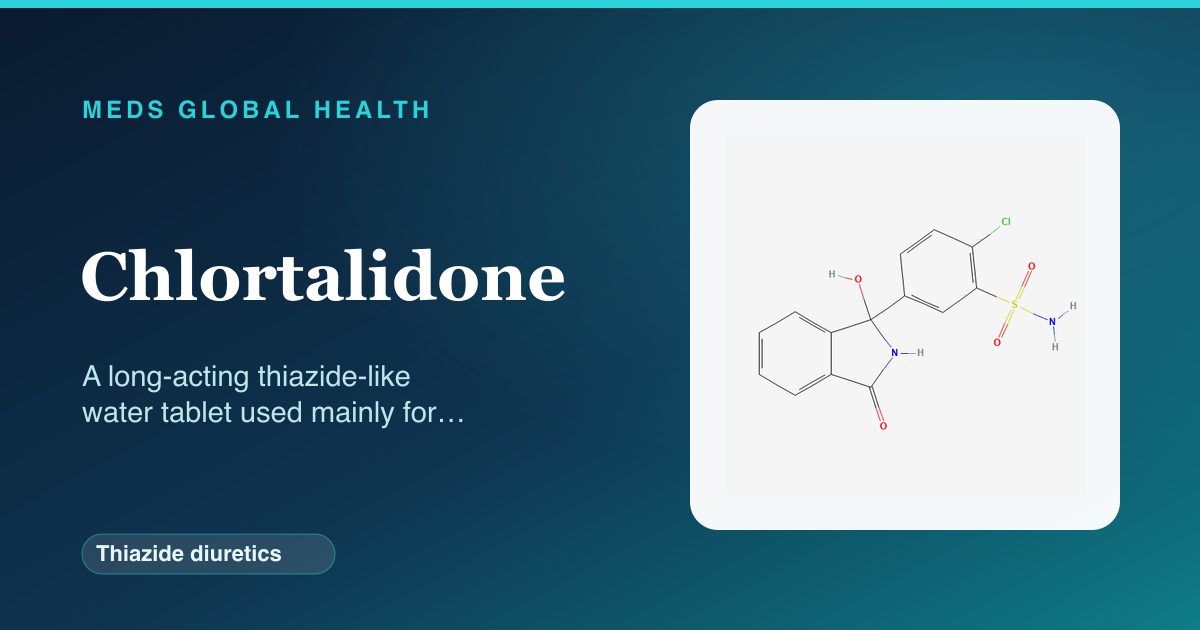
What it is
Chlortalidone is a thiazide-like diuretic, a type of 'water tablet' used mainly to lower high blood pressure and sometimes to ease fluid retention (oedema). It is long-acting, so a single morning dose works through the day. As a long-term blood-pressure treatment it works steadily in the background to reduce the risk of heart attacks and strokes over time.
How it works
Chlortalidone acts on the kidneys to make them pass out more salt (sodium) and water in the urine. In the longer term, its main blood-pressure-lowering effect comes from relaxing and reducing resistance in the blood vessels. Together this lowers blood pressure and removes excess fluid.
What it treats
Conditions Chlortalidone is used for
Practical use
How to take Chlortalidone
General, dose-free guidance — always follow your prescriber's and the leaflet's specific instructions.
- Take it once in the morning so increased urination does not disturb your sleep.
- Swallow with water, with or without food.
- Keep taking it regularly for blood pressure, even though you will not feel the benefit day to day.
- Attend for blood tests as arranged, to check your salts, sugar and kidney function.
- Use sun protection, as your skin may be more sensitive to sunlight.
- Report symptoms of low salts, such as muscle cramps, weakness, confusion or feeling very unwell.
Weighing it up
Advantages & disadvantages of Chlortalidone
Advantages
- Long-acting, so a single morning dose lasts through the day.
- Well-established at lowering blood pressure and reducing the risk of heart attacks and strokes.
- A low-cost, simple once-daily tablet.
Disadvantages
- Can lower the body's potassium and sodium, needing blood-test monitoring.
- May raise blood sugar and uric acid, sometimes triggering gout.
- Increases urination, and can make the skin more sensitive to sunlight.
Practical use
Good to know
It is usually taken once in the morning, so the extra urine it produces does not interrupt your sleep. Because it changes the body's salt balance, blood tests are used to check sodium and potassium — a low potassium or sodium level can cause symptoms such as cramps, weakness or feeling unwell. It can also raise blood sugar and uric acid, so it may trigger gout in those prone to it, and your skin can become more sensitive to sunlight.
Who should not take it / use with caution
- People who have had a serious reaction to chlortalidone or related sulfonamide medicines.
- Those with a very low blood sodium or potassium level, significant kidney problems, or untreated Addison's disease.
- Used with caution in gout, diabetes, and during pregnancy or breastfeeding, where it is generally avoided.
Monitoring
- Blood pressure
- Blood salts (sodium and potassium) and kidney function before and after starting
- Blood sugar and uric acid where relevant
Side effects
- Increased urination, especially after the morning dose.
- Dizziness or light-headedness, and disturbances in blood salts (low potassium or sodium) that may cause cramps, weakness or tiredness.
- Raised blood sugar or uric acid (which can bring on gout), and increased sensitivity to sunlight; rarely, more serious salt or kidney disturbances.
Key interactions
- NSAID painkillers (e.g. ibuprofen) can reduce its effect and stress the kidneys.
- Combining with other blood-pressure medicines adds to the lowering effect; care with medicines that also alter potassium.
- Can affect lithium levels and interact with some heart-rhythm medicines and diabetes treatments.
Available as: Tablets.
Answers
Chlortalidone: frequently asked questions
Why should I take chlortalidone in the morning?
Because it increases how much you urinate, taking it in the morning means the extra trips to the toilet happen during the day rather than disturbing your sleep at night.
Why do I need blood tests on it?
It can change the levels of salts such as potassium and sodium in your blood, and can affect blood sugar, uric acid and kidney function. Blood tests let your prescriber check these and adjust treatment if needed.
Can it cause gout?
It can. Chlortalidone can raise uric acid levels, which may trigger an attack of gout in people who are prone to it. Tell your prescriber if you have had gout before or develop a painful, swollen joint.
Will it make me more sensitive to the sun?
It can make your skin burn more easily, so use sun protection and avoid prolonged strong sun or sunbeds, particularly when you first start it.
Do I still need it if my blood pressure is now normal?
Usually yes. Your blood pressure is controlled because the tablet is working; stopping it generally allows the pressure to rise again. Don't stop without discussing it with your prescriber.
The wider class
About Thiazide diuretics
Chlortalidone belongs to the thiazide diuretics class. For how the class as a whole works, its shared safety principles and monitoring, see the full guide.
Browse by body system
Authoritative sources
- BNF: Chlortalidone.
- NICE CKS: Thiazide diuretics.
- NICE: Hypertension in adults.
Building a medicines information resource?
We create evidence-led, dose-free drug and formulary references for teams.