A thiazide diuretic ("water tablet")
Hydrochlorothiazide
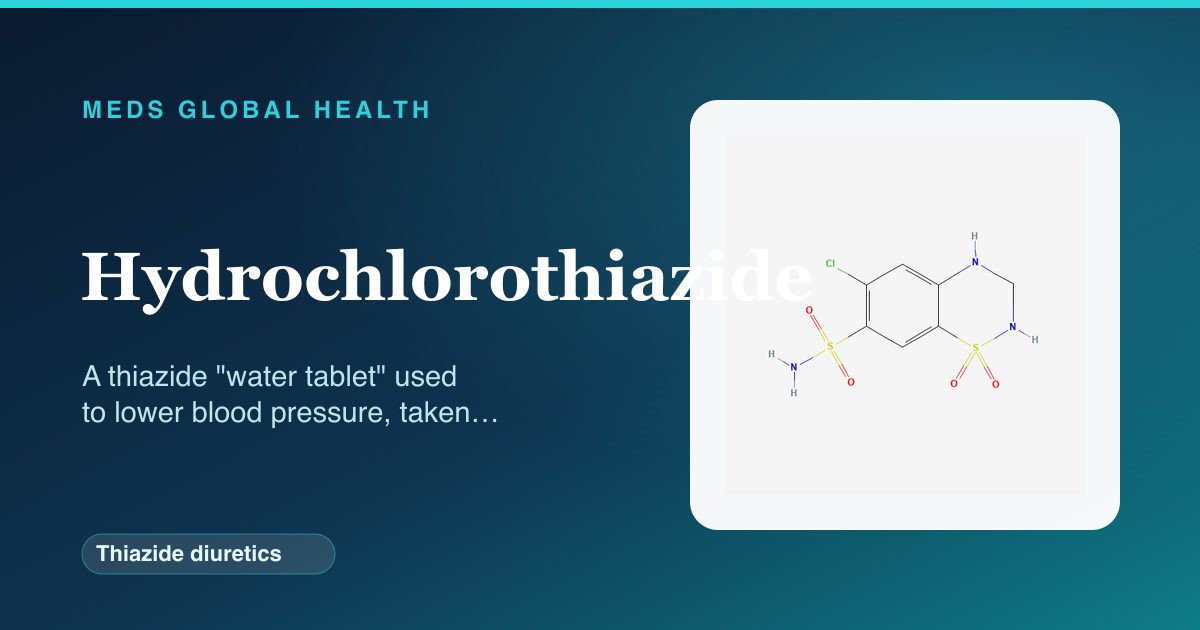
A thiazide "water tablet" used to lower blood pressure, taken in the morning and often combined with other blood-pressure medicines.
What is Hydrochlorothiazide?
Hydrochlorothiazide is a thiazide diuretic, a type of water tablet used mainly to lower blood pressure. It works by helping the kidneys remove extra salt and water from the body, which eases the load on the heart and blood vessels.
Education and reference only. This is a plain-language guide to Hydrochlorothiazide — it deliberately contains no doses. Doses depend on the person, the brand and the reason for treatment, and belong with your prescriber. Always check the BNF, the product labelling (SmPC) and follow medical advice.
What it is
Hydrochlorothiazide is a thiazide diuretic — a "water tablet" — used mainly to lower blood pressure. It is one of the most established blood-pressure treatments worldwide. In the UK a closely related thiazide-like diuretic, indapamide, is more often chosen first, but hydrochlorothiazide is very common internationally and frequently appears as one half of a fixed-dose combination tablet alongside an ACE inhibitor or ARB. It is a long-term, once-daily tablet that works gently in the background rather than producing an effect you feel from day to day.
How it works
Hydrochlorothiazide acts on the kidneys, where it reduces how much salt (sodium) the kidney reabsorbs back into the body. With more salt and water leaving in the urine, the volume of fluid in the circulation falls a little, and over the longer term the blood vessels also relax. Both effects lower blood pressure. Because the body adjusts the salt balance, the modest extra urine production settles after the first days, but the blood-pressure-lowering effect continues.
Company & origin
Originated / developed by: Merck (and Ciba).
Hydrochlorothiazide was developed in the late 1950s, growing out of carbonic anhydrase/sulfonamide diuretic research; it was synthesised by chemists including George deStevens at Ciba, and Merck & Co. brought it to market around 1959. It became one of the first widely used thiazide diuretics.
What it treats
Conditions Hydrochlorothiazide is used for
Practical use
How to take Hydrochlorothiazide
General, dose-free guidance — always follow your prescriber's and the leaflet's specific instructions.
- Take it in the morning so that the extra trips to the toilet do not disturb your sleep.
- Take it at the same time each day, with or without food.
- Expect blood tests to monitor your salts (such as potassium and sodium) and kidney function.
- Tell your doctor if you become very thirsty, weak, dizzy or develop muscle cramps.
- Use sun protection, as your skin may become more sensitive to sunlight.
Weighing it up
Advantages & disadvantages of Hydrochlorothiazide
Advantages
- An effective and well-established treatment for high blood pressure.
- Reduces the risk of stroke and heart problems linked to high blood pressure.
- Taken once a day and low in cost.
- Often combined with other blood-pressure medicines for better control.
Disadvantages
- Can lower potassium, sodium and other salts, sometimes causing weakness or cramps.
- May raise blood sugar, uric acid (gout) and cholesterol in some people.
- Increases the need to pass urine, which can be inconvenient.
- Can make the skin more sensitive to sunlight.
- Needs regular blood tests, particularly when starting or changing the dose.
Practical use
Good to know
It is best taken in the morning, because as a water tablet it increases urine production and an evening dose can disturb sleep with night-time trips to the toilet. It is taken long-term and often partnered with another blood-pressure medicine — many people take it as part of a single combination tablet. It can lower blood levels of potassium and sodium and can nudge blood sugar and uric acid upwards, which is why it can occasionally trigger gout; blood tests keep an eye on this. People who burn easily may notice increased sensitivity to sunlight.
Who should not take it / use with caution
- People with a significantly low blood potassium or sodium level, or severe kidney or liver impairment.
- People with gout or high uric acid levels are treated with caution, as thiazides can provoke an attack.
- Used with caution in diabetes (blood sugar can rise) and avoided in people with a known sulfonamide-related sensitivity to it.
Monitoring
- Blood pressure
- Kidney function and blood salts (potassium, sodium) before and after starting
- Blood sugar and uric acid where relevant
Side effects
- Increased urine production, especially in the first days, and sometimes dizziness or light-headedness from gentle fluid loss.
- Changes in blood salts — a fall in potassium or sodium — and a rise in blood sugar or uric acid (which can bring on gout); these are watched with blood tests.
- Increased sensitivity of the skin to sunlight, and uncommonly a rash; very rarely a more serious reaction.
Key interactions
- Other medicines that lower potassium or affect heart rhythm need care, as low potassium can be a problem when they are combined.
- NSAID painkillers (e.g. ibuprofen) can blunt its effect and stress the kidneys, especially alongside an ACE inhibitor or ARB.
- Care with lithium (levels can rise) and with other blood-pressure-lowering medicines, which can add to its effect.
Available as: Tablets, often as part of a fixed-dose combination with an ACE inhibitor or ARB.
Answers
Hydrochlorothiazide: frequently asked questions
Why should I take hydrochlorothiazide in the morning?
It is a "water tablet", so it makes you pass more urine, particularly in the first days of taking it. Taking it in the morning means this happens during the day rather than disturbing your sleep with night-time trips to the toilet.
Can hydrochlorothiazide cause gout?
It can. Thiazide diuretics can raise the level of uric acid in the blood, and in people who are prone to gout this can occasionally trigger an attack. If you have had gout, mention it to your prescriber, who may choose a different medicine or keep a closer eye on you.
Do I need blood tests while taking it?
Yes, usually. Because it can lower potassium and sodium and nudge up blood sugar and uric acid, your prescriber will check your kidney function and blood salts around starting it and from time to time afterwards. These tests are routine and reassuring.
Is hydrochlorothiazide the same as the water tablet used in the UK?
It is the same type of medicine, but in the UK a closely related thiazide-like diuretic called indapamide is more often chosen first for blood pressure. Hydrochlorothiazide is used worldwide and frequently appears in the UK as one half of a combination tablet with an ACE inhibitor or ARB.
What is the difference between hydrochlorothiazide and Microzide?
They are the same medicine — hydrochlorothiazide is the generic (active-ingredient) name and Microzide is a US brand name. In the UK it is almost always supplied as the generic. The active ingredient is identical.
The wider class
About Thiazide diuretics
Hydrochlorothiazide belongs to the thiazide diuretics class. For how the class as a whole works, its shared safety principles and monitoring, see the full guide.
Browse by body system
Authoritative sources
- BNF: Hydrochlorothiazide.
- NICE NG136: Hypertension in adults.
- NICE CKS: Thiazide diuretics.
Building a medicines information resource?
We create evidence-led, dose-free drug and formulary references for teams.