An antiplatelet
Dipyridamole
An antiplatelet, often combined with aspirin, used to help prevent further strokes after a stroke or TIA.
What is Dipyridamole?
Dipyridamole is an antiplatelet medicine that helps stop platelets clumping together to form clots. It is used, often together with low-dose aspirin, to reduce the risk of another stroke or mini-stroke (TIA). Headache is common in the first days but usually settles, and it is taken with food.
Education and reference only. This is a plain-language guide to Dipyridamole — it deliberately contains no doses. Doses depend on the person, the brand and the reason for treatment, and belong with your prescriber. Always check the BNF, the product labelling (SmPC) and follow medical advice.
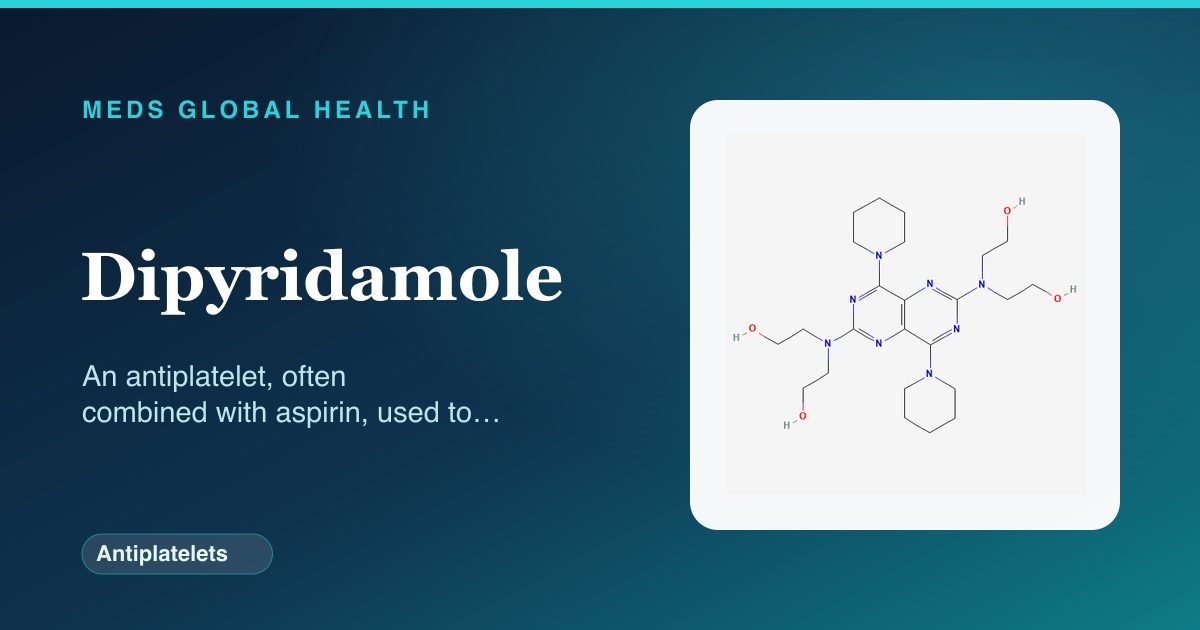
What it is
Dipyridamole is an antiplatelet medicine used mainly to prevent a further stroke or mini-stroke (transient ischaemic attack, or TIA). It is frequently prescribed alongside low-dose aspirin, and a combined modified-release form is widely used in the UK for this purpose. It is also sometimes used in a hospital test of the heart and around mechanical heart valves. Its job is to keep the blood from forming clots in the brain's blood vessels.
How it works
Dipyridamole makes platelets less sticky in a different way from aspirin. It raises the levels of natural signalling chemicals around platelets and affects how they take up a substance called adenosine, which together discourage platelets from activating and clumping. By widening some blood vessels and reducing platelet clumping, it lowers the chance of a clot forming and blocking blood flow to the brain.
Company & origin
Originated / developed by: Originally developed by Boehringer Ingelheim..
In use for many decades, dipyridamole has long been established in the UK for preventing clots after a stroke or TIA.
What it treats
Conditions Dipyridamole is used for
Practical use
How to take Dipyridamole
General, dose-free guidance — always follow your prescriber's and the leaflet's specific instructions.
- Take it with food, usually twice a day, at about the same times.
- Swallow modified-release capsules whole — do not crush, open or chew them.
- Keep taking it even if you get a headache at first; this usually settles within a week or two.
- Continue your aspirin too if it has been prescribed alongside.
- If a dose is missed, take it when you remember unless the next is near, then skip it — do not double up.
Weighing it up
Advantages & disadvantages of Dipyridamole
Advantages
- Adds extra protection against further strokes when combined with aspirin.
- Long track record of use in the UK for stroke and TIA prevention.
- Available as a convenient combined modified-release product with aspirin.
Disadvantages
- Headache is common early on and puts some people off continuing.
- Needs to be taken more than once a day and with food, which is less convenient.
- Like all antiplatelets, it raises the risk of bruising and bleeding.
Practical use
Good to know
Dipyridamole is taken with food, usually twice a day, and the modified-release capsules must be swallowed whole rather than crushed or chewed. A throbbing headache is common when you first start and is the most frequent reason people want to stop — it usually eases over the first week or two, so it is worth persevering, and simple painkillers can help. Because it thins the blood, watch for bruising or bleeding, and tell healthcare staff you take it before any procedure.
Who should not take it / use with caution
- People with active bleeding or a high risk of serious bleeding.
- People with certain unstable heart conditions, such as recent or unstable angina or severe heart-valve narrowing — discuss with your specialist.
- Used with caution in low blood pressure and in some people having heart investigations.
Monitoring
- Watching for bruising or bleeding
- Checking that early headaches are settling
- Blood pressure in people prone to dizziness or low blood pressure
Side effects
- Headache, especially in the first days — usually eases with time.
- Dizziness, flushing, an upset stomach or diarrhoea.
- Easier bruising and bleeding; rarely, worsening chest pain in people with heart disease.
Key interactions
- Other antiplatelets and anticoagulants (such as aspirin, clopidogrel or warfarin) add to bleeding risk.
- It can interact with adenosine used in heart tests and with some blood-pressure medicines.
- Tell your team about all your medicines before starting it.
Available as: Tablets and modified-release capsules; also a form combined with aspirin.
Answers
Dipyridamole: frequently asked questions
I keep getting headaches on dipyridamole — should I stop?
Headache is the most common early side effect and usually settles within a week or two as your body adjusts. It is worth continuing if you can, and a simple painkiller may help; speak to your pharmacist or prescriber rather than stopping suddenly.
Why do I take it with aspirin?
Combining dipyridamole with low-dose aspirin gives better protection against a further stroke or TIA than aspirin alone for many people. Your stroke team decides the best combination for you.
Can I crush the capsules if I find them hard to swallow?
No — the modified-release capsules are designed to release slowly and must be swallowed whole. If swallowing is a problem, ask your pharmacist about alternative options.
What is the difference between dipyridamole and Persantin?
They are the same medicine. Dipyridamole is the generic name and Persantin is a brand name; both contain the same active ingredient.
Does it cause bleeding like other blood thinners?
Yes, it can increase bruising and bleeding, especially alongside aspirin. Report any heavy or unusual bleeding, and tell healthcare staff you take it before surgery or dental work.
The wider class
About Antiplatelets
Dipyridamole belongs to the antiplatelets class. For how the class as a whole works, its shared safety principles and monitoring, see the full guide.
Browse by body system
Authoritative sources
- BNF: Dipyridamole.
- NICE CKS: Antiplatelet medicines.
Building a medicines information resource?
We create evidence-led, dose-free drug and formulary references for teams.