An anti-tuberculosis (TB) antibiotic
Ethambutol
An antibiotic used as part of tuberculosis (TB) treatment, given together with other TB medicines.
What is Ethambutol?
Ethambutol is an antibiotic used as part of standard tuberculosis (TB) treatment, always combined with other TB medicines. Its most important caution is that it can occasionally affect the eyes, causing changes in vision or colour vision, so eyesight is checked before treatment and any visual change must be reported straight away. As with all TB treatment, the full course must be completed even after symptoms settle.
Education and reference only. This is a plain-language guide to Ethambutol — it deliberately contains no doses. Doses depend on the person, the brand and the reason for treatment, and belong with your prescriber. Always check the BNF, the product labelling (SmPC) and follow medical advice.
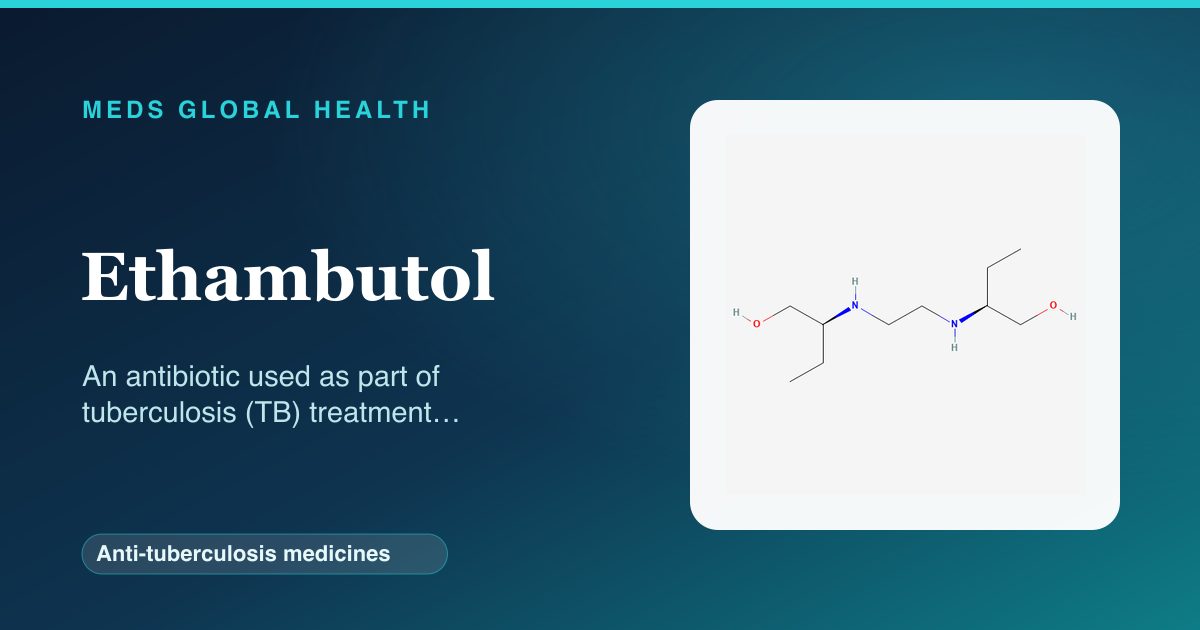
What it is
Ethambutol is an antibiotic used in the UK as one part of tuberculosis (TB) treatment, always combined with other TB medicines during the early phase of a course that lasts several months. It is included to help kill the bacteria and reduce the chance of resistance developing. Like all TB treatment, it must be taken exactly as prescribed and the course completed in full.
How it works
Ethambutol interferes with the way TB bacteria build their protective cell wall, which stops them multiplying and helps the other TB medicines clear the infection. It is used alongside several other medicines so the bacteria are attacked in different ways at once, improving cure rates and reducing the risk of resistance. It works specifically against TB-type bacteria and has no effect on ordinary infections such as colds or flu.
Company & origin
Originated / developed by: A core anti-tuberculosis medicine.
An antibiotic used in the UK as part of standard tuberculosis (TB) treatment, alongside other TB medicines.
Practical use
How to take Ethambutol
General, dose-free guidance — always follow your prescriber's and the leaflet's specific instructions.
- Take it exactly as prescribed and complete the whole course, even after symptoms improve.
- It can be taken with or without food, at the same time each day.
- Have your eyesight checked as advised, and report any change in vision or colour vision immediately.
- Tell your team about any kidney problems, as the dose may need adjusting.
- If you miss a dose, take it as soon as you remember unless it is nearly time for the next; do not double up, and tell your team about missed doses.
Weighing it up
Advantages & disadvantages of Ethambutol
Advantages
- An effective part of combination tuberculosis treatment.
- Helps reduce the risk of TB becoming resistant to other medicines.
- Generally well tolerated, with eye effects usually reversible if caught early.
Disadvantages
- Can occasionally affect the eyes, including vision and colour vision.
- Needs dose adjustment in people with reduced kidney function.
- Requires a long course and strict adherence to work properly.
Practical use
Good to know
The most important safety point with ethambutol is that it can occasionally affect the eyes, causing blurred vision, reduced vision or difficulty telling colours (especially red and green) apart. Eyesight is usually checked before starting treatment, and you should report any change in vision, however slight, straight away, as stopping the medicine early usually allows vision to recover. It can be taken with or without food. Doses are adjusted carefully if the kidneys are not working well, since the medicine is cleared by the kidneys. As with all TB medicines, the full course must be completed exactly as prescribed, even after you feel better.
Who should not take it / use with caution
- People who have had a serious reaction to ethambutol should not take it.
- Used with great caution, or avoided, in people with existing eye disease (such as optic neuritis) or those who cannot report visual changes reliably.
- Used carefully with dose adjustment in people with reduced kidney function, and reviewed in pregnancy or breastfeeding.
Monitoring
- Eyesight, including colour vision, before and during treatment.
- Kidney function, as this affects how the medicine is cleared.
- Response of the infection and adherence to the full course.
Side effects
- Eye problems — blurred or reduced vision, or difficulty telling colours apart — which must be reported immediately.
- Nausea, tummy upset or reduced appetite.
- Less commonly, joint aches, rashes or, rarely, allergic reactions.
Key interactions
- Certain indigestion remedies (antacids) may reduce how well it is absorbed if taken at the same time.
- Other medicines that can affect the eyes or nerves may add to the risk, so these are reviewed.
- Always tell your team and pharmacist about all your medicines before starting anything new.
Available as: Tablets; also combined with other TB medicines in single tablets in some cases.
Answers
Ethambutol: frequently asked questions
What is ethambutol used for?
It is an antibiotic used as part of tuberculosis (TB) treatment, always alongside other TB medicines. It helps kill the bacteria and reduce the chance of resistance, and it does not work against everyday infections like colds.
Why is my eyesight checked during ethambutol treatment?
Ethambutol can occasionally affect the eyes, causing changes in vision or colour vision, so eyesight is checked before and during treatment. Report any visual change straight away — stopping the medicine early usually allows vision to recover.
What eye symptoms should I report?
Report any blurred vision, reduced vision, or difficulty telling colours (especially red and green) apart, however slight. Acting quickly is important, so do not wait — contact your team as soon as you notice any change.
Can ethambutol be used if I have kidney problems?
Yes, but the dose usually needs adjusting because the medicine is cleared by the kidneys. Tell your team about any kidney problems so they can prescribe and monitor it safely.
Why must I finish the whole course?
TB bacteria clear slowly, so several medicines including ethambutol are taken together for months to cure the infection and prevent resistance. Keep taking it exactly as prescribed, even after you feel well.
The wider class
About Anti-tuberculosis medicines
Ethambutol belongs to the anti-tuberculosis medicines class. For how the class as a whole works, its shared safety principles and monitoring, see the full guide.
Browse by body system
Authoritative sources
- BNF
- NICE CKS
Building a medicines information resource?
We create evidence-led, dose-free drug and formulary references for teams.