An antibiotic used in a short regimen for highly drug-resistant TB
Pretomanid
An antibiotic used only as part of a short combination regimen, with bedaquiline and linezolid, for highly drug-resistant tuberculosis.
What is Pretomanid?
Pretomanid is a specialist antibiotic used as part of a short combination treatment for highly drug-resistant tuberculosis (TB), the hardest-to-treat forms where many other medicines no longer work. It is always used together with two other medicines, bedaquiline and linezolid, and never on its own. It is taken by mouth. Important safety points across this regimen include effects on the liver, nerve damage affecting the hands, feet and sometimes the eyes (largely from the linezolid partner), and effects on the heart's rhythm (the QT interval). It is given only under close specialist supervision with regular monitoring.
Education and reference only. This is a plain-language guide to Pretomanid — it deliberately contains no doses. Doses depend on the person, the brand and the reason for treatment, and belong with your prescriber. Always check the BNF, the product labelling (SmPC) and follow medical advice.
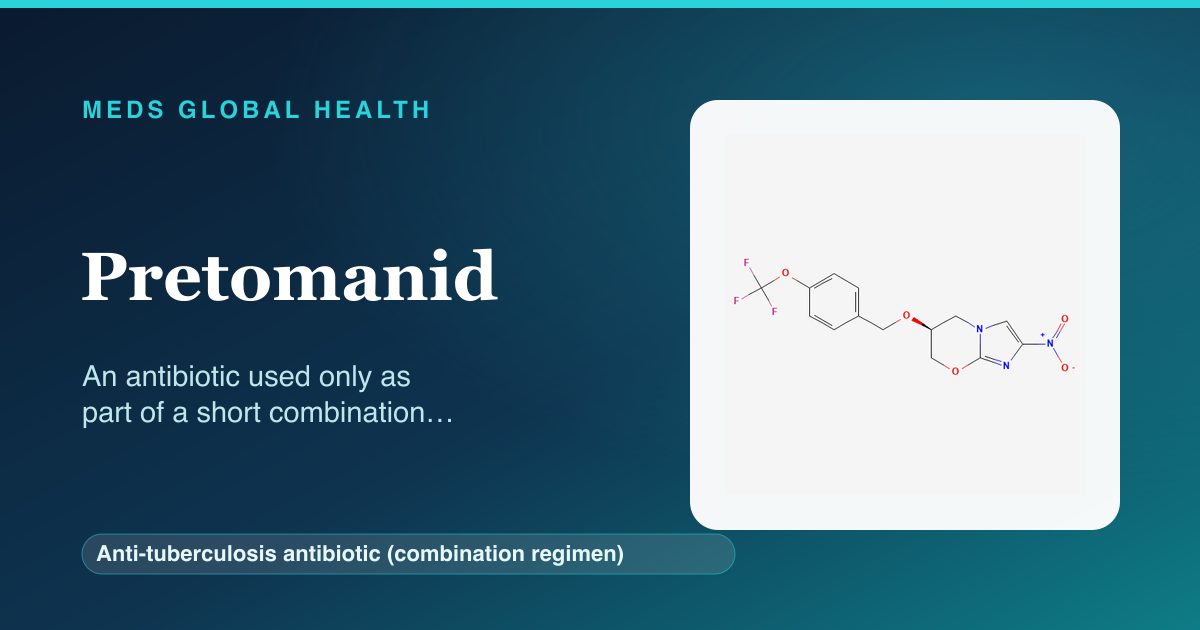
What it is
Pretomanid is an antibiotic used to help treat highly drug-resistant forms of tuberculosis, where the bacteria are no longer killed by most of the usual TB medicines. It is licensed to be used only as part of a specific short combination regimen, together with bedaquiline and linezolid, and is not used alone or swapped freely into other regimens. It is taken by mouth as a tablet. Because the combination is powerful and can have significant effects, it is prescribed and closely supervised by a specialist TB service with careful monitoring throughout.
How it works
Pretomanid attacks the tuberculosis bacteria in more than one way, including disrupting how they make the building blocks of their protective coat and how they handle energy, which helps kill the bacteria. It is used alongside bedaquiline and linezolid so the bacteria are hit from several directions at once; this combined attack is what makes a shorter course possible and helps prevent further resistance. Using these medicines together rather than one at a time is essential, because a single TB medicine on its own allows resistance to develop. The full course must be completed for the treatment to work.
Company & origin
A specialist antibiotic used in the UK as part of a short combination regimen for highly drug-resistant tuberculosis, under specialist supervision.
Practical use
How to take Pretomanid
General, dose-free guidance — always follow your prescriber's and the leaflet's specific instructions.
- Take it by mouth as prescribed, always together with bedaquiline and linezolid as the set combination.
- Never take it on its own, as a single TB medicine alone lets resistance develop.
- Report any yellowing of the skin or eyes, dark urine or feeling very unwell, as these can signal a liver problem.
- Report new numbness, tingling, pain or weakness in the hands or feet, or any change in your eyesight, promptly.
- Complete the full course exactly as prescribed, even when you feel better, to cure the infection and prevent resistance.
Weighing it up
Advantages & disadvantages of Pretomanid
Advantages
- Helps treat highly drug-resistant tuberculosis that most other medicines can no longer clear.
- As part of its combination, it can allow a shorter overall course than older regimens.
- Taken by mouth as part of an all-tablet treatment regimen.
Disadvantages
- Must only ever be used as part of the set combination with bedaquiline and linezolid.
- The regimen can affect the liver, the nerves and eyes, and the heart's rhythm, so close monitoring is needed.
- Requires specialist supervision and consistent, complete treatment to work.
Practical use
Good to know
The key point is that pretomanid is only ever used as part of the set combination with bedaquiline and linezolid, never on its own, and the safety picture comes from the whole regimen. The combination can affect the liver, so liver blood tests are done and any yellowing of the skin or eyes, dark urine or feeling very unwell should be reported at once. Nerve damage causing numbness, tingling, pain or weakness in the hands and feet, and sometimes problems with vision, can occur, largely from the linezolid partner, so new numbness, tingling or any change in eyesight must be reported promptly. The regimen can also affect the heart's electrical rhythm (the QT interval), which is checked. Taking every medicine consistently and completing the full course is essential.
Who should not take it / use with caution
- People who have had a serious allergic reaction to pretomanid should not take it.
- It is used with caution, or avoided, in people with significant liver problems or certain heart-rhythm problems.
- It is only used as part of its set combination regimen under a specialist tuberculosis service.
Monitoring
- Regular liver blood tests and watching for signs of liver problems such as jaundice.
- Checking for nerve symptoms in the hands and feet and for any change in eyesight.
- Heart-rhythm (QT) checks and blood counts during treatment.
Side effects
- Liver inflammation (hepatitis), which liver blood tests are used to detect.
- Nerve damage causing numbness, tingling or pain in the hands and feet, and sometimes vision problems, largely from the linezolid partner.
- Changes in the heart's rhythm (the QT interval), and stomach upset, headache or low blood counts as part of the regimen.
Key interactions
- Other medicines that affect the liver add to the risk, so a full medicines list is important.
- Medicines that affect the heart's QT interval are reviewed when using this regimen.
- Some medicines can change how well the regimen works, so tell your specialist everything you take.
Available as: Tablets taken by mouth, as part of a combination regimen.
Answers
Pretomanid: frequently asked questions
What is pretomanid used for?
It is used as part of a short combination regimen, with bedaquiline and linezolid, to treat highly drug-resistant tuberculosis where most other medicines no longer work.
Can it be used on its own?
No. Pretomanid is only ever used as part of its set combination with bedaquiline and linezolid, because a single TB medicine alone allows resistance to develop.
What are the main safety concerns?
Across the regimen the main concerns are effects on the liver, nerve damage in the hands, feet and sometimes the eyes (largely from linezolid), and effects on the heart's rhythm, all of which are monitored.
Why do I need so many tests during treatment?
Regular liver blood tests, nerve and eyesight checks, heart-rhythm checks and blood counts are used to catch and manage the regimen's possible effects early.
Can I stop once I feel better?
No. The full course must be completed exactly as prescribed, even when you feel well, to cure the infection and prevent further resistance.
The wider class
About Anti-tuberculosis antibiotic (combination regimen)
Pretomanid belongs to the anti-tuberculosis antibiotic (combination regimen) class. For how the class as a whole works, its shared safety principles and monitoring, see the full guide.
Browse by body system
Authoritative sources
- BNF
- NICE CKS
Building a medicines information resource?
We create evidence-led, dose-free drug and formulary references for teams.