A rifamycin antibiotic for mycobacterial infections
Rifabutin
A specialist antibiotic used for mycobacterial infections such as MAC and tuberculosis, often alongside HIV medicines.
What is Rifabutin?
Rifabutin is a rifamycin antibiotic used to treat and prevent infections caused by mycobacteria, including Mycobacterium avium complex (MAC) and tuberculosis, often in people with HIV. A well-known and harmless effect is an orange-red colouring of urine, tears and other body fluids, which can stain soft contact lenses. More important are its tendency to lower blood counts, to cause eye inflammation (uveitis), and the fact that it speeds up the breakdown of many other medicines, so it interacts widely and is chosen partly because it interacts a little less than rifampicin with HIV drugs.
Education and reference only. This is a plain-language guide to Rifabutin — it deliberately contains no doses. Doses depend on the person, the brand and the reason for treatment, and belong with your prescriber. Always check the BNF, the product labelling (SmPC) and follow medical advice.
What it is
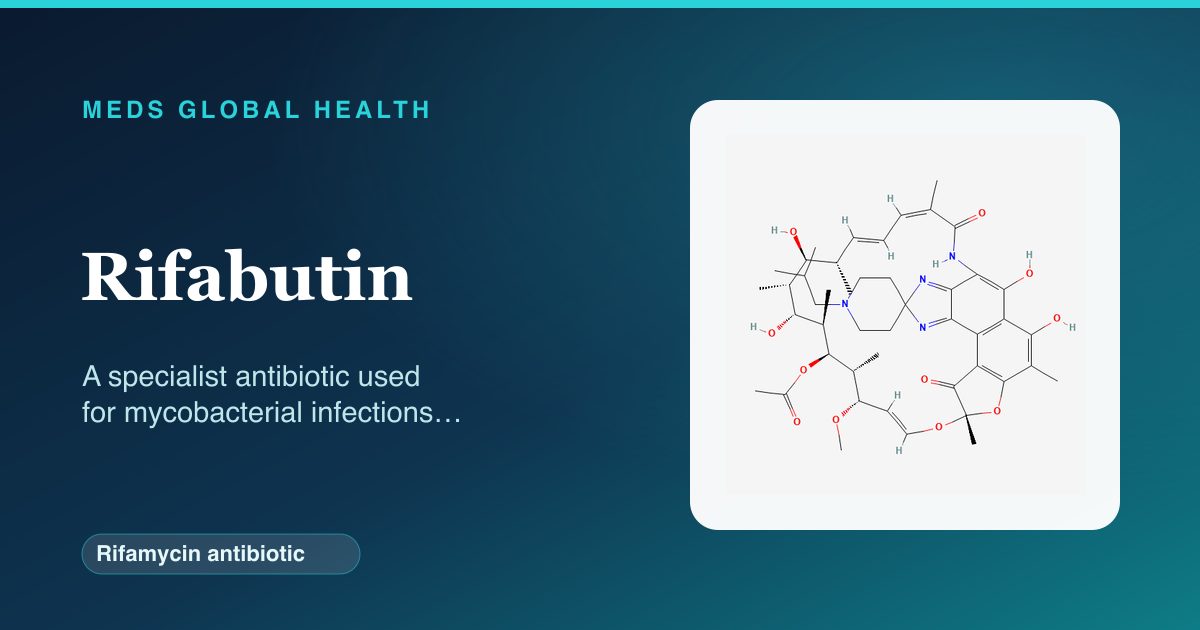
Rifabutin is an antibiotic of the rifamycin family, related to rifampicin, used against mycobacteria, the family of bacteria that cause tuberculosis and infections such as Mycobacterium avium complex (MAC). It is used both to treat these infections and to help prevent MAC in people with weakened immune systems, particularly those with advanced HIV. It is taken by mouth and is usually part of a combination of medicines rather than used alone for an active infection. It is a specialist medicine because it interacts with many other drugs and needs monitoring.
How it works
Rifabutin kills mycobacteria by blocking an enzyme they need to make the genetic material that lets them multiply, which is why it is effective against tuberculosis and MAC. Because mycobacteria are slow-growing and stubborn, it is used alongside other antibiotics over a long course to clear or control the infection and to stop resistance developing. It also switches on the body's drug-clearing enzymes, which speeds up the breakdown of many other medicines, including some HIV treatments; this is the main reason it interacts so widely and why doses of it and of other medicines often have to be adjusted.
Company & origin
A specialist antibiotic used in the UK for mycobacterial infections such as MAC and tuberculosis, often in people with HIV.
Practical use
How to take Rifabutin
General, dose-free guidance — always follow your prescriber's and the leaflet's specific instructions.
- Take it by mouth as prescribed, usually as part of a combination of medicines, and complete the full course.
- Do not be alarmed by orange-red urine, tears or sweat; this is harmless, but it can stain soft contact lenses, so consider glasses.
- Report eye pain, redness or blurred vision promptly, as it can cause inflammation inside the eye.
- Give your team a full list of all your medicines, as rifabutin interacts with many of them and doses may need adjusting.
- Keep your blood-test and review appointments, as it can affect your blood counts.
Weighing it up
Advantages & disadvantages of Rifabutin
Advantages
- Effective against mycobacterial infections such as MAC and tuberculosis.
- Useful for treating and helping prevent MAC in people with weakened immune systems.
- Interacts a little less than rifampicin with certain HIV medicines, which can make combinations easier.
Disadvantages
- Causes harmless orange-red colouring of body fluids and can permanently stain soft contact lenses.
- Can lower blood counts and can cause inflammation inside the eye (uveitis).
- Speeds up the breakdown of many other medicines, so it interacts widely.
Practical use
Good to know
The most striking but harmless effect is that rifabutin turns urine, sweat, tears and other body fluids an orange-red colour, and it can permanently stain soft contact lenses, so glasses may be preferable during treatment. The most important safety points are three: it can lower blood counts (especially white cells and platelets), so blood tests are done; it can cause inflammation inside the eye (uveitis), with eye pain, redness or blurred vision that must be reported promptly; and it speeds up the breakdown of many other medicines, so a full medicines list is essential and doses often need adjusting, particularly with HIV treatments. It is chosen over rifampicin in some HIV situations precisely because it interferes a little less with certain HIV drugs. Take it regularly and complete the full course, and keep up your monitoring appointments.
Who should not take it / use with caution
- People who have had a serious allergic reaction to rifabutin or other rifamycins (such as rifampicin) should not take it.
- It is used with caution and monitoring in people with low blood counts or liver problems.
- It is used with great care alongside many other medicines, with dose adjustments, because of its strong interaction effects.
Monitoring
- Regular blood counts to watch for a drop in white cells or platelets.
- Watching for eye symptoms such as pain, redness or blurred vision, which can signal uveitis.
- Reviewing other medicines and liver function, and adjusting doses for interactions.
Side effects
- A harmless orange-red colouring of urine, tears, sweat and other fluids, which can stain soft contact lenses.
- Nausea or stomach upset.
- Lower blood counts, particularly white cells and platelets, which monitoring is designed to catch.
- Inflammation inside the eye (uveitis), with eye pain, redness or blurred vision, which needs prompt attention.
Key interactions
- It speeds up the breakdown of many medicines, making them less effective, including some HIV treatments, so doses often need adjusting.
- It can make hormonal contraception, such as the pill, less reliable, so additional or alternative contraception is needed.
- Some medicines, particularly certain HIV drugs, raise rifabutin's level and the risk of side effects, so its dose may be reduced.
Available as: Capsules taken by mouth.
Answers
Rifabutin: frequently asked questions
What is rifabutin used for?
It is used to treat and help prevent mycobacterial infections such as Mycobacterium avium complex (MAC) and tuberculosis, often in people with HIV.
Why has my urine turned orange-red?
Rifabutin harmlessly colours urine, tears, sweat and other body fluids orange-red; it can permanently stain soft contact lenses, so glasses may be better.
What eye problems should I watch for?
It can cause inflammation inside the eye (uveitis); report eye pain, redness or blurred vision promptly so it can be checked and treated.
Why does my team need my full medicines list?
Rifabutin speeds up the breakdown of many medicines, including some HIV treatments and hormonal contraception, so doses and methods often need adjusting.
Why blood tests?
It can lower blood counts, particularly white cells and platelets, so regular blood tests are used to catch this early.
The wider class
About Rifamycin antibiotic
Rifabutin belongs to the rifamycin antibiotic class. For how the class as a whole works, its shared safety principles and monitoring, see the full guide.
Browse by body system
Authoritative sources
- BNF
- NICE CKS
Building a medicines information resource?
We create evidence-led, dose-free drug and formulary references for teams.