A core first-line medicine for tuberculosis (TB)
Pyrazinamide
A core first-line anti-tuberculosis medicine used in combination, typically during the first two months of treatment.
What is Pyrazinamide?
Pyrazinamide is a core first-line medicine for treating tuberculosis (TB). It is always used in combination with other anti-TB medicines, not on its own, usually during the intensive first two months of treatment. It works best in the acidic conditions where TB bacteria hide, helping to clear the infection. Its dominant safety concern is liver toxicity (hepatitis), so liver function is monitored. It also raises the level of uric acid in the blood, which can cause joint aches and occasionally trigger gout.
Education and reference only. This is a plain-language guide to Pyrazinamide — it deliberately contains no doses. Doses depend on the person, the brand and the reason for treatment, and belong with your prescriber. Always check the BNF, the product labelling (SmPC) and follow medical advice.
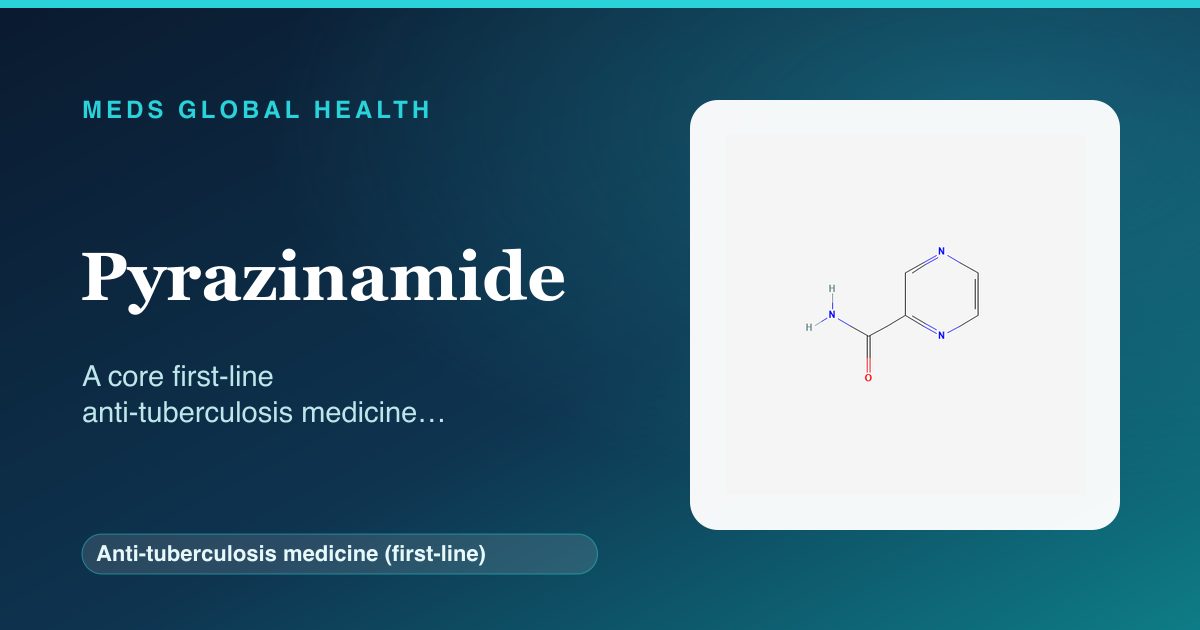
What it is
Pyrazinamide is one of the main first-line medicines used to treat tuberculosis, an infection caused by bacteria that most often affects the lungs. It is never used alone, because TB bacteria quickly become resistant to a single medicine; instead it is combined with other anti-TB medicines, often as part of a fixed combination tablet. It is typically given during the first two months (the 'intensive phase') of the standard six-month course. It is taken by mouth and is prescribed and supervised by a TB specialist team.
How it works
Pyrazinamide is particularly effective at killing tuberculosis bacteria that are sitting in acidic, low-oxygen conditions, such as inside the body's immune cells and in areas of inflammation, where some other TB medicines work less well. By targeting these harder-to-reach bacteria early in treatment, it helps shorten the overall length of TB therapy. Because TB bacteria can develop resistance, it is always combined with other medicines so that the bacteria are attacked in several ways at once, which improves the chance of a cure and reduces the risk of resistance.
Company & origin
A core first-line medicine used in the UK as part of combination treatment for tuberculosis, usually during the first two months of therapy.
Practical use
How to take Pyrazinamide
General, dose-free guidance — always follow your prescriber's and the leaflet's specific instructions.
- Take it by mouth exactly as prescribed, together with your other TB medicines, for the full course.
- Do not stop early even when you feel better, as stopping risks the infection returning and becoming resistant.
- Report yellowing of the skin or eyes, dark urine, persistent nausea, vomiting or tummy pain straight away, as these can signal a liver problem.
- Tell your team about joint pain or a gout flare, which can happen because it raises uric acid levels.
- Tell your team about all other medicines, alcohol use and any liver or kidney conditions.
Weighing it up
Advantages & disadvantages of Pyrazinamide
Advantages
- A core first-line medicine that helps cure tuberculosis as part of combination treatment.
- Especially good at killing TB bacteria hiding in acidic conditions, which helps shorten treatment.
- Taken by mouth, often as part of a convenient fixed combination tablet.
Disadvantages
- Can cause liver toxicity (hepatitis), so liver monitoring is needed.
- Raises uric acid, which can cause joint aches and occasionally trigger gout.
- Must always be taken with other TB medicines and for the full course to work.
Practical use
Good to know
The key things to understand about pyrazinamide are that it is part of a team of TB medicines, taken together for the whole prescribed course, and that completing the full course is vital to cure the infection and prevent resistance. Its dominant safety concern is the liver: it can cause hepatitis (liver inflammation), so liver function is checked and any yellowing of the skin or eyes, dark urine, persistent nausea, vomiting or tummy pain should be reported straight away. It also raises uric acid in the blood, which can cause joint aches and may occasionally trigger an attack of gout. Because of the liver risk, it is used with particular care in people who already have liver problems or who drink heavily, and the whole regimen is supervised by a TB team.
Who should not take it / use with caution
- People who have had a serious allergic reaction to pyrazinamide should not take it.
- It is avoided or used with great care in people with significant liver disease.
- It is used with caution in people with gout or kidney problems, under specialist supervision.
Monitoring
- Liver function blood tests before and during treatment, as liver toxicity is the main risk.
- Watching for signs of a liver problem, such as jaundice, dark urine or persistent nausea.
- Checking uric acid levels or reviewing joint symptoms if gout-like pain develops.
Side effects
- Liver inflammation (hepatitis), which can be serious and needs monitoring.
- Raised uric acid, causing joint aches or, occasionally, an attack of gout.
- Nausea, loss of appetite or flushing of the skin.
Key interactions
- It is used alongside other TB medicines that also affect the liver, adding to the need for monitoring.
- Drinking alcohol adds to the risk of liver damage and is best avoided.
- Tell your team about gout medicines and all other medicines, as combinations need careful review.
Available as: Tablets taken by mouth, including as part of fixed combination tablets.
Answers
Pyrazinamide: frequently asked questions
What is pyrazinamide used for?
It is a core first-line medicine for treating tuberculosis (TB), always used in combination with other anti-TB medicines, usually during the first two months of treatment.
Why is it always taken with other medicines?
TB bacteria can quickly become resistant to a single medicine, so pyrazinamide is combined with others to attack the infection in several ways and improve the chance of a cure.
What is the main risk to watch for?
Its dominant concern is liver toxicity (hepatitis), so liver function is monitored and any jaundice, dark urine or persistent nausea should be reported straight away.
Can it cause gout?
It raises the level of uric acid in the blood, which can cause joint aches and may occasionally trigger an attack of gout, so report joint pain to your team.
Can I stop once I feel better?
No. You must complete the full course with your other TB medicines, as stopping early risks the infection returning and becoming resistant.
The wider class
About Anti-tuberculosis medicine (first-line)
Pyrazinamide belongs to the anti-tuberculosis medicine (first-line) class. For how the class as a whole works, its shared safety principles and monitoring, see the full guide.
Browse by body system
Authoritative sources
- BNF
- NICE CKS
Building a medicines information resource?
We create evidence-led, dose-free drug and formulary references for teams.