A topical retinoid for acne
Adapalene
A topical retinoid (vitamin-A-related) gel for acne, applied at night; expect early dryness and irritation, use sunscreen, and not in pregnancy.
What is Adapalene?
Adapalene is a topical retinoid (related to vitamin A) used as a gel or cream for acne. It unblocks pores and reduces the spots and blackheads of acne, and it is applied at night to clean, dry skin. It often causes dryness, redness and irritation at first and can briefly make spots seem worse before they improve; it makes skin more sensitive to sun, so sunscreen is important, and it should not be used in pregnancy.
Education and reference only. This is a plain-language guide to Adapalene — it deliberately contains no doses. Doses depend on the person, the brand and the reason for treatment, and belong with your prescriber. Always check the BNF, the product labelling (SmPC) and follow medical advice.
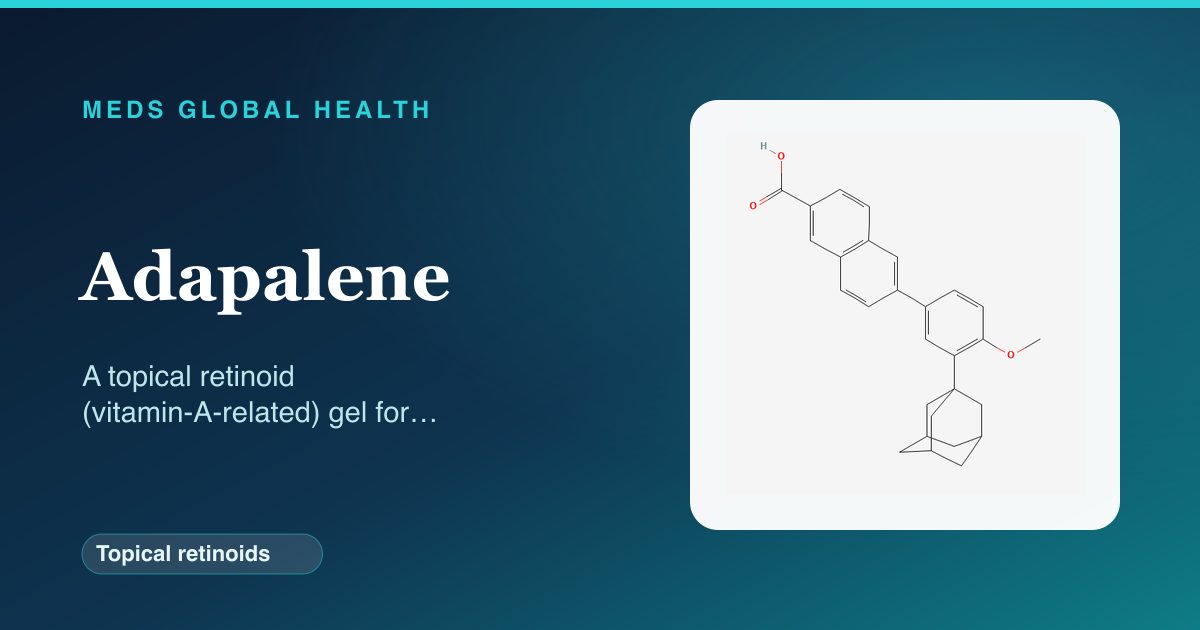
What it is
Adapalene is a topical retinoid — a medicine related to vitamin A — used in the UK to treat acne. It works on the way skin cells behave in the pores, helping to unblock them and reduce blackheads, whiteheads and inflamed spots. It is applied to the skin at night and is a treatment that needs patience: it usually takes several weeks before clear improvement is seen, and the skin often becomes drier and a little irritated, especially at first.
How it works
Adapalene is a retinoid that acts on skin cells in and around the pores. In acne, dead skin cells and oil build up and block the pores, leading to blackheads and spots. Adapalene helps normalise how the skin cells shed and turn over, which unblocks the pores, prevents new blockages forming, and reduces inflammation. Because it speeds up skin-cell turnover, it commonly causes dryness, peeling and irritation as the skin adjusts.
What it treats
Conditions Adapalene is used for
Practical use
How to take Adapalene
General, dose-free guidance — always follow your prescriber's and the leaflet's specific instructions.
- Apply it at night to clean, dry skin — wait until the skin is dry after washing before applying.
- Use only a thin amount spread across the affected area, rather than dabbing it onto individual spots.
- Expect dryness, redness and peeling at first, and possibly an early flare; a non-greasy moisturiser helps and these usually settle.
- Protect your skin from strong sunlight and use sunscreen, as it makes skin more sensitive to the sun.
- Do not use it if you are pregnant, trying to become pregnant, or breastfeeding.
- Be patient — it takes several weeks to work, so keep using it regularly and do not give up too early.
Weighing it up
Advantages & disadvantages of Adapalene
Advantages
- It is effective for acne, tackling both blackheads and inflamed spots by unblocking pores.
- It helps prevent new spots forming, not just treating existing ones.
- Applied once at night, it fits easily into a routine.
Disadvantages
- It commonly causes dryness, redness and irritation, especially in the first weeks.
- It can make the skin more sensitive to sunlight, so sun protection is needed.
- It must not be used in pregnancy, and it takes several weeks of regular use before clear improvement.
Practical use
Good to know
Adapalene is applied at night to clean, dry skin — wait until the skin is dry after washing, and use only a thin amount across the affected area rather than dabbing it on individual spots. Expect some dryness, redness, peeling and irritation, particularly in the first weeks, and the skin may even seem to flare or get a little worse before it gets better; this usually settles, and a non-greasy moisturiser helps. It makes the skin more sensitive to sunlight, so protect your skin from strong sun and use sunscreen. It must not be used in pregnancy or when trying to become pregnant. Above all, it takes weeks to work, so it is important to keep going and not give up too early.
Who should not take it / use with caution
- Women who are pregnant, trying to become pregnant, or breastfeeding.
- Anyone who has had a serious allergic reaction to adapalene or an ingredient in the product.
- Used with care on broken, sunburnt or eczema-prone skin, where it can be too irritating.
Monitoring
- Review of how the acne is responding, usually after several weeks of regular use.
- Watching for excessive dryness or irritation, which may mean using it less often for a while.
- Confirming it is not used in pregnancy and that sun protection is being followed.
Side effects
- Dryness, redness, peeling and a burning or stinging feeling, especially at first.
- Itching and skin sensitivity, and sometimes a temporary worsening (flare) of spots early on.
- Increased sensitivity to sunlight, with easier sunburn.
- Rarely, more severe irritation or an allergic skin reaction (stop and seek advice).
Key interactions
- Other irritating skincare — such as harsh scrubs, peels, or products containing alcohol — can add to dryness and irritation.
- Using it with other acne treatments can be effective but may increase irritation; introduce them gradually as advised.
- Strong sun and sunbeds increase the risk of skin reactions, so sun protection is important.
Available as: A gel and a cream.
Answers
Adapalene: frequently asked questions
When and how do I apply adapalene?
Apply it at night to clean, dry skin — wait until the skin is dry after washing. Use only a thin amount spread across the whole affected area rather than dabbing it on individual spots, as it works to prevent new spots as well as treat existing ones.
Why has my skin become dry and irritated?
Dryness, redness and peeling are common, especially in the first few weeks, because adapalene speeds up skin-cell turnover. A non-greasy moisturiser helps, and the irritation usually settles as your skin gets used to it. If it is severe, you can use it less often for a while.
Why do my spots seem worse at first?
Some people notice an early flare where spots seem to get a little worse before they improve. This is a recognised effect and usually passes. The key is to keep going, as the real benefit appears over several weeks.
Do I need to use sunscreen with adapalene?
Yes — adapalene makes your skin more sensitive to sunlight, so you can burn more easily. Protect your skin from strong sun and use sunscreen, and avoid sunbeds while using it.
Can I use adapalene in pregnancy?
No — adapalene is a retinoid and must not be used in pregnancy or when trying to become pregnant, and it is avoided when breastfeeding. If you are pregnant or planning a pregnancy, speak to your prescriber about safer alternatives for acne.
The wider class
About Topical retinoids
Adapalene belongs to the topical retinoids class. For how the class as a whole works, its shared safety principles and monitoring, see the full guide.
Browse by body system
Authoritative sources
- BNF
- NICE CKS
Building a medicines information resource?
We create evidence-led, dose-free drug and formulary references for teams.