A topical acne treatment
Benzoyl peroxide
A topical acne treatment that reduces acne bacteria and unblocks pores, used for mild to moderate acne.
What is Benzoyl peroxide?
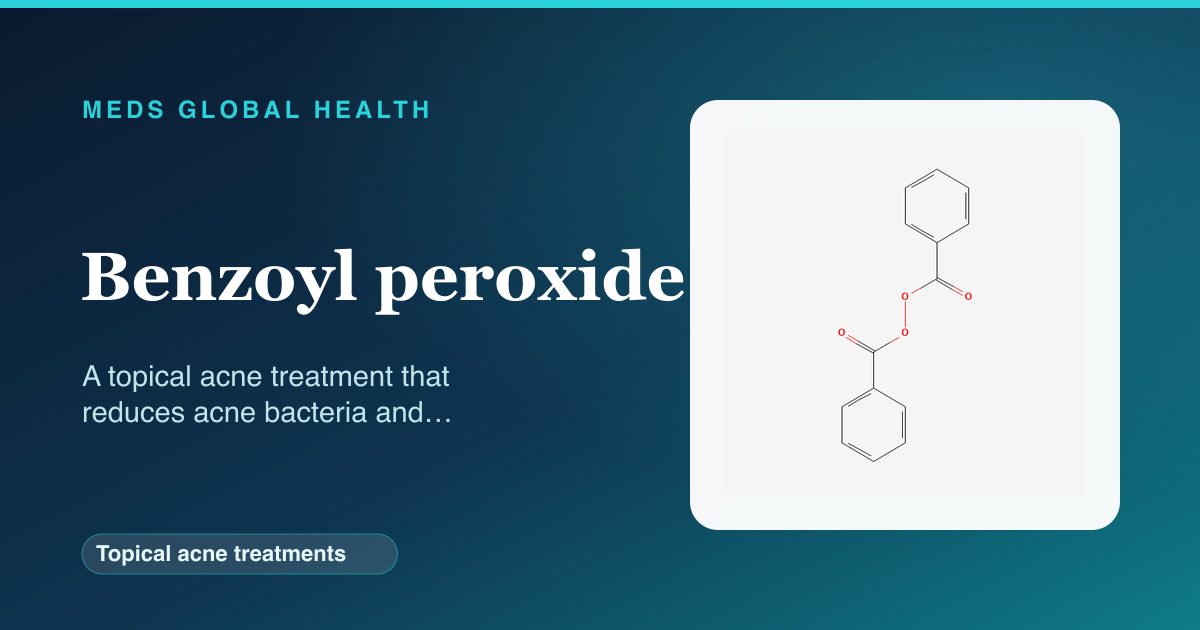
Benzoyl peroxide is a topical acne treatment applied to the skin. It works by reducing the bacteria involved in acne and helping to unblock pores, which lessens spots and inflammation. It can bleach hair, towels and clothing, and often causes dryness or peeling, especially at first.
Education and reference only. This is a plain-language guide to Benzoyl peroxide — it deliberately contains no doses. Doses depend on the person, the brand and the reason for treatment, and belong with your prescriber. Always check the BNF, the product labelling (SmPC) and follow medical advice.
What it is
Benzoyl peroxide is a cream, gel or wash that you apply to areas of skin affected by acne. In the UK it can be bought from a pharmacy or prescribed, and it is one of the first treatments tried for mild to moderate acne. It is often used on its own or combined with other acne medicines such as antibiotics or retinoids. It comes in different strengths, with lower-strength preparations usually recommended to start.
How it works
It releases oxygen onto the skin, which reduces the bacteria that contribute to acne and makes it harder for them to multiply. It also has a mild peeling and unblocking effect, helping to clear the plugs of oil and dead skin that block pores. Together these actions reduce the number of spots and calm inflammation over a few weeks.
Company & origin
Originated / developed by: A widely used acne treatment.
A long-established topical treatment for acne, available in the UK both on prescription and to buy from pharmacies.
What it treats
Conditions Benzoyl peroxide is used for
Practical use
How to take Benzoyl peroxide
General, dose-free guidance — always follow your prescriber's and the leaflet's specific instructions.
- Wash and gently dry the affected skin, then apply a thin layer over the whole acne-prone area rather than dabbing onto individual spots.
- Start by applying it sparingly, often once a day or even on alternate days, and build up to once or twice a day as your skin tolerates it.
- Wash your hands after applying it, and keep it away from your eyes, lips, mouth and any broken skin.
- Use sun protection and avoid sunlamps, as it can make your skin more sensitive to sunlight; let it dry before contact with fabrics to limit bleaching.
- If you forget an application, simply apply it at the next usual time — do not use extra to make up for the missed one.
Weighing it up
Advantages & disadvantages of Benzoyl peroxide
Advantages
- Effective for mild to moderate acne and available to buy from pharmacies without a prescription.
- Does not lead to bacterial resistance, so it can be used long term and alongside antibiotics.
- Treats the whole area to prevent new spots, not just the ones you can already see.
Disadvantages
- Commonly causes dryness, redness and peeling, especially in the first few weeks.
- Bleaches hair, towels, bedding and coloured clothing on contact.
- Can make skin more sensitive to sunlight, and improvement takes several weeks.
Practical use
Good to know
Benzoyl peroxide can bleach hair, towels, bed linen and coloured clothing, so let it dry fully and use white fabrics where possible. Dryness, redness and peeling are common at first and usually settle as your skin gets used to it, which is why starting with a lower strength applied sparingly is sensible. It can make your skin more sensitive to sunlight, so use sun protection and avoid sunlamps. It usually takes several weeks of regular use before you see a clear improvement, so keep going even if results seem slow. If your skin becomes very sore or you react badly, stop and ask a pharmacist for advice.
Who should not take it / use with caution
- Anyone who has had an allergic reaction to benzoyl peroxide should not use it.
- It should not be applied to broken, sunburnt or eczema-affected skin.
- People with very sensitive skin should seek advice and start with a low strength applied sparingly.
Monitoring
- No blood tests are needed; you and your prescriber judge progress by how your skin looks over several weeks.
- Reduce how often you apply it if your skin becomes too dry or sore.
- See a GP if acne is severe, scarring or not improving after a reasonable trial.
Side effects
- Dryness, mild burning, redness and flaking of the treated skin are common, particularly early on.
- Bleaching of hair and fabrics that come into contact with the treated area.
- Rarely, a more severe reaction with marked swelling, blistering or itching — stop and seek advice if this happens.
Key interactions
- Using it at the same time as other strong or peeling acne products can make irritation worse.
- It is often combined deliberately with antibiotics or retinoids, but follow the order and timing your prescriber advises.
- Tell a pharmacist about other skin treatments you use before starting it.
Available as: Creams, gels and washes applied to the skin.
Answers
Benzoyl peroxide: frequently asked questions
Why is my skin peeling and red?
Dryness, redness and peeling are common at first; starting sparingly with a lower strength and using a light moisturiser usually helps your skin settle.
Will it bleach my towels and clothes?
Yes, it can bleach hair, towels, bedding and coloured fabrics, so let it dry fully and use white towels and pillowcases where you can.
How long before it works?
It usually takes several weeks of regular use to see a clear improvement, so keep going even if progress seems slow at first.
Can I use it with other acne treatments?
It is often combined with antibiotics or retinoids, but follow your prescriber's advice on which to use and when to avoid too much irritation.
Does it make my skin sun-sensitive?
It can make your skin more sensitive to sunlight, so use sun protection and avoid sunlamps and sunbeds while using it.
The wider class
About Topical acne treatments
Benzoyl peroxide belongs to the topical acne treatments class. For how the class as a whole works, its shared safety principles and monitoring, see the full guide.
Browse by body system
Authoritative sources
- BNF
- NICE CKS
Building a medicines information resource?
We create evidence-led, dose-free drug and formulary references for teams.