A topical retinoid gel
Tazarotene
A retinoid gel applied to the skin for plaque psoriasis, and sometimes acne.
What is Tazarotene?
Tazarotene is a topical retinoid, a vitamin A-related medicine applied as a gel to plaques of psoriasis and sometimes to acne. It works on the skin to slow the rapid build-up of skin cells that makes psoriasis plaques thick and scaly. It can irritate the skin, so it is dabbed thinly onto the plaques themselves and kept off healthy skin, the eyes and lips. Because it is a retinoid, it must not be used in pregnancy or by anyone trying for a baby. Wash your hands after applying it.
Education and reference only. This is a plain-language guide to Tazarotene — it deliberately contains no doses. Doses depend on the person, the brand and the reason for treatment, and belong with your prescriber. Always check the BNF, the product labelling (SmPC) and follow medical advice.
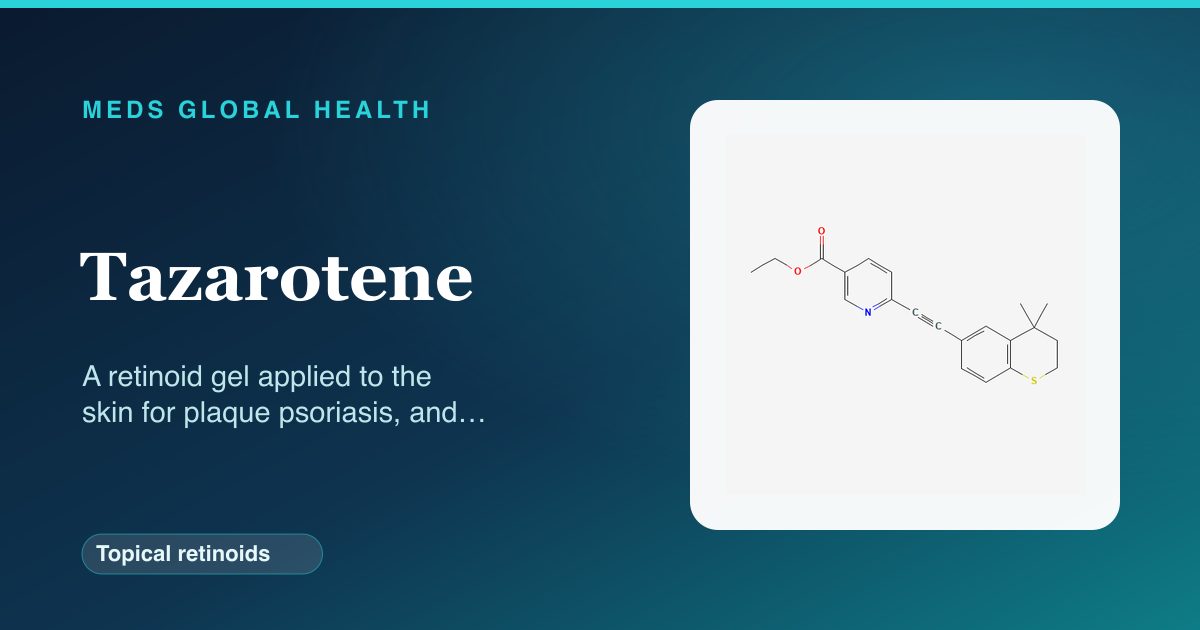
What it is
Tazarotene is a topical retinoid, meaning it is related to vitamin A and is applied directly to the skin as a gel. In the UK it is used mainly for mild to moderate plaque psoriasis and is sometimes used for acne. It is dabbed onto the raised, scaly patches of psoriasis rather than spread over large areas, because it can sting and redden normal skin around the plaques. It is a prescription treatment used as part of a wider psoriasis plan.
How it works
Tazarotene acts on the skin to calm the over-fast production of skin cells that makes psoriasis plaques thick, red and flaky, helping them flatten and clear over weeks. As a retinoid it also helps normalise how skin cells mature and shed, which is why it can help acne too. Because it changes how skin behaves rather than acting through the bloodstream, it tends to cause local effects such as redness and irritation at the spots where it is applied.
Company & origin
A topical retinoid gel used in the UK for plaque psoriasis and sometimes acne.
Practical use
How to take Tazarotene
General, dose-free guidance — always follow your prescriber's and the leaflet's specific instructions.
- Apply a thin layer of the gel just to the psoriasis plaques, usually once a day in the evening, keeping it off the surrounding healthy skin.
- Wash and dry the area first, and let the skin dry fully before applying, as damp skin increases irritation.
- Use a moisturiser on the normal skin around the plaques to protect it, but not directly mixed with the gel.
- Keep it well away from your eyes, lips, nostrils and any broken or weeping skin.
- Wash your hands thoroughly after applying it, unless your hands are the area being treated.
- Protect treated skin from strong sunlight and avoid sunbeds, as it can make skin more sun-sensitive.
Weighing it up
Advantages & disadvantages of Tazarotene
Advantages
- An effective, targeted treatment that can flatten and clear stubborn psoriasis plaques.
- Applied to the skin only, so it avoids the body-wide effects of tablet treatments.
- Can also help acne, as it normalises how skin cells mature and shed.
Disadvantages
- Commonly irritates the skin with redness, burning, dryness or itching, especially early on.
- Must not be used in pregnancy or when trying to conceive, as it is a retinoid.
- Can make skin more sensitive to sunlight and is fiddly to apply to plaques only.
Practical use
Good to know
Tazarotene often causes some redness, dryness, burning or itching when you start, especially if it strays onto healthy skin, so apply it precisely to the plaques and use a moisturiser around them. It can make skin more sensitive to sunlight, so protect treated areas from strong sun and avoid sunbeds. The most important rule is that, as a retinoid, it must not be used during pregnancy or when trying to conceive, and reliable contraception is needed for those who could become pregnant. Keep it well away from the eyes, lips, nostrils and broken skin, and wash your hands after applying it unless you are treating them. Build-up of effect is gradual, so give it time and do not use more than directed in the hope of faster results.
Who should not take it / use with caution
- It must not be used by anyone who is pregnant, trying to conceive, or unable to use reliable contraception.
- People with widespread, broken or weeping psoriasis or very sensitive skin should avoid it or use it with care.
- It should not be applied near the eyes, lips, nostrils or on healthy skin.
Monitoring
- Reviewing how the plaques respond and whether irritation is tolerable over the first few weeks.
- Checking pregnancy status and contraception in anyone who could become pregnant before and during use.
- Adjusting how often it is applied if the skin becomes too sore or dry.
Side effects
- Redness, burning, stinging, dryness and itching of the treated skin are common, particularly at first.
- Increased sensitivity to sunlight, so treated areas can burn more easily.
- Worsening irritation if it spreads onto healthy skin around the plaques.
Key interactions
- Other skin products that dry or irritate, such as harsh soaps, peels or astringents, can add to irritation.
- Treatments that increase sun sensitivity may combine with its sun-sensitising effect.
- Tell your prescriber about other creams used on the same area so they are not applied at the same time.
Available as: A gel applied to the skin.
Answers
Tazarotene: frequently asked questions
Can I use tazarotene if I am pregnant?
No. As a retinoid it must not be used in pregnancy or when trying to conceive, and reliable contraception is needed for anyone who could become pregnant.
Why does my skin sting and go red?
Some redness, burning and dryness is common, especially early on; applying only a thin layer to the plaques and moisturising around them usually helps.
Where exactly should I put it?
Dab it just onto the raised, scaly psoriasis plaques, keeping it off the healthy skin around them, and away from your eyes and lips.
Do I need to be careful in the sun?
Yes, it can make treated skin more sensitive to sunlight, so protect the area from strong sun and avoid sunbeds.
How long before it works?
Improvement is gradual over several weeks, so keep applying it as directed rather than using more in the hope of a faster result.
The wider class
About Topical retinoids
Tazarotene belongs to the topical retinoids class. For how the class as a whole works, its shared safety principles and monitoring, see the full guide.
Browse by body system
Authoritative sources
- BNF
- NICE CKS
Building a medicines information resource?
We create evidence-led, dose-free drug and formulary references for teams.