A topical retinoid cream for acne
Trifarotene
A vitamin-A-related cream applied to the skin to treat acne on the face and the body.
What is Trifarotene?
Trifarotene is a topical retinoid, a vitamin-A-related cream, used to treat acne on the face and on the trunk, such as the back and chest. It works by helping to unblock pores and calm the inflammation that causes spots, so the skin clears over time. The most common effects are skin dryness, redness, irritation and peeling, especially in the first weeks, and it makes the skin more sensitive to sunlight. Like other retinoids, it should be avoided in pregnancy. It is applied as a thin layer to clean, dry skin and works gradually rather than overnight.
Education and reference only. This is a plain-language guide to Trifarotene — it deliberately contains no doses. Doses depend on the person, the brand and the reason for treatment, and belong with your prescriber. Always check the BNF, the product labelling (SmPC) and follow medical advice.
What it is
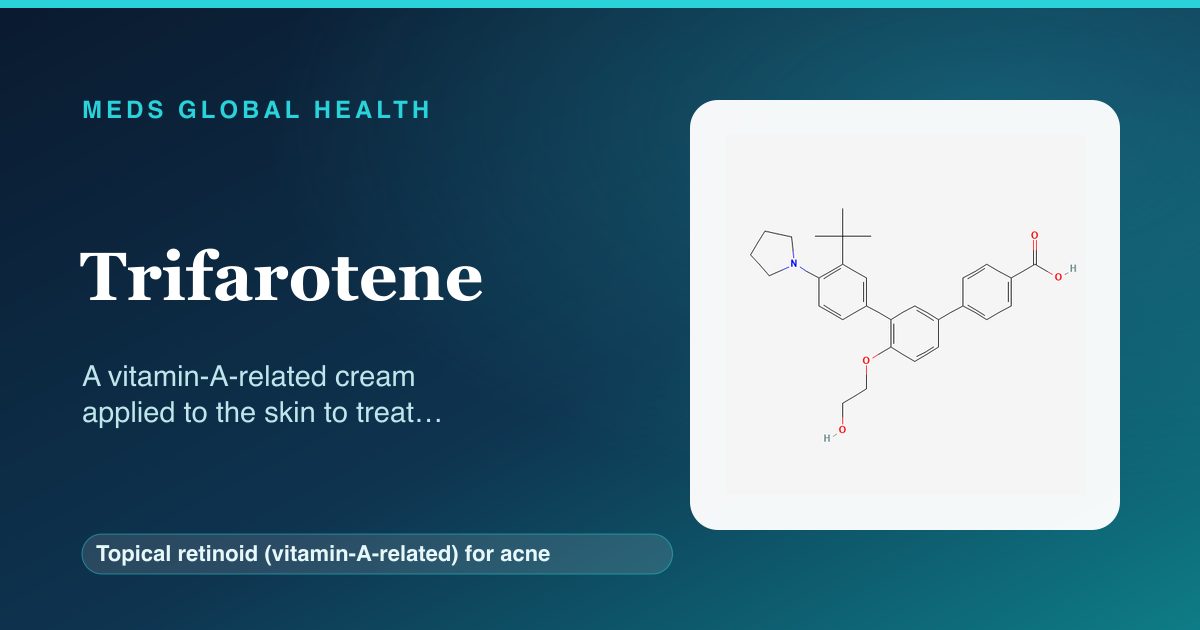
Trifarotene is a topical retinoid, meaning a vitamin-A-related medicine applied to the skin, used to treat acne. It can be used on the face and also on larger areas such as the back and chest. It works on the underlying causes of acne by helping skin cells turn over and unblocking pores, and by calming inflammation, so spots clear and fewer new ones form. It is applied as a cream in a thin layer, usually once a day, and it takes several weeks of regular use before the full benefit is seen. It is used as part of an acne treatment plan, sometimes alongside other acne medicines.
How it works
Acne happens when pores become blocked with skin cells and oil, allowing spots and inflammation to develop. Trifarotene, like other retinoids, acts on the skin to encourage normal turnover of skin cells and to stop pores becoming clogged, while also helping to calm the inflammation around spots. Over several weeks of regular use this clears existing spots and reduces the formation of new ones. Because it works gradually on the way the skin behaves rather than killing bacteria directly, it is applied regularly and the skin may seem worse before it gets better as it adjusts.
Company & origin
A vitamin-A-related cream used in the UK to treat acne on the face and the trunk, such as the back and chest.
What it treats
Conditions Trifarotene is used for
Practical use
How to take Trifarotene
General, dose-free guidance — always follow your prescriber's and the leaflet's specific instructions.
- Apply a thin layer to clean, dry skin once a day, usually in the evening, as directed.
- Avoid the eyes, lips, inside of the nose and any broken or sunburnt skin.
- Use a non-greasy moisturiser and protect your skin from the sun, as it can make skin more sun-sensitive.
- Keep using it regularly and give it several weeks to work, even if the skin seems worse at first.
- Avoid it in pregnancy, and discuss contraception and pregnancy plans with your prescriber.
Weighing it up
Advantages & disadvantages of Trifarotene
Advantages
- Treats acne on the face and on larger areas such as the back and chest.
- Works on the underlying causes of acne by unblocking pores and calming inflammation.
- Applied to the skin rather than taken by mouth, as part of an acne plan.
Disadvantages
- Commonly causes dryness, redness, irritation and peeling, especially early on.
- Makes the skin more sensitive to sunlight, so sun protection is needed.
- Works gradually and, like other retinoids, must be avoided in pregnancy.
Practical use
Good to know
The main things to expect with trifarotene are skin dryness, redness, irritation, peeling and a burning or stinging feeling, especially in the first few weeks while the skin gets used to it; using a non-greasy moisturiser and applying only a thin layer helps. It can make your skin more sensitive to sunlight, so daily sun protection and avoiding sunbeds are important. It works gradually, so the skin may not improve, and can even seem a little worse, for several weeks before it gets better, so it is worth persevering. Like other retinoids, it should be avoided in pregnancy, and you should discuss contraception and pregnancy plans with your prescriber. Apply it to clean, dry skin, avoid the eyes, lips and broken skin, and do not use more than directed, as more does not work faster and only increases irritation.
Who should not take it / use with caution
- It should be avoided in pregnancy, in keeping with other retinoid medicines.
- People who have had a serious allergic reaction to trifarotene should not use it.
- It should not be applied to broken, eczema-affected or sunburnt skin, or used with excessive sun exposure.
Monitoring
- Reviewing how well the acne is responding over several weeks.
- Checking how the skin is tolerating the cream and adjusting how often it is used if needed.
- Discussing pregnancy plans and contraception where relevant.
Side effects
- Skin dryness, redness, peeling and a burning or stinging feeling, especially in the first weeks.
- Increased sensitivity to sunlight.
- Less commonly, more marked irritation, which may mean using it less often for a while.
Key interactions
- Other harsh or drying skin products, such as strong scrubs or peels, can add to irritation.
- Care is needed when combining it with other acne treatments, guided by your prescriber.
- Sun exposure and sunbeds increase the risk of skin reactions, so they should be limited.
Available as: A cream applied to the skin.
Answers
Trifarotene: frequently asked questions
What is trifarotene used for?
It is a vitamin-A-related cream used to treat acne on the face and on areas such as the back and chest, by unblocking pores and calming inflammation.
Why is my skin dry and peeling?
Dryness, redness and peeling are common, especially in the first weeks; applying only a thin layer and using a non-greasy moisturiser helps as the skin adjusts.
Do I need to protect my skin from the sun?
Yes. Trifarotene can make your skin more sensitive to sunlight, so daily sun protection and avoiding sunbeds are important.
How long does it take to work?
It works gradually over several weeks, and the skin can even seem worse at first, so keep using it regularly and give it time.
Can I use it in pregnancy?
No. Like other retinoids, trifarotene should be avoided in pregnancy, so discuss contraception and any pregnancy plans with your prescriber.
The wider class
About Topical retinoid (vitamin-A-related) for acne
Trifarotene belongs to the topical retinoid (vitamin-a-related) for acne class. For how the class as a whole works, its shared safety principles and monitoring, see the full guide.
Browse by body system
Authoritative sources
- BNF
- NICE CKS
Building a medicines information resource?
We create evidence-led, dose-free drug and formulary references for teams.