An artemisinin malaria treatment (with lumefantrine)
Artemether
An artemisinin medicine combined with lumefantrine to treat malaria; it is a treatment, not a preventive.
What is Artemether?
Artemether is a fast-acting malaria medicine derived from a plant, and in the UK it is given combined with another medicine called lumefantrine, sold as Riamet. It is used to treat malaria, not to prevent it, so it is taken when someone has the infection rather than before or during travel as protection. The two medicines together clear the malaria parasites from the blood quickly and reduce the chance of the infection coming back. Lumefantrine needs fat to be absorbed properly, so the doses are taken with fatty food or a milky drink. It can affect the heart's rhythm, so there are cautions in people with certain heart conditions or on some other medicines.
Education and reference only. This is a plain-language guide to Artemether — it deliberately contains no doses. Doses depend on the person, the brand and the reason for treatment, and belong with your prescriber. Always check the BNF, the product labelling (SmPC) and follow medical advice.
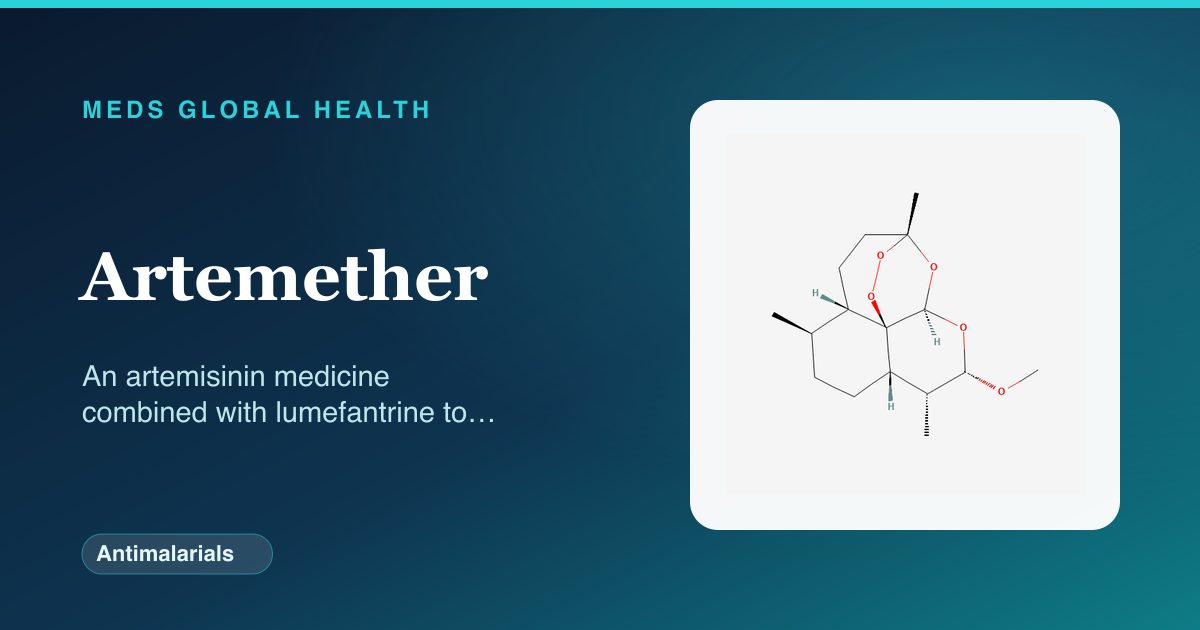
What it is
Artemether is one of the artemisinin medicines, derived from the sweet wormwood plant, used to treat malaria. In the UK it is always given as a fixed combination with lumefantrine, under the brand Riamet, taken by mouth as tablets over a short course. It is used to treat uncomplicated malaria, particularly the falciparum type, and is a treatment rather than a way of preventing malaria during travel.
How it works
Artemether acts quickly inside red blood cells to kill the malaria parasites, rapidly reducing the number in the blood and easing symptoms. It is cleared from the body fast, so it is paired with lumefantrine, which stays around longer and mops up any remaining parasites, lowering the risk of the infection returning. Combining two medicines that work in different ways also helps prevent the parasites becoming resistant.
Company & origin
Originated / developed by: Novartis.
An artemisinin-based medicine used in the UK, combined with lumefantrine, to treat malaria; it is not used to prevent malaria.
Practical use
How to take Artemether
General, dose-free guidance — always follow your prescriber's and the leaflet's specific instructions.
- Take it only to treat diagnosed malaria, not as protection before or during travel.
- Take each dose with fatty food, milk or a milky drink, as the lumefantrine part needs fat to be absorbed.
- Complete the whole course exactly as prescribed, even when you start to feel better.
- If you are sick within a short time of a dose, tell your team, as the dose may need repeating.
- Tell your prescriber about heart problems, fainting spells or other medicines that can affect heart rhythm.
- Seek medical advice if fever returns after treatment, as this needs prompt assessment.
Weighing it up
Advantages & disadvantages of Artemether
Advantages
- Works quickly to clear malaria parasites and ease symptoms.
- The combination lowers the chance of the infection returning and helps prevent resistance.
- Taken as a short oral course for uncomplicated malaria.
Disadvantages
- It treats malaria but does not prevent it, so it is no use as travel protection.
- Must be taken with fatty food or it may not be absorbed properly.
- Can affect the heart's rhythm, needing caution in some heart conditions and with certain other medicines.
Practical use
Good to know
The most important practical point is that this is a treatment for malaria, not a preventive, so it is taken when someone is infected, not as travel protection. A key tip for it to work is that lumefantrine is poorly absorbed without fat, so each dose should be taken with food, milk or another fatty drink; if vomiting occurs soon after a dose, the dose may need repeating. The main safety caution is on the heart: it can affect the heart's electrical rhythm (the QT interval), so it is used carefully in people with certain heart conditions, low blood salts, or who take other medicines that affect heart rhythm. The full course must be completed even once you feel better, and any return of fever should be checked, as malaria can be serious and needs prompt assessment.
Who should not take it / use with caution
- People with certain heart-rhythm conditions, or a family history of sudden heart-rhythm death, should not usually take it.
- Those taking some other medicines that affect heart rhythm may need to avoid it or be specially assessed.
- It is used with caution in pregnancy and severe liver or kidney problems, guided by a specialist.
Monitoring
- Confirming the malaria diagnosis and checking the response to treatment.
- Considering a heart-rhythm tracing in people with heart risk factors or relevant medicines.
- Watching for any return of fever after treatment, which needs prompt reassessment.
Side effects
- Headache, dizziness, tiredness and loss of appetite, which can overlap with malaria symptoms.
- Nausea, vomiting, stomach upset and palpitations in some people.
- Rarely, changes in the heart's rhythm (a longer QT interval), which is why heart cautions apply.
Key interactions
- Other medicines that affect the heart's rhythm can add to the risk and may need to be avoided.
- Some medicines that change how the body breaks it down can raise or lower its levels.
- Tell your prescriber about all medicines, including malaria-prevention tablets you may have been taking.
Available as: Tablets taken by mouth as a fixed combination with lumefantrine.
Answers
Artemether: frequently asked questions
Can I take artemether to prevent malaria while travelling?
No, this combination treats malaria rather than preventing it; for protection during travel you need a different preventive medicine, so ask a travel clinic before you go.
Why must I take it with fatty food?
The lumefantrine part is poorly absorbed without fat, so taking each dose with food, milk or a milky drink helps the medicine work properly.
What if I am sick soon after a dose?
Tell your team, as vomiting shortly after a dose can mean it was not absorbed and the dose may need to be repeated.
Does it affect the heart?
It can affect the heart's electrical rhythm, so it is used carefully in people with certain heart conditions or on other medicines that do the same; mention any heart problems.
What if my fever comes back after treatment?
Seek medical advice promptly, as a return of fever needs reassessment; malaria can be serious and should not be ignored.
The wider class
About Antimalarials
Artemether belongs to the antimalarials class. For how the class as a whole works, its shared safety principles and monitoring, see the full guide.
Browse by body system
Authoritative sources
- BNF
- NICE CKS
Building a medicines information resource?
We create evidence-led, dose-free drug and formulary references for teams.