An antimalarial used in combination treatment
Naphthoquine
An antimalarial medicine used in combination with another drug as a short course to treat malaria.
What is Naphthoquine?
Naphthoquine is an antimalarial medicine used, in combination with another antimalarial, to treat malaria, an infection spread by mosquitoes. It is taken by mouth, usually as a short course. It is generally well tolerated, with stomach upset being among the more common effects, and some caution is needed because antimalarials can affect the heart's rhythm (the QT interval). It is used mainly in parts of the world where malaria is common and is a specialist or region-specific treatment rather than one routinely used in the UK.
Education and reference only. This is a plain-language guide to Naphthoquine — it deliberately contains no doses. Doses depend on the person, the brand and the reason for treatment, and belong with your prescriber. Always check the BNF, the product labelling (SmPC) and follow medical advice.
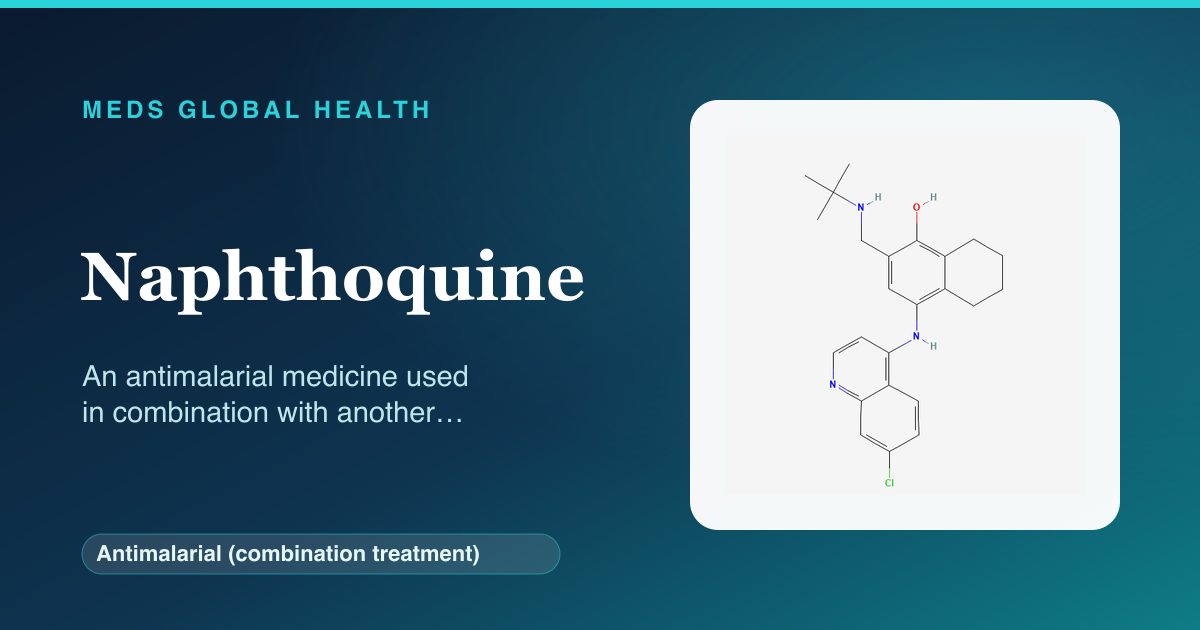
What it is
Naphthoquine is a medicine used to treat malaria, a serious infection caused by a parasite and spread through mosquito bites. It is generally given in combination with another antimalarial as part of a short treatment course, taken by mouth. Using two medicines together helps clear the infection more effectively and reduces the chance of the parasite becoming resistant. It is used mainly in regions where malaria is common and is considered a specialist or region-specific treatment, rather than one that is routinely prescribed in the UK.
How it works
Naphthoquine works by acting against the malaria parasite once it has entered the body's red blood cells, helping to kill it and clear the infection. It is paired with another antimalarial that works in a different way, so the combination tackles the parasite from more than one angle, which improves the chances of cure and helps prevent the parasite developing resistance. Because it stays in the body for a while, it can also help protect against the infection returning soon after treatment.
Company & origin
An antimalarial medicine used, in combination with another drug, to treat malaria, mainly in regions where malaria is common rather than routinely in the UK.
Practical use
How to take Naphthoquine
General, dose-free guidance — always follow your prescriber's and the leaflet's specific instructions.
- Take it by mouth exactly as directed, completing the full combination course even if you feel better.
- Tell your prescriber about any heart-rhythm problems or other medicines that affect the heart rhythm.
- Report any palpitations, fainting, severe stomach upset or worsening symptoms promptly.
- Tell your doctor about all your other medicines, as some can interact with antimalarials.
- Seek medical care for malaria rather than self-treating, as it can become serious quickly.
Weighing it up
Advantages & disadvantages of Naphthoquine
Advantages
- An effective treatment for malaria when used as part of a combination.
- Taken by mouth, usually as a short, defined course.
- Used with a partner medicine, which helps reduce the chance of resistance.
Disadvantages
- Can cause stomach upset such as nausea or tummy pain.
- Like other antimalarials, it can affect the heart's rhythm (the QT interval).
- A specialist, region-specific medicine that is not routinely used in the UK.
Practical use
Good to know
Naphthoquine is used as part of a combination and as a defined course, so it is important to complete the full treatment exactly as directed, even if you start to feel better, to make sure the infection is fully cleared. It is generally well tolerated, with the more common effects being stomach upset such as nausea or tummy pain. A point worth knowing is that antimalarials as a group can affect the heart's electrical rhythm (the QT interval), so caution is used in people with heart-rhythm problems or who take other medicines that do the same. Malaria itself can become serious quickly, so it should always be diagnosed and treated under medical care, and any worsening during treatment should be reported promptly.
Who should not take it / use with caution
- People who have had a serious allergic reaction to naphthoquine should not take it.
- It is used with caution in people with certain heart-rhythm problems or those on medicines that affect the QT interval.
- It is used under medical guidance, with care in pregnancy and in people with significant heart problems.
Monitoring
- Reviewing how well the malaria responds to treatment.
- Watching for heart-rhythm effects, especially in people at risk.
- Checking for stomach upset and other side effects during the course.
Side effects
- Stomach upset such as nausea, tummy pain or diarrhoea.
- Headache or dizziness in some people.
- Less commonly, changes in the heart's rhythm (the QT interval).
Key interactions
- Other medicines that affect the heart's QT interval should be reviewed when taking it.
- Some medicines can change how antimalarials work, so give a full list of what you take.
- It is used as part of a combination, so both medicines in the course are taken as directed.
Available as: Tablets taken by mouth, usually as part of a combination product.
Answers
Naphthoquine: frequently asked questions
What is naphthoquine used for?
It is an antimalarial medicine used, in combination with another antimalarial, to treat malaria, an infection spread by mosquitoes.
Why is it given with another medicine?
Combining two antimalarials that work in different ways helps clear the infection more effectively and reduces the chance of the parasite becoming resistant.
Does it affect the heart?
Like other antimalarials, it can affect the heart's electrical rhythm (the QT interval), so caution is used in people with heart-rhythm problems or on certain other medicines.
Should I finish the whole course?
Yes. It is important to complete the full course exactly as directed, even if you feel better, to make sure the malaria is fully cleared.
Is it used in the UK?
It is mainly used in regions where malaria is common and is a specialist, region-specific treatment rather than one routinely prescribed in the UK.
The wider class
About Antimalarial (combination treatment)
Naphthoquine belongs to the antimalarial (combination treatment) class. For how the class as a whole works, its shared safety principles and monitoring, see the full guide.
Browse by body system
Authoritative sources
- BNF
- NICE CKS
Building a medicines information resource?
We create evidence-led, dose-free drug and formulary references for teams.