An antimalarial also used in some rheumatic conditions
Chloroquine
A medicine used to prevent and treat malaria and, in some cases, to help conditions such as lupus and rheumatoid arthritis.
What is Chloroquine?
Chloroquine is a long-established medicine used to prevent and treat malaria and, in some people, to help rheumatic conditions such as lupus and rheumatoid arthritis. Its most important risk is damage to the back of the eye (the retina) with long-term use, so eye checks are advised. It can also affect the heart's rhythm, is very dangerous in overdose even in small amounts for children, and needs care in people with psoriasis, the inherited conditions porphyria or G6PD deficiency. It is taken by mouth and used under medical guidance.
Education and reference only. This is a plain-language guide to Chloroquine — it deliberately contains no doses. Doses depend on the person, the brand and the reason for treatment, and belong with your prescriber. Always check the BNF, the product labelling (SmPC) and follow medical advice.
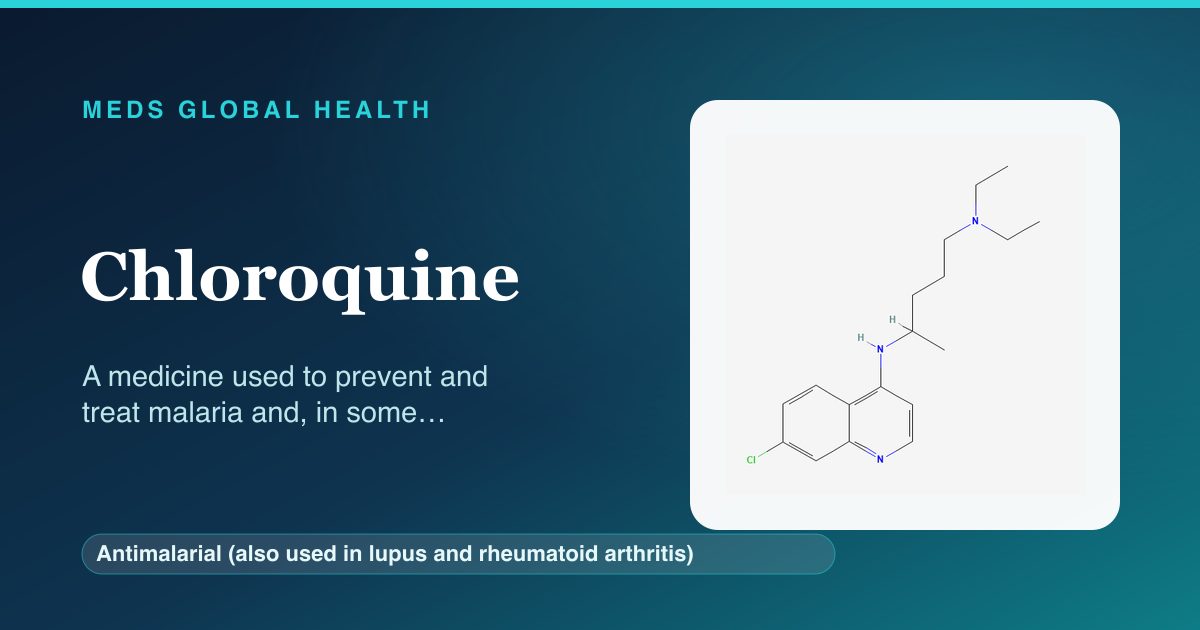
What it is
Chloroquine is a medicine that has been used for many years, mainly against malaria, where it is taken to prevent infection when travelling to some areas and to treat it. It is also used, in certain situations, to calm the overactive immune activity in some rheumatic conditions, such as lupus and rheumatoid arthritis, although a closely related medicine is more commonly chosen for those today. It is taken by mouth as tablets. Because of its risks, particularly to the eyes and heart, it is used under medical guidance with appropriate checks.
How it works
Against malaria, chloroquine acts inside the parasite that causes the disease, interfering with how it handles the substances it needs to survive, so the parasite is killed. In rheumatic conditions, it is thought to dampen down parts of the immune system that drive inflammation, which can ease symptoms over time. Because it builds up in body tissues, including the eyes, long-term use carries a risk of gradual damage to the retina, which is why eye checks are part of longer-term treatment.
Company & origin
A long-established medicine used in the UK to prevent and treat malaria and, in some cases, to help rheumatic conditions such as lupus and rheumatoid arthritis.
What it treats
Conditions Chloroquine is used for
Practical use
How to take Chloroquine
General, dose-free guidance — always follow your prescriber's and the leaflet's specific instructions.
- Take it by mouth exactly as prescribed; for preventing malaria, start it before travel and continue for the advised time after returning.
- Keep it well out of the reach of children, as even a small overdose can be extremely dangerous.
- Attend any eye checks arranged for you if you are taking it long term.
- Tell your prescriber about any heart-rhythm problems, psoriasis, or the conditions porphyria or G6PD deficiency.
- Report any change in your vision, such as blurring or difficulty reading, promptly.
Weighing it up
Advantages & disadvantages of Chloroquine
Advantages
- An effective, long-established option for preventing and treating malaria in suitable areas.
- Can help calm inflammation in some rheumatic conditions such as lupus and rheumatoid arthritis.
- Taken by mouth as tablets.
Disadvantages
- Long-term use can damage the back of the eye, so eye checks are needed.
- Can affect the heart's rhythm and is very dangerous in overdose.
- Needs caution in people with psoriasis, porphyria or G6PD deficiency.
Practical use
Good to know
The most important thing to understand about chloroquine is the risk of damage to the retina, the light-sensitive layer at the back of the eye, which can build up with long-term use and may affect vision, so regular eye checks are recommended for people taking it for a long time. It can also affect the heart's electrical rhythm, so it is used with care alongside other medicines that do the same. A crucial safety point is that it is very dangerous in overdose, and even a small number of tablets can be life-threatening to a young child, so it must be kept well out of reach. It needs extra caution in people with psoriasis, which it can flare, and in the inherited conditions porphyria and G6PD deficiency. Tell your prescriber about all your medicines and any heart, eye or skin conditions.
Who should not take it / use with caution
- People who have had a serious allergic reaction to chloroquine should not take it.
- It is used with great caution, or avoided, in people with existing eye (retinal) problems.
- It is used with caution in people with heart-rhythm problems, psoriasis, porphyria or the inherited condition G6PD deficiency.
Monitoring
- Regular eye checks for people taking it long term, to look for early retinal changes.
- Reviewing the heart rhythm where appropriate, especially with other medicines that affect it.
- Checking how well the condition responds and watching for side effects.
Side effects
- Nausea, stomach upset or headache, especially early on.
- Itching or skin rash, and sometimes a flare of psoriasis.
- With long-term use, gradual damage to the retina that can affect vision.
- Less commonly, effects on the heart's rhythm, or in overdose, dangerous heart and breathing problems.
Key interactions
- It is used with care alongside other medicines that can affect the heart's rhythm.
- It can interact with some medicines used for heart problems and epilepsy, so a full medicines list is important.
- Antacids can reduce how well it is absorbed, so they should be separated in time.
Available as: Tablets taken by mouth.
Answers
Chloroquine: frequently asked questions
What is chloroquine used for?
It is used to prevent and treat malaria and, in some people, to help rheumatic conditions such as lupus and rheumatoid arthritis.
Why do I need eye checks?
Long-term use can gradually damage the retina at the back of the eye, which may affect vision, so regular eye checks help catch any early changes.
Is it dangerous in overdose?
Yes. Chloroquine is very dangerous in overdose, and even a small number of tablets can be life-threatening to a young child, so keep it well out of reach.
Can it affect my heart?
It can affect the heart's electrical rhythm, so it is used with care alongside other medicines that do the same; tell your prescriber about any heart problems.
How is it different from hydroxychloroquine?
They are closely related, but hydroxychloroquine is more often chosen for rheumatic conditions today; your prescriber will decide which suits you.
The wider class
About Antimalarial (also used in lupus and rheumatoid arthritis)
Chloroquine belongs to the antimalarial (also used in lupus and rheumatoid arthritis) class. For how the class as a whole works, its shared safety principles and monitoring, see the full guide.
Browse by body system
Authoritative sources
- BNF
- NICE CKS
Building a medicines information resource?
We create evidence-led, dose-free drug and formulary references for teams.