A beta-blocker eye drop for glaucoma and tablet for blood pressure
Betaxolol
A beta-blocker used as eye drops for glaucoma and as tablets for high blood pressure.
What is Betaxolol?
Betaxolol is a beta-blocker that comes in two forms. As eye drops it lowers the pressure inside the eye in glaucoma, and as tablets it is used to treat high blood pressure. The eye drops are thought to carry a lower risk of triggering wheeze than some other glaucoma drops such as timolol, but caution is still needed in asthma. The tablets can slow the heart and cause tiredness, and like other beta-blockers should not be stopped suddenly, as this can be harmful.
Education and reference only. This is a plain-language guide to Betaxolol — it deliberately contains no doses. Doses depend on the person, the brand and the reason for treatment, and belong with your prescriber. Always check the BNF, the product labelling (SmPC) and follow medical advice.
What it is
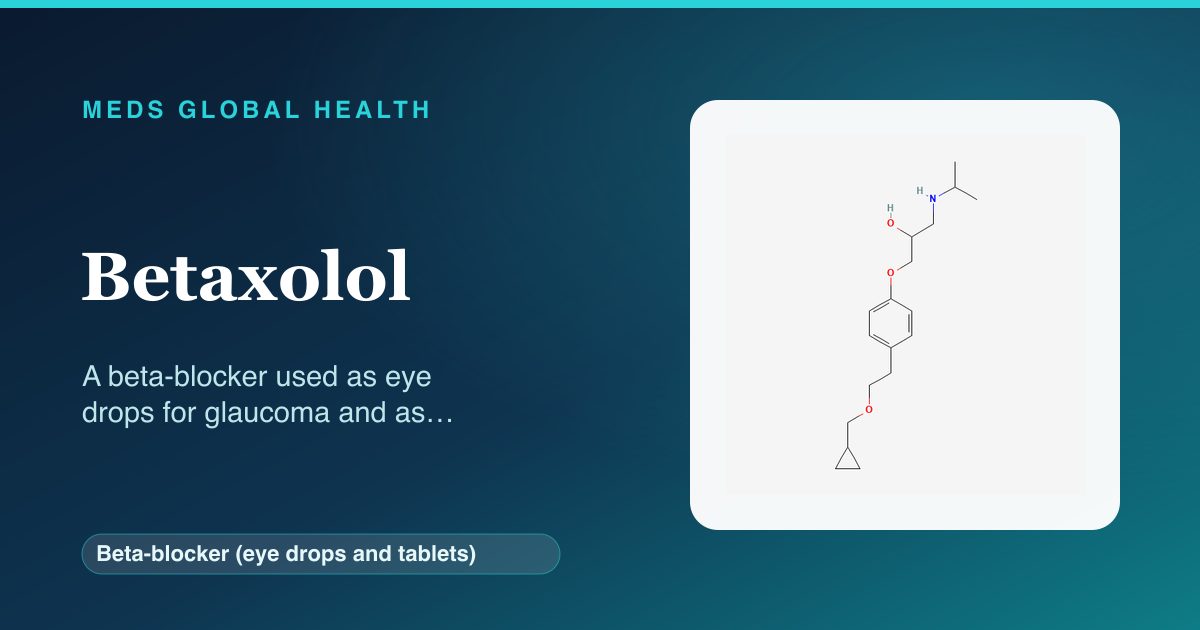
Betaxolol is a beta-blocker, a medicine that blocks the action of certain stress hormones on the heart and elsewhere. It is used in two main ways: as eye drops to reduce the pressure inside the eye in glaucoma and raised eye pressure, and as tablets to lower high blood pressure. The eye drops are a more selective beta-blocker, which is thought to make them a little less likely to cause wheezing than non-selective drops such as timolol, although caution in asthma is still needed. It is a long-established medicine in both forms.
How it works
In glaucoma, betaxolol eye drops reduce how much fluid the eye produces, which lowers the pressure inside the eye and helps protect the optic nerve from damage. As tablets for high blood pressure, it blocks the effect of stress hormones on the heart, slowing the heart rate and reducing how hard the heart pumps, which lowers blood pressure. Even though the eye drops are placed in the eye, a small amount can still be absorbed into the body, which is why effects such as slowing the heart or affecting breathing are possible, particularly in people sensitive to beta-blockers.
Company & origin
A beta-blocker used in the UK as eye drops to lower pressure in glaucoma and as tablets to treat high blood pressure.
What it treats
Conditions Betaxolol is used for
Practical use
How to take Betaxolol
General, dose-free guidance — always follow your prescriber's and the leaflet's specific instructions.
- For the eye drops, put them in as directed and press gently on the inner corner of the eye for a minute or so to reduce body absorption.
- If you use other eye drops, leave a few minutes between them so each is not washed out.
- For the tablets, take them regularly as prescribed to keep your blood pressure controlled.
- Do not stop a beta-blocker suddenly; any change should be made gradually under your prescriber's guidance.
- Tell your prescriber about asthma, wheeze, a slow heart rate or diabetes before starting either form.
Weighing it up
Advantages & disadvantages of Betaxolol
Advantages
- Eye drops effectively lower the pressure inside the eye in glaucoma.
- Thought to carry a lower risk of triggering wheeze than non-selective drops such as timolol.
- Tablets are an effective, long-established treatment for high blood pressure.
Disadvantages
- Should still be used with caution in asthma, as even eye drops can occasionally affect breathing.
- Tablets can slow the heart and cause tiredness and cold hands and feet.
- Like all beta-blockers, should not be stopped suddenly, as this can be harmful.
Practical use
Good to know
It helps to know betaxolol exists as both eye drops and tablets, with the drops used for glaucoma and the tablets for blood pressure. For the eye drops, a useful tip is to press gently on the inner corner of the eye for a minute or so after instilling them, which reduces how much is absorbed into the body. Although betaxolol is more selective and thought to carry less wheeze risk than timolol, it should still be used with caution in asthma, as even eye drops can occasionally affect breathing. For the tablets, common effects are a slower heartbeat, tiredness and cold hands and feet, and an important rule with any beta-blocker is not to stop it suddenly, as stopping abruptly can worsen heart symptoms; any change should be made gradually under guidance. Tell your prescriber about asthma, slow heart rates or diabetes before starting.
Who should not take it / use with caution
- People who have had a serious allergic reaction to betaxolol should not use it.
- It is used with caution, and sometimes avoided, in people with asthma or a history of wheeze, even as eye drops.
- It is used with caution in people with a very slow heart rate or certain heart-rhythm problems, and in some people with diabetes, as it can mask warning signs of low blood sugar.
Monitoring
- For glaucoma, regular eye-pressure checks and eye reviews to make sure the pressure is controlled.
- For the tablets, checking blood pressure and heart rate.
- Watching for breathing symptoms, tiredness or a very slow heartbeat.
Side effects
- For the eye drops, brief stinging or discomfort and, occasionally, dry or irritated eyes.
- A slower heartbeat, tiredness, dizziness or cold hands and feet, more often with the tablets.
- Occasionally, wheeze or breathing difficulty, particularly in people prone to asthma.
- Vivid dreams or low mood in some people taking the tablets.
Key interactions
- It is used with care alongside other medicines that slow the heart, such as certain heart-rhythm medicines and some calcium-channel blockers.
- It can add to the blood-pressure-lowering effect of other blood-pressure medicines.
- In people with diabetes, it can mask some warning signs of low blood sugar, so this is discussed.
Available as: Eye drops for glaucoma and tablets taken by mouth for high blood pressure.
Answers
Betaxolol: frequently asked questions
What is betaxolol used for?
As eye drops it lowers the pressure inside the eye in glaucoma, and as tablets it is used to treat high blood pressure.
Are the eye drops safer for asthma than timolol?
They are more selective and thought to carry a lower wheeze risk than timolol, but caution in asthma is still needed, as even drops can affect breathing.
Why press on the corner of my eye after drops?
Pressing gently on the inner corner for a minute or so reduces how much of the medicine is absorbed into the rest of the body.
Can I stop the tablets suddenly?
No. Like all beta-blockers, betaxolol tablets should not be stopped suddenly, as this can worsen heart symptoms; any change should be gradual and guided.
What are the common side effects of the tablets?
A slower heartbeat, tiredness, dizziness and cold hands and feet are common; report wheeze or a very slow heartbeat to your prescriber.
The wider class
About Beta-blocker (eye drops and tablets)
Betaxolol belongs to the beta-blocker (eye drops and tablets) class. For how the class as a whole works, its shared safety principles and monitoring, see the full guide.
Browse by body system
Authoritative sources
- BNF
- NICE CKS
Building a medicines information resource?
We create evidence-led, dose-free drug and formulary references for teams.