A (non-selective) beta-blocker
Propranolol
A non-selective beta-blocker with broad uses — blood pressure, migraine prevention and the physical symptoms of anxiety.
What is Propranolol?
Propranolol is a long-established non-selective beta-blocker that slows the heart and blunts the body's adrenaline response. It is used for conditions such as high blood pressure, angina, irregular heart rhythms, migraine prevention, and the physical symptoms of anxiety such as a racing heart and tremor.
Education and reference only. This is a plain-language guide to Propranolol — it deliberately contains no doses. Doses depend on the person, the brand and the reason for treatment, and belong with your prescriber. Always check the BNF, the product labelling (SmPC) and follow medical advice.
What it is
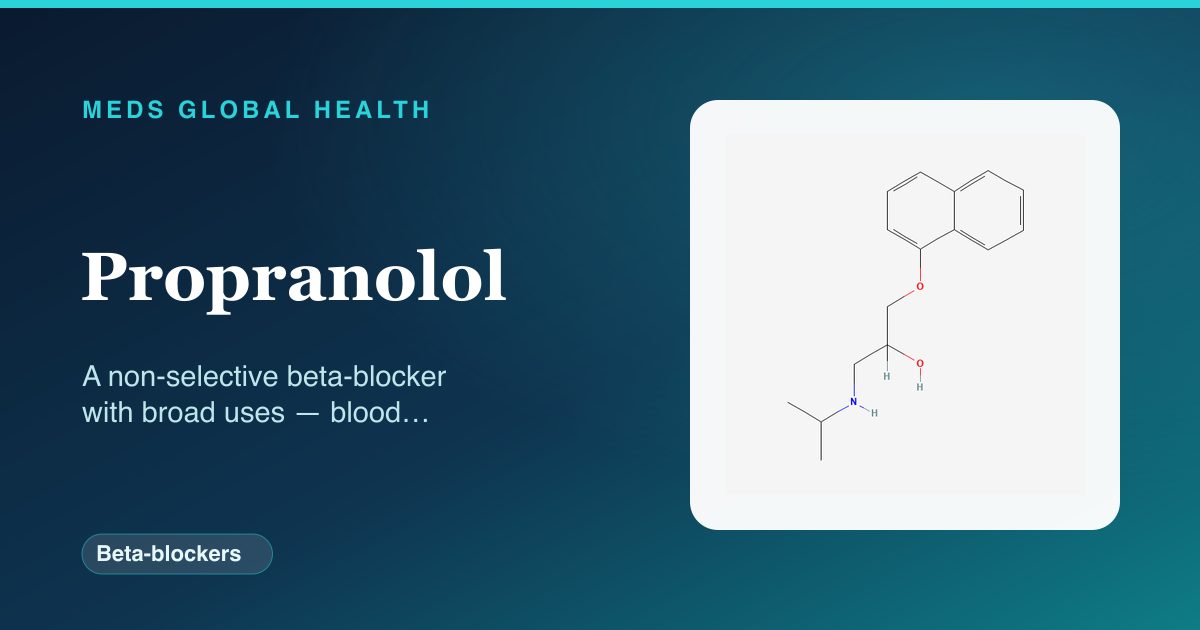
Propranolol is a long-established "non-selective" beta-blocker — meaning it acts on beta receptors throughout the body, not just the heart. This broad action gives it a wide range of uses: lowering blood pressure, preventing migraines, easing the physical symptoms of anxiety (such as a racing heart, palpitations, tremor and performance anxiety), and controlling the symptoms of an overactive thyroid. It is taken as a tablet, and because it is shorter-acting than some other beta-blockers it is often taken more than once a day.
How it works
Propranolol blocks beta receptors, reducing the effect of adrenaline-type stress signals on the body. In the heart this slows the rate and eases the force of each beat, which lowers blood pressure and calms the palpitations and tremor of anxiety. Its effect on these stress signals is also thought to underlie how it prevents migraines and why it settles the racing heart and shakiness of an overactive thyroid. Because it is non-selective, it acts on receptors in the airways too — which is why it must be used with great care in people with asthma.
Company & origin
Originated / developed by: AstraZeneca (originated at ICI).
Propranolol was the first clinically successful beta-blocker, discovered by Sir James Black and colleagues at Imperial Chemical Industries (ICI, the pharmaceutical arm later became Zeneca, now AstraZeneca) in the United Kingdom in the early 1960s. It was introduced in 1964 and marketed as Inderal; Black later won the Nobel Prize for this work.
What it treats
Conditions Propranolol is used for
Practical use
How to take Propranolol
General, dose-free guidance — always follow your prescriber's and the leaflet's specific instructions.
- Usually taken one or more times a day, depending on the formulation and what it is treating.
- Standard tablets are taken with water; slow-release capsules must be swallowed whole, not opened or crushed.
- Can be taken with or without food, but try to be consistent.
- If you miss a dose, skip it and take the next one as usual — do not double up.
- Do not stop suddenly, as this can cause a rebound rise in heart rate or blood pressure.
- Tell your doctor if you have asthma, as propranolol can worsen breathing problems.
Weighing it up
Advantages & disadvantages of Propranolol
Advantages
- Versatile — useful for heart conditions, migraine and anxiety symptoms.
- Particularly good at easing physical anxiety symptoms like palpitations and tremor.
- Long-established and inexpensive.
- Effective for preventing migraine attacks.
Disadvantages
- Non-selective action means a higher chance of worsening asthma than heart-selective beta-blockers.
- Can cause tiredness, cold hands and feet, and vivid dreams.
- Must not be stopped abruptly.
- Can mask warning signs of low blood sugar in people with diabetes.
Practical use
Good to know
It must never be stopped abruptly, as suddenly stopping a beta-blocker can cause a rebound increase in heart rate and chest pain; if it needs to stop, it is reduced gradually. For migraine it is used as a preventer, taken regularly to reduce how often attacks happen — not to treat an attack in progress. For anxiety it eases the physical symptoms rather than changing your thoughts, so it is often used for specific situations such as performance anxiety. Tiredness, cold hands and vivid dreams are common.
Who should not take it / use with caution
- People with asthma — propranolol can trigger wheeze and a serious asthma attack, so it is generally avoided; it is used with great caution in other airways disease.
- People with certain slow or blocked heart rhythms (e.g. some heart block), a very slow heart rate or low blood pressure, or uncontrolled heart failure.
- Used with caution in people with diabetes (it can mask the warning signs of a low blood sugar) and in severe circulation problems in the hands and feet.
Monitoring
- Heart rate and blood pressure
- Breathing in anyone with airways disease
- Response of the condition being treated — for example migraine frequency or anxiety symptoms
Side effects
- Tiredness, cold hands and feet, and a slow pulse.
- Dizziness, especially when starting or increasing.
- Vivid dreams, disturbed sleep or nightmares; in people with asthma it can trigger wheeze, and in diabetes it can blunt the early warning signs of a low blood sugar.
Key interactions
- Other heart-rate-lowering medicines (e.g. diltiazem, verapamil, digoxin) can slow the heart too much.
- Care alongside other blood-pressure-lowering medicines, as blood pressure can fall too far.
- Can mask the warning signs of a low blood sugar in people with diabetes; care with some asthma inhalers and certain other medicines.
Available as: Tablets (several strengths), including a slow-release form; a liquid is available for those who cannot swallow tablets.
Answers
Propranolol: frequently asked questions
Can I stop propranolol suddenly?
No — stopping a beta-blocker abruptly can cause a rebound fast heart rate, raised blood pressure and chest pain, and can be dangerous in heart disease. If it needs to stop, it is reduced gradually under guidance.
Can I take propranolol if I have asthma?
Generally no. As a non-selective beta-blocker, propranolol can trigger wheezing and a serious asthma attack, so it is usually avoided in asthma. Always tell your prescriber about any asthma or breathing condition so a safer choice can be made.
Does propranolol treat a migraine attack?
No — it is used to prevent migraines, taken regularly to reduce how often attacks happen. It does not stop an attack that has already started; a separate medicine is used for that.
How does propranolol help with anxiety?
It eases the physical symptoms of anxiety — such as a racing heart, palpitations and tremor — rather than changing anxious thoughts. This makes it useful for situations like performance anxiety, and it is often used alongside other approaches such as talking therapy.
Is Inderal the same as propranolol?
Yes — propranolol is the generic (active-ingredient) name and Inderal is a brand name; both contain the same active ingredient.
The wider class
About Beta-blockers
Propranolol belongs to the beta-blockers class. For how the class as a whole works, its shared safety principles and monitoring, see the full guide.
Browse by body system
Authoritative sources
- BNF: Propranolol hydrochloride.
- electronic Medicines Compendium (SmPC): Propranolol.
- NICE CKS: Propranolol.
Building a medicines information resource?
We create evidence-led, dose-free drug and formulary references for teams.