A beta-blocker
Oxprenolol
An older beta-blocker used for high blood pressure, angina and palpitations linked to anxiety.
What is Oxprenolol?
Oxprenolol is an older beta-blocker used to treat high blood pressure and angina, and to ease the racing heart and palpitations that can come with anxiety. Beta-blockers work by blocking the effect of adrenaline-like signals, so the heart beats more slowly and less forcefully, lowering blood pressure and reducing the workload on the heart. The usual beta-blocker cautions apply: it can worsen asthma, slow the heart too much, and should not be stopped abruptly, as this can cause a rebound in symptoms. Newer beta-blockers are now more commonly chosen.
Education and reference only. This is a plain-language guide to Oxprenolol — it deliberately contains no doses. Doses depend on the person, the brand and the reason for treatment, and belong with your prescriber. Always check the BNF, the product labelling (SmPC) and follow medical advice.
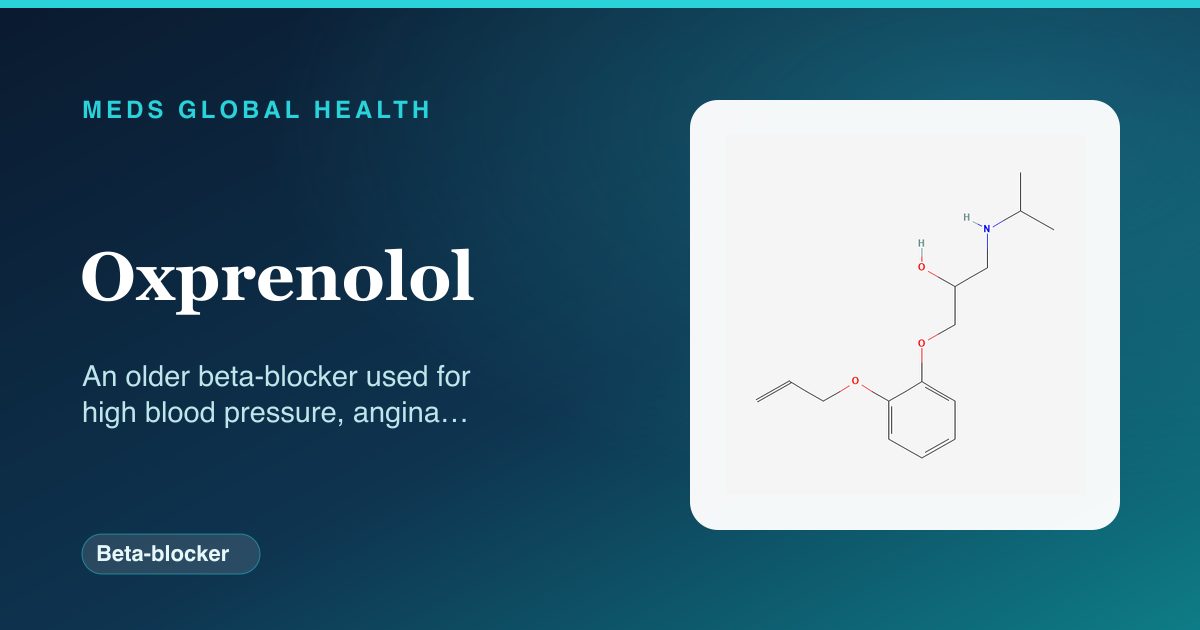
What it is
Oxprenolol is a beta-blocker, a type of medicine that blocks the effect of adrenaline and similar 'fight or flight' signals on the heart and blood vessels. It is an older member of the family, used to treat high blood pressure and angina (chest pain from the heart), and to calm the fast heartbeat, palpitations and tremor that can accompany anxiety. By slowing the heart and easing how hard it pumps, it lowers blood pressure and reduces the heart's workload. It is taken by mouth, and these days newer beta-blockers are more often prescribed.
How it works
When adrenaline-like signals act on 'beta' receptors, the heart speeds up and beats harder and blood pressure rises. Oxprenolol blocks these receptors, so the heart slows and pumps less forcefully, which lowers blood pressure and reduces the strain on the heart in angina. The same calming effect on the heart helps with the racing pulse, palpitations and shakiness that anxiety can bring. Because it damps down the body's adrenaline response, it should be reduced gradually rather than stopped suddenly.
Company & origin
An older beta-blocker used in the UK for high blood pressure, angina and palpitations linked to anxiety.
What it treats
Conditions Oxprenolol is used for
Practical use
How to take Oxprenolol
General, dose-free guidance — always follow your prescriber's and the leaflet's specific instructions.
- Take it regularly as prescribed, at around the same times each day, to keep its effect steady.
- Do not stop it suddenly; if it needs to be stopped, your prescriber will reduce it gradually to avoid a rebound in symptoms.
- Tell your prescriber about any asthma or breathing problems before starting, as beta-blockers can make these worse.
- If you have diabetes, be aware it can mask some warning signs of low blood sugar, such as a racing heartbeat.
- Report a very slow pulse, marked tiredness, breathlessness or cold hands and feet to your prescriber.
Weighing it up
Advantages & disadvantages of Oxprenolol
Advantages
- Effectively lowers high blood pressure and reduces angina by easing the heart's workload.
- Calms the physical signs of anxiety such as palpitations, a racing pulse and tremor.
- A long-established, well-understood beta-blocker taken by mouth.
Disadvantages
- Can worsen asthma and other breathing problems and is unsuitable for some people.
- Can cause tiredness, cold hands and feet, a slow heartbeat and vivid dreams.
- Must not be stopped suddenly, and newer beta-blockers are now more commonly preferred.
Practical use
Good to know
Oxprenolol is an older beta-blocker, and while it still works, newer ones are now more commonly chosen for blood pressure and heart conditions. The usual beta-blocker cautions apply: it can narrow the airways and worsen asthma or other breathing problems, so it is avoided or used very carefully in people with these conditions; it can slow the heart too much or cause tiredness, cold hands and feet, and vivid dreams. A key safety point is that it should never be stopped abruptly, as suddenly removing a beta-blocker can cause a rebound worsening of angina or blood pressure; any change is made gradually. People with diabetes should know it can mask some warning signs of low blood sugar, such as a fast heartbeat. When used for anxiety symptoms, it helps the physical signs such as palpitations and tremor rather than the worried feelings themselves.
Who should not take it / use with caution
- People with asthma or other serious breathing problems should usually avoid it.
- It should not be used by people with a very slow heart rate or certain heart-conduction (heart block) problems.
- It is avoided in untreated heart failure or very low blood pressure without specialist advice.
Monitoring
- Checking blood pressure and heart rate to confirm it is working and not slowing the heart too much.
- Reviewing breathing in anyone prone to asthma and asking about tiredness or cold hands and feet.
- Ensuring it is reduced gradually rather than stopped suddenly when changes are made.
Side effects
- Tiredness, cold hands and feet, and a slow heartbeat are common.
- Dizziness, especially on standing, and sometimes vivid dreams or disturbed sleep.
- Less commonly, wheezing in people prone to asthma, low mood or stomach upset.
Key interactions
- Other medicines that slow the heart, such as certain calcium-channel blockers and digoxin, can add to its effect.
- Combining it with other blood-pressure medicines can lower blood pressure further.
- It can affect how warning signs of low blood sugar feel in people taking diabetes medicines.
Available as: Tablets taken by mouth.
Answers
Oxprenolol: frequently asked questions
What is oxprenolol used for?
It is a beta-blocker used for high blood pressure and angina, and to ease the physical signs of anxiety such as palpitations, a racing pulse and tremor.
Can I stop taking it if I feel fine?
No. Beta-blockers should not be stopped suddenly, as this can cause a rebound worsening of angina or blood pressure; your prescriber will reduce it gradually if needed.
Is it safe if I have asthma?
Beta-blockers can narrow the airways and worsen asthma, so it is usually avoided or used very carefully; tell your prescriber about any breathing problems.
Does it treat the feelings of anxiety?
It mainly helps the physical signs of anxiety, such as palpitations and tremor, rather than the worried thoughts and feelings themselves.
Why might I be offered a newer beta-blocker instead?
Oxprenolol is an older beta-blocker; newer ones are now more commonly chosen, though your prescriber may still use it where it suits you.
The wider class
About Beta-blocker
Oxprenolol belongs to the beta-blocker class. For how the class as a whole works, its shared safety principles and monitoring, see the full guide.
Browse by body system
Authoritative sources
- BNF
- NICE CKS
Building a medicines information resource?
We create evidence-led, dose-free drug and formulary references for teams.