A beta-blocker with extra heart-rhythm action
Sotalol
A beta-blocker with extra rhythm-controlling action used to treat and prevent certain abnormal heart rhythms, including atrial fibrillation.
What is Sotalol?
Sotalol is a beta-blocker that also has an extra action on the heart's electrical rhythm, used to control and prevent abnormal heart rhythms such as atrial fibrillation. This rhythm action can lengthen part of the heartbeat (the QT interval), so it is started carefully and monitored with ECGs. It should never be stopped suddenly.
Education and reference only. This is a plain-language guide to Sotalol — it deliberately contains no doses. Doses depend on the person, the brand and the reason for treatment, and belong with your prescriber. Always check the BNF, the product labelling (SmPC) and follow medical advice.
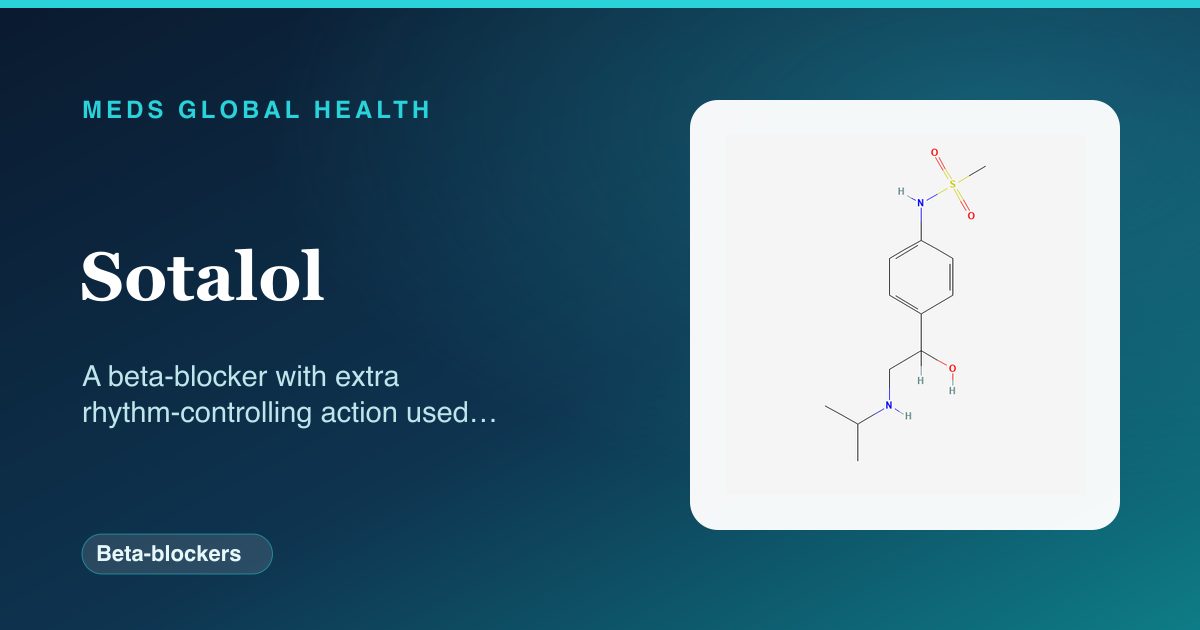
What it is
Sotalol is a beta-blocker that differs from the others by also having an additional 'class III' antiarrhythmic action on the heart's electrical system. This makes it useful not just for slowing and steadying the heart but for treating and preventing certain abnormal heart rhythms, including atrial fibrillation and some life-threatening rhythms. Because of these extra effects it is prescribed by specialists and started under closer supervision than ordinary beta-blockers.
How it works
As a beta-blocker, sotalol blocks the effect of adrenaline on the heart, slowing the heart rate and steadying it. Its second action lengthens the time the heart's electrical system takes to reset between beats (the QT interval and the heart muscle's recovery period), which helps suppress abnormal rhythms. This same lengthening, however, can occasionally trigger its own dangerous rhythm, which is why it has to be started carefully, often with an ECG, and why electrolytes such as potassium are kept in balance.
Company & origin
Originated / developed by: Introduced as an antiarrhythmic beta-blocker.
Sotalol is a beta-blocker that also has additional 'class III' antiarrhythmic action, introduced in the 1960s and later established as a treatment for heart rhythm disorders. Because of its rhythm effects it is started and monitored more carefully than ordinary beta-blockers.
What it treats
Conditions Sotalol is used for
Practical use
How to take Sotalol
General, dose-free guidance — always follow your prescriber's and the leaflet's specific instructions.
- Take it regularly as prescribed; it is a beta-blocker with an extra rhythm-controlling action, not an ordinary blood-pressure tablet.
- Never stop it suddenly — doing so can cause a rebound fast heartbeat or worsening rhythm problems, so any change is made gradually under specialist guidance.
- Report palpitations, fainting, severe dizziness or a very slow pulse promptly, as these can signal a rhythm problem.
- Attend for ECGs and blood tests as arranged, as the medicine can affect the heart's electrical timing and is affected by salts such as potassium.
- Tell any prescriber or pharmacist you take sotalol before starting new medicines, including some antibiotics and antifungals, which can add to its rhythm effect.
- Avoid becoming dehydrated from severe vomiting or diarrhoea without advice, as low salts can increase the risk of rhythm problems.
Weighing it up
Advantages & disadvantages of Sotalol
Advantages
- Combines beta-blockade with an extra rhythm-controlling action, useful for both rate and rhythm in conditions such as atrial fibrillation.
- Effective at preventing certain abnormal rhythms from returning.
- Long-established with well-understood effects and monitoring.
Disadvantages
- Can lengthen the QT interval and, rarely, trigger a dangerous heart rhythm of its own, so it needs careful starting and ECG monitoring.
- Must never be stopped abruptly because of rebound effects.
- Shares ordinary beta-blocker side effects such as tiredness, cold hands and a slow pulse.
- Needs caution with low potassium or magnesium and with several other QT-affecting medicines.
Practical use
Good to know
Sotalol is more than an ordinary beta-blocker — its extra rhythm action can lengthen part of the heartbeat (the QT interval), which is helpful for controlling rhythm but can rarely cause a serious abnormal rhythm of its own. For this reason it is started carefully, often in or close to hospital with ECG checks, and salts such as potassium and magnesium are kept in balance. It must never be stopped suddenly, as this can cause a rebound in heart rate or rhythm problems. Palpitations, fainting or dizziness should be reported promptly.
Who should not take it / use with caution
- People with certain slow or blocked heart rhythms (such as some heart block) without a pacemaker, very low blood pressure, or uncontrolled heart failure.
- People with a long QT interval, a history of certain dangerous rhythms (such as torsades de pointes), or significantly reduced kidney function, which raises levels.
- Used with caution in asthma or significant lung disease, low potassium or magnesium, and alongside other medicines that lengthen the QT interval.
Monitoring
- ECG, particularly the QT interval, around starting and dose changes
- Heart rate, blood pressure and rhythm
- Kidney function and blood salts (potassium, magnesium)
Side effects
- Tiredness, cold hands and feet, a slow pulse, and dizziness — typical beta-blocker effects.
- Breathlessness or wheeze in those prone to it, and sometimes vivid dreams or low mood.
- Importantly, palpitations, fainting or a sense of an irregular heartbeat may signal a rhythm disturbance and should be reported urgently.
Key interactions
- Other medicines that lengthen the QT interval (some antibiotics, antifungals, antipsychotics and antidepressants) add to the risk of dangerous rhythms.
- Medicines and conditions that lower potassium or magnesium (such as some diuretics) increase rhythm risk.
- Care with other heart-slowing or blood-pressure-lowering medicines and with anti-arrhythmics; it can mask warning signs of low blood sugar in diabetes.
Available as: Tablets. A hospital injection of the same medicine also exists for specialist use.
Answers
Sotalol: frequently asked questions
How is sotalol different from an ordinary beta-blocker?
As well as the usual beta-blocker effect of slowing and steadying the heart, sotalol has a second action that helps control abnormal rhythms. That extra action can lengthen part of the heartbeat (the QT interval), which is why it is started more carefully, often with ECG checks, than ordinary beta-blockers.
Why must I not stop sotalol suddenly?
Stopping a beta-blocker like sotalol abruptly can cause a rebound — a fast heartbeat, raised blood pressure or a return of rhythm problems, which can be dangerous. Any change is made gradually under specialist guidance, never on your own.
Why do I need ECGs on this medicine?
Sotalol can lengthen the QT interval, the time the heart takes to reset between beats. Rarely this can trigger a serious rhythm, so an ECG is used when starting and when the dose changes to make sure the timing stays safe.
What symptoms should make me seek help urgently?
Report palpitations, a fluttering or irregular heartbeat, fainting, severe dizziness or a very slow pulse promptly, as these can signal a rhythm problem. Seek urgent help if you faint or feel your heart is beating abnormally.
Does it matter if my potassium is low?
Yes. Low potassium or magnesium increases the risk of sotalol causing an abnormal rhythm. This is why blood salts are checked, and why severe vomiting or diarrhoea, which can lower them, should be reported rather than managed alone.
The wider class
About Beta-blockers
Sotalol belongs to the beta-blockers class. For how the class as a whole works, its shared safety principles and monitoring, see the full guide.
Browse by body system
Authoritative sources
- BNF: Sotalol.
- MHRA Drug Safety Update: sotalol and QT-interval prolongation.
- electronic Medicines Compendium (SmPC): Sotalol.
Building a medicines information resource?
We create evidence-led, dose-free drug and formulary references for teams.