An oral cephalosporin antibiotic
Cefpodoxime
An oral cephalosporin antibiotic used to treat certain bacterial infections, such as some chest, urine and skin infections.
What is Cefpodoxime?
Cefpodoxime is an oral third-generation cephalosporin antibiotic used to treat certain bacterial infections. It works by killing the bacteria causing the infection. Because it is closely related to penicillin, people with a serious penicillin allergy may also react to it. It needs stomach acid to be absorbed properly, so antacids and acid-reducing medicines such as proton pump inhibitors can stop it working as well; it is best taken with food. As with other antibiotics, it can occasionally cause a serious gut infection called Clostridioides difficile.
Education and reference only. This is a plain-language guide to Cefpodoxime — it deliberately contains no doses. Doses depend on the person, the brand and the reason for treatment, and belong with your prescriber. Always check the BNF, the product labelling (SmPC) and follow medical advice.
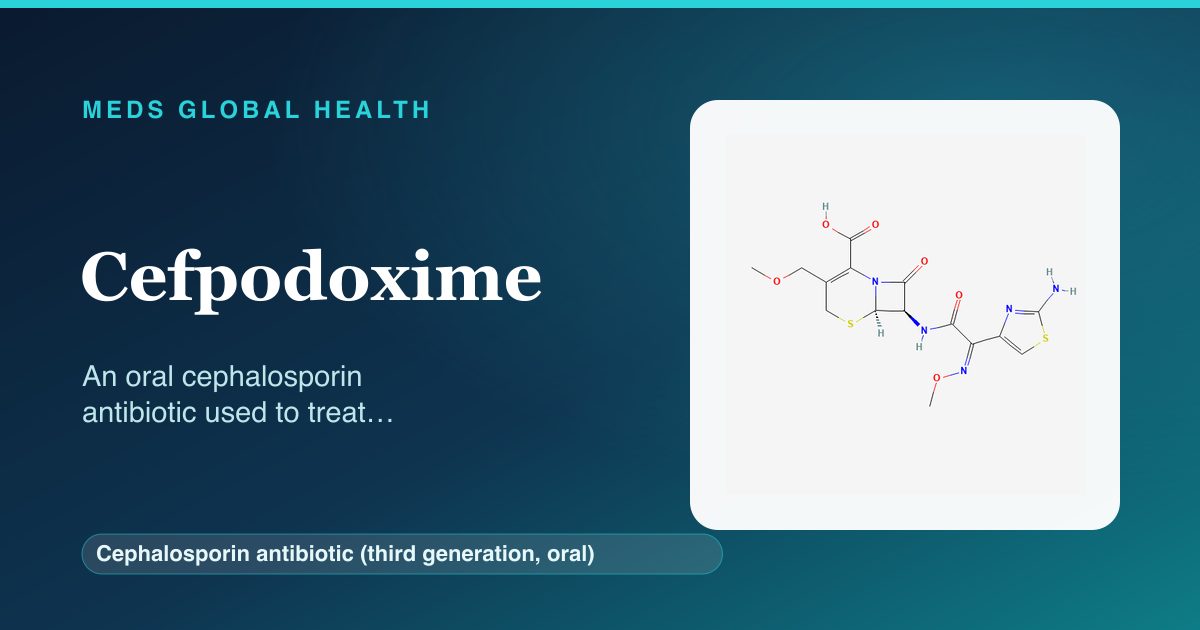
What it is
Cefpodoxime is an antibiotic from the cephalosporin family, a group closely related to penicillins. It is taken by mouth and is used to treat a range of bacterial infections, such as some chest infections, urine infections, and skin and soft-tissue infections, when a suitable antibiotic is needed. It is described as a third-generation cephalosporin, meaning it is active against a broad range of bacteria. Like all antibiotics, it only works against bacteria and has no effect on viruses such as colds or flu.
How it works
Cefpodoxime kills bacteria by stopping them from building their protective cell wall, so the bacteria break apart and die. This clears the infection and lets the body recover. Because it is taken by mouth, it needs to be absorbed from the gut, and it relies on stomach acid to dissolve properly, which is why food helps and why strong acid-reducing medicines can lower how much gets into the body. Taking the full course as prescribed helps make sure the infection is fully cleared and reduces the chance of bacteria becoming resistant.
Company & origin
An oral antibiotic used in the UK to treat certain bacterial infections, belonging to the cephalosporin family.
Practical use
How to take Cefpodoxime
General, dose-free guidance — always follow your prescriber's and the leaflet's specific instructions.
- Take it with food, as this helps it be absorbed properly.
- Keep it apart from antacids and acid-reducing medicines such as PPIs, which can stop it working as well; ask your pharmacist about timing.
- Take it at evenly spaced times and finish the whole course, even if you feel better.
- Tell your prescriber if you have ever had a serious allergic reaction to penicillin or another antibiotic.
- Report severe or watery diarrhoea during or after treatment, as it can occasionally signal a gut infection.
Weighing it up
Advantages & disadvantages of Cefpodoxime
Advantages
- An effective oral antibiotic active against a broad range of bacteria.
- Taken by mouth, avoiding the need for injections for many infections.
- A useful option when a third-generation cephalosporin is appropriate.
Disadvantages
- People with a serious penicillin allergy may also react to it.
- Antacids and acid-reducing medicines can reduce how well it is absorbed.
- Like all antibiotics, it can upset the gut and, uncommonly, cause Clostridioides difficile infection.
Practical use
Good to know
Two practical points stand out with cefpodoxime. First, because it is closely related to penicillin, anyone who has had a serious allergic reaction to penicillin should tell their prescriber, as a small number of people react to both. Second, it needs stomach acid to be absorbed, so it is best taken with food, and antacids or acid-reducing medicines such as proton pump inhibitors (PPIs) and H2 blockers can reduce how well it works; these may need to be spaced apart or reviewed. As with any antibiotic, it can upset the balance of bacteria in the gut and, uncommonly, lead to a serious infection called Clostridioides difficile, so any severe or watery diarrhoea during or after treatment should be reported. Finishing the prescribed course matters, even once you feel better.
Who should not take it / use with caution
- People who have had a serious allergic reaction to cefpodoxime or other cephalosporins should not take it.
- It is used with caution in people who have had a severe allergic reaction to penicillin, because of possible cross-reaction.
- It is used with care in people with significant kidney problems, who may need a review of treatment.
Monitoring
- Reviewing whether the infection is responding to treatment.
- Watching for signs of an allergic reaction, especially in people with a penicillin allergy.
- Watching for severe diarrhoea that could suggest a gut infection.
Side effects
- Diarrhoea, nausea or stomach upset.
- Thrush or other changes from the balance of bacteria being disturbed.
- Allergic reactions, ranging from rash to, rarely, a serious reaction needing urgent care.
- Uncommonly, severe or watery diarrhoea from Clostridioides difficile infection, which needs prompt attention.
Key interactions
- Antacids and acid-reducing medicines such as PPIs and H2 blockers can reduce how well cefpodoxime is absorbed.
- It may affect some other medicines, so tell your prescriber everything you take.
- Tell your prescriber about any history of allergy to penicillins or cephalosporins before starting.
Available as: Tablets, and an oral liquid for those who cannot swallow tablets, taken by mouth.
Answers
Cefpodoxime: frequently asked questions
What is cefpodoxime used for?
It is an oral cephalosporin antibiotic used to treat certain bacterial infections, such as some chest, urine, and skin and soft-tissue infections.
Can I take it if I am allergic to penicillin?
Cefpodoxime is closely related to penicillin, so some people allergic to penicillin can react to it; tell your prescriber about any serious penicillin allergy before taking it.
Why should I avoid antacids and PPIs with it?
Cefpodoxime needs stomach acid to be absorbed, so antacids and acid-reducing medicines such as PPIs can reduce how well it works; ask your pharmacist about spacing them apart.
Should I take it with food?
Yes, taking cefpodoxime with food helps it be absorbed properly.
Why do I need to finish the course?
Finishing the whole course helps make sure the infection is fully cleared and reduces the chance of bacteria becoming resistant, even if you feel better sooner.
The wider class
About Cephalosporin antibiotic (third generation, oral)
Cefpodoxime belongs to the cephalosporin antibiotic (third generation, oral) class. For how the class as a whole works, its shared safety principles and monitoring, see the full guide.
Browse by body system
Authoritative sources
- BNF
- NICE CKS
Building a medicines information resource?
We create evidence-led, dose-free drug and formulary references for teams.