A tricyclic antidepressant
Desipramine
An older tricyclic antidepressant used mainly to treat depression.
What is Desipramine?
Desipramine is an older type of antidepressant known as a tricyclic. It is used mainly to treat depression, although in the UK newer antidepressants and other tricyclics are usually chosen first. The most important safety point is that tricyclics like desipramine can be dangerous in overdose, mainly because of their effects on the heart's rhythm, so only small supplies may be given to people at risk. They commonly cause drying effects such as a dry mouth, constipation and blurred vision, and can cause drowsiness and dizziness. It should not be stopped suddenly.
Education and reference only. This is a plain-language guide to Desipramine — it deliberately contains no doses. Doses depend on the person, the brand and the reason for treatment, and belong with your prescriber. Always check the BNF, the product labelling (SmPC) and follow medical advice.
What it is
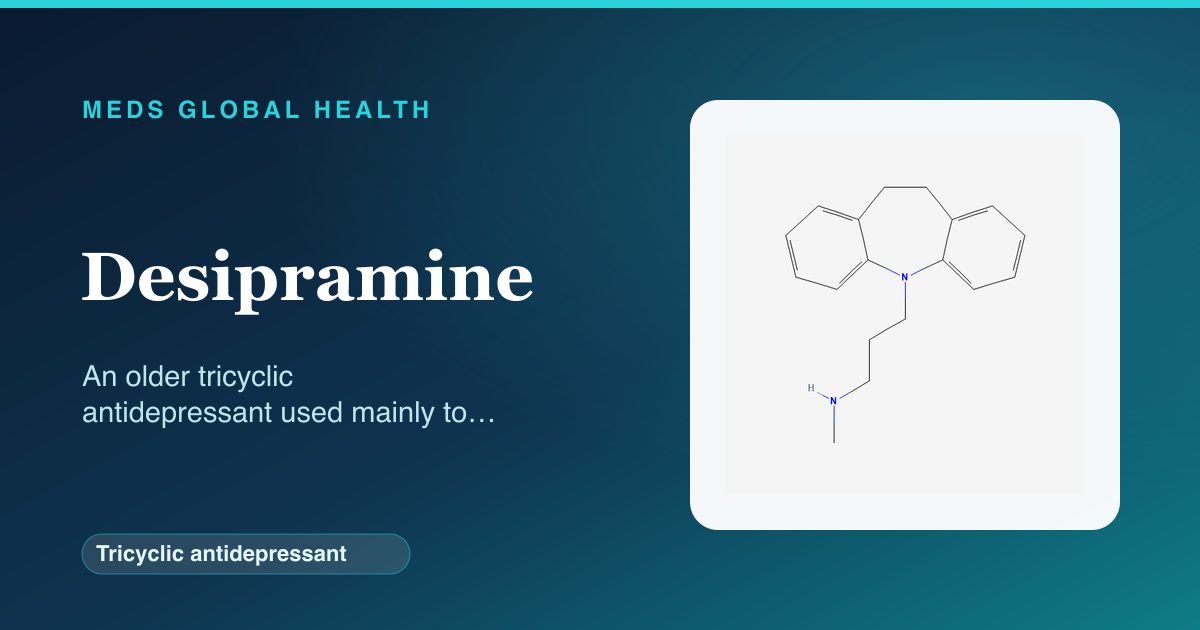
Desipramine is a tricyclic antidepressant, one of an older group of medicines used to treat depression. It works on the brain chemicals involved in mood. While tricyclics are effective, they tend to cause more side effects and are more dangerous in overdose than newer antidepressants, so they are often not the first choice today. Desipramine in particular is used mainly in the United States and is not a commonly used antidepressant in the UK, where other tricyclics and newer medicines are usually preferred. It is taken by mouth as tablets, under the supervision of a doctor.
How it works
Desipramine works by increasing the activity of certain chemical messengers in the brain, particularly noradrenaline, which are involved in regulating mood. Low activity of these messengers is linked to depression, so boosting it can gradually lift mood and ease symptoms. Like other antidepressants, it takes a few weeks of regular use to work properly, so it should not be judged after only a few days. As well as its effect on mood chemicals, it blocks other receptors in the body, which explains its drying side effects and its effects on the heart, and is why it can be harmful in overdose.
Company & origin
An older tricyclic antidepressant, used mainly in the United States; in the UK other tricyclics and newer antidepressants are usually preferred.
What it treats
Conditions Desipramine is used for
Practical use
How to take Desipramine
General, dose-free guidance — always follow your prescriber's and the leaflet's specific instructions.
- Take it regularly as prescribed, and give it a few weeks to work, as the benefit builds up gradually.
- Do not stop it suddenly; the dose should be reduced slowly under medical advice to avoid withdrawal-type symptoms.
- Be careful when standing up, as it can cause dizziness, and take care with driving until you know how it affects you.
- Tell your doctor straight away if your mood gets worse or you have distressing thoughts, especially in the first weeks.
- Keep it well out of reach of children and others, as taking too much can be very dangerous.
Weighing it up
Advantages & disadvantages of Desipramine
Advantages
- An effective treatment for depression that works on the brain chemicals involved in mood.
- A long-established medicine with decades of experience behind it.
- Taken by mouth as tablets.
Disadvantages
- Dangerous in overdose, mainly because of its effects on the heart's rhythm.
- Commonly causes drying effects such as dry mouth, constipation, blurred vision and difficulty passing urine.
- Can cause drowsiness and dizziness, and is generally not a first-choice antidepressant today.
Practical use
Good to know
The most important thing to know about desipramine, as with other tricyclics, is that it is dangerous if too much is taken: in overdose it can seriously disturb the heart's rhythm, which can be life-threatening. For this reason it is used with care, and sometimes only small amounts are supplied at a time, in people who may be at risk. It commonly causes antimuscarinic, or drying, effects such as a dry mouth, constipation, blurred vision and difficulty passing urine, and it can cause drowsiness and dizziness, especially on standing up, which can lead to falls in older people. It needs to be taken regularly for a few weeks before the full benefit is felt, and it should never be stopped suddenly, as this can cause withdrawal-type symptoms; the dose is reduced gradually instead. As with all antidepressants, watch for any worsening mood or distressing thoughts, especially early on, and seek help if these occur.
Who should not take it / use with caution
- People who have recently had a heart attack or who have certain serious heart-rhythm problems should not take it.
- It should not be taken with, or close to, another type of antidepressant called a monoamine oxidase inhibitor (MAOI).
- It is used with caution in people with heart disease, epilepsy, glaucoma, an enlarged prostate or a history of mania.
- People who have had a serious allergic reaction to it should not take it.
Monitoring
- Reviewing mood and any distressing thoughts, especially in the first weeks of treatment.
- Checking for side effects such as a fast heartbeat, dizziness or drying effects.
- Considering a heart tracing in people with heart concerns or when higher doses are used.
Side effects
- Dry mouth, constipation, blurred vision and difficulty passing urine.
- Drowsiness, dizziness on standing, and sometimes a faster heartbeat.
- Weight changes and, in some people, sexual difficulties.
- Rarely but seriously, dangerous heart-rhythm disturbances, particularly in overdose.
Key interactions
- It must not be combined with MAOI antidepressants, and care is needed when switching between them.
- Combining it with other medicines that affect the heart's rhythm increases the risk of rhythm problems.
- Alcohol and other sedating medicines add to its drowsiness, and some medicines can raise its levels in the body.
Available as: Tablets taken by mouth.
Answers
Desipramine: frequently asked questions
What is desipramine used for?
It is an older tricyclic antidepressant used mainly to treat depression, although in the UK newer antidepressants and other tricyclics are usually chosen first.
Why is overdose so dangerous?
Tricyclics like desipramine can seriously disturb the heart's rhythm if too much is taken, which can be life-threatening, so only small supplies may be given to people at risk.
How long does it take to work?
It usually takes a few weeks of regular use before the full benefit on mood is felt, so it should not be judged after just a few days.
Can I stop it once I feel better?
Do not stop it suddenly; the dose should be reduced gradually under medical advice to avoid withdrawal-type symptoms.
Why does it dry my mouth?
Desipramine blocks certain receptors in the body, which causes drying effects such as a dry mouth, constipation and blurred vision.
The wider class
About Tricyclic antidepressant
Desipramine belongs to the tricyclic antidepressant class. For how the class as a whole works, its shared safety principles and monitoring, see the full guide.
Browse by body system
Authoritative sources
- BNF
- NICE CKS
Building a medicines information resource?
We create evidence-led, dose-free drug and formulary references for teams.