A tricyclic antidepressant
Doxepin
An older, sedating tricyclic antidepressant for depression; it takes weeks to work, causes anticholinergic effects such as dry mouth and constipation, must not be stopped suddenly, and is dangerous and cardiotoxic if too much is taken.
What is Doxepin?
Doxepin is a tricyclic antidepressant (TCA) used in the UK to treat depression. It raises the levels of the brain chemicals noradrenaline and serotonin, which help to lift mood, and its sedating effect can also help with sleep. It takes a few weeks to work fully, should never be stopped abruptly, and is dangerous in overdose because it can severely affect the heart.
Education and reference only. This is a plain-language guide to Doxepin — it deliberately contains no doses. Doses depend on the person, the brand and the reason for treatment, and belong with your prescriber. Always check the BNF, the product labelling (SmPC) and follow medical advice.
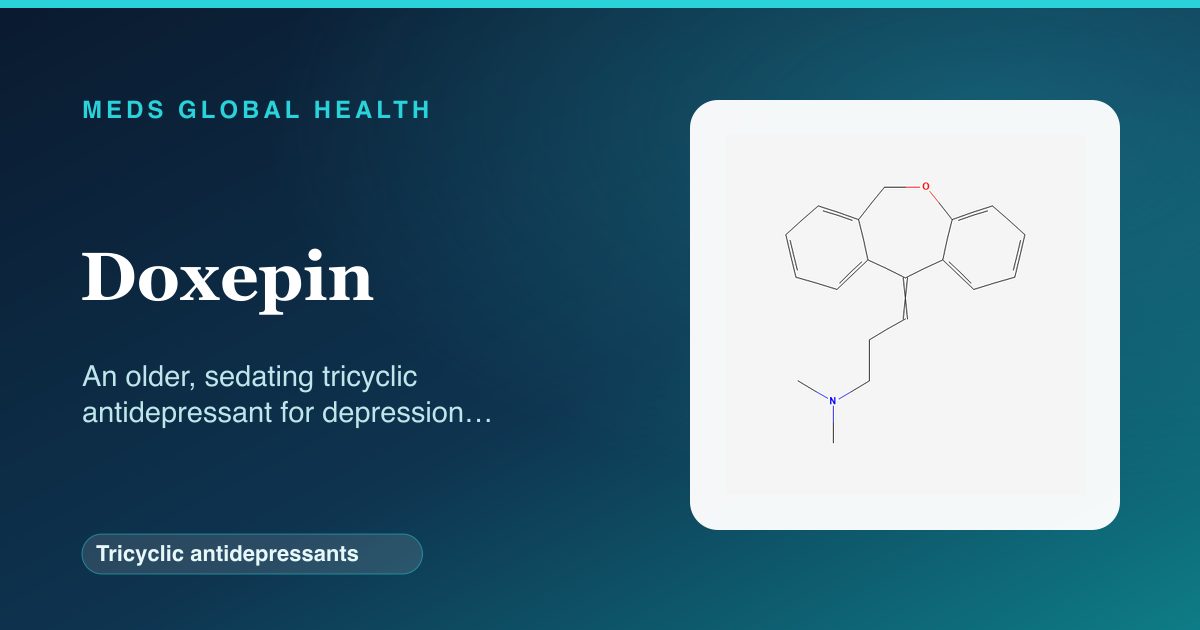
What it is
Doxepin is a tricyclic antidepressant, one of the older group of medicines for depression. It is used to treat depression, and because it is sedating it may suit people whose low mood comes with poor sleep or agitation. Tricyclics like doxepin work well but tend to cause more side effects than newer antidepressants, so they are often not the first choice.
How it works
Depression is linked to low activity of brain chemicals (neurotransmitters) such as serotonin and noradrenaline. Doxepin increases the amount of these chemicals available between nerve cells, which gradually helps to lift mood over a few weeks. It also blocks other receptors, including histamine and acetylcholine (muscarinic) receptors, which is why it is sedating and causes anticholinergic effects such as a dry mouth, constipation and blurred vision.
Company & origin
Originated / developed by: Available in the UK as branded Sinepin and as generic doxepin..
Doxepin is a tricyclic antidepressant (TCA) used in the UK for depression, and its sedating, anticholinergic profile is typical of this older class.
What it treats
Conditions Doxepin is used for
Practical use
How to take Doxepin
General, dose-free guidance — always follow your prescriber's and the leaflet's specific instructions.
- Take it regularly as prescribed, usually at the same time each day.
- Because it is sedating, it is often taken in the evening to help with sleep.
- Swallow the capsules with water; it can be taken with or without food.
- Keep taking it even if you feel no benefit at first, as it takes a few weeks to work.
- Do not stop it suddenly; it should be reduced slowly under medical guidance.
- Avoid alcohol, which adds to its drowsiness.
Weighing it up
Advantages & disadvantages of Doxepin
Advantages
- Effective for depression, with a sedating effect that can help disturbed sleep.
- Long-established medicine with well-understood effects.
- Can sometimes be taken once a day, often at night, though it may be split into divided doses.
- Available as both branded and generic in the UK.
Disadvantages
- Causes anticholinergic effects such as dry mouth, constipation and blurred vision.
- Sedating, which can cause daytime drowsiness.
- Very dangerous and toxic to the heart in overdose.
- Takes a few weeks to work and must not be stopped suddenly.
Practical use
Good to know
Doxepin takes a couple of weeks or more before its mood-lifting effect is felt, so it is important to keep taking it and not give up early. It must not be stopped suddenly, as this can cause withdrawal effects; it should be reduced gradually under medical advice. It is very dangerous in overdose because it is toxic to the heart, so a careful supply and storage are important.
Who should not take it / use with caution
- People who have recently had a heart attack or who have certain heart-rhythm problems.
- People with severe liver disease.
- People with an enlarged prostate causing difficulty passing urine, or certain types of glaucoma, without specialist advice.
- People taking a monoamine oxidase inhibitor (MAOI) antidepressant or who have recently stopped one.
Monitoring
- Mood and any thoughts of self-harm, especially when starting or changing the dose.
- As with all antidepressants, watch for increased low mood or thoughts of self-harm, especially in those under 25 and in the first weeks; tell your prescriber urgently if these occur. Use with caution in bipolar disorder (risk of switching to mania).
- Heart rhythm (ECG) in people with heart concerns.
- Side effects such as drowsiness, dry mouth and constipation.
Side effects
- Drowsiness or sedation.
- Dry mouth, constipation and blurred vision.
- Dizziness, especially on standing up.
- Weight gain.
- Less commonly, changes in heart rhythm.
Key interactions
- MAOI antidepressants, which must not be combined.
- Other sedating medicines and alcohol, which increase drowsiness.
- Medicines that can affect the heart's QT rhythm.
- Other anticholinergic medicines, which add to dry mouth and constipation.
Available as: Capsules taken by mouth.
Answers
Doxepin: frequently asked questions
How long does doxepin take to work?
Its effect on mood usually takes a couple of weeks or more to build up, so it is important to keep taking it even if you notice no benefit at first.
Is doxepin dangerous in overdose?
Yes. Like other tricyclic antidepressants, doxepin is very dangerous in overdose because it is toxic to the heart. Taking too much is a medical emergency, so it should be stored safely.
Can I stop taking doxepin suddenly?
No. Stopping suddenly can cause withdrawal effects. It should be reduced gradually under the guidance of your doctor.
Why does doxepin make me drowsy?
Doxepin blocks histamine receptors, which makes it sedating. This is why it is often taken in the evening and can help if low mood comes with poor sleep.
What are the common side effects of doxepin?
Common effects include drowsiness, a dry mouth, constipation, blurred vision and dizziness, which reflect its anticholinergic and sedating actions.
The wider class
About Tricyclic antidepressants
Doxepin belongs to the tricyclic antidepressants class. For how the class as a whole works, its shared safety principles and monitoring, see the full guide.
Browse by body system
Authoritative sources
- BNF
- NICE CKS
Building a medicines information resource?
We create evidence-led, dose-free drug and formulary references for teams.