A tricyclic antidepressant
Nortriptyline
A tricyclic antidepressant used for depression and, at lower intensity, for nerve pain and migraine prevention.
What is Nortriptyline?
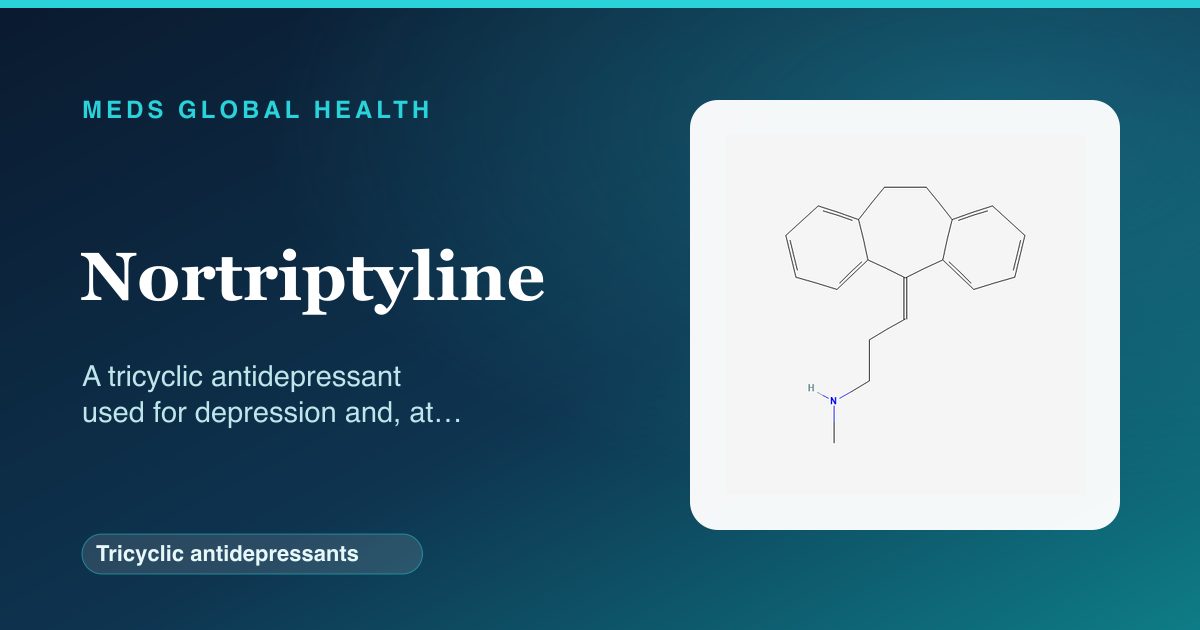
Nortriptyline is a tricyclic antidepressant. As well as treating depression, it is widely used at a lower intensity to help with long-term nerve pain, such as the pain that follows shingles or affects nerves in diabetes.
Education and reference only. This is a plain-language guide to Nortriptyline — it deliberately contains no doses. Doses depend on the person, the brand and the reason for treatment, and belong with your prescriber. Always check the BNF, the product labelling (SmPC) and follow medical advice.
What it is
Nortriptyline is a tricyclic antidepressant (TCA). As well as treating depression, it is widely used at a lower intensity to help with long-term nerve pain (such as the burning, shooting pain of nerve damage) and to help prevent migraines. In the UK it is sometimes seen under the brand Allegron, and in the US as Pamelor, though most prescriptions are generic. It tends to cause fewer of the dry-mouth, constipation and drowsiness effects than older tricyclics such as amitriptyline, which can make it a better-tolerated choice — but it shares the same cautions, including being dangerous in overdose.
How it works
Nortriptyline increases the levels of the brain chemical messengers noradrenaline and, to a lesser extent, serotonin, by slowing their reabsorption back into nerve cells. In depression this gradually lifts mood over a few weeks. In nerve pain and migraine it works differently — it dampens the way pain signals are processed in the nervous system, which is why it can help even when mood is fine, and usually at a gentler intensity than is used for depression.
Company & origin
Originated / developed by: Eli Lilly and Company.
Nortriptyline, a tricyclic antidepressant and active metabolite of amitriptyline, was developed by Eli Lilly and first approved in the United States in 1964 under the brand name Aventyl.
What it treats
Conditions Nortriptyline is used for
Practical use
How to take Nortriptyline
General, dose-free guidance — always follow your prescriber's and the leaflet's specific instructions.
- For nerve pain it is usually started low and built up slowly to find the level that helps with the fewest side effects.
- It can take a few weeks to work fully, so give it time and keep taking it regularly.
- It can cause drowsiness, so many people take it in the evening, and care is needed with driving until you know how it affects you.
- Do not stop it suddenly after regular use; it should be reduced gradually to avoid withdrawal effects.
- Avoid or limit alcohol, which adds to drowsiness.
- Tell your doctor about heart problems, glaucoma or difficulty passing urine before starting.
Weighing it up
Advantages & disadvantages of Nortriptyline
Advantages
- Useful for both depression and long-term nerve pain.
- Often improves sleep when taken in the evening.
- Long-established medicine with well-understood effects.
- Dose can be adjusted to balance benefit and side effects.
Disadvantages
- Commonly causes drowsiness, dry mouth, constipation and blurred vision.
- Can cause dizziness on standing and affect heart rhythm, so caution is needed in heart disease.
- More dangerous than newer antidepressants if too much is taken.
- Should be reduced gradually rather than stopped abruptly.
Practical use
Good to know
For pain or migraine it is started low and built up slowly, and the benefit can take several weeks to appear, so it is worth persevering. It is often taken in the evening because it can cause drowsiness, which can also help sleep. It tends to have fewer anticholinergic effects (dry mouth, constipation, blurred vision) than amitriptyline, but these can still occur. It should not be stopped abruptly after regular use — it is tapered to avoid withdrawal effects. Importantly, tricyclics are dangerous in overdose, so only the amount needed is kept at home and it must be kept away from children.
Who should not take it / use with caution
- People who have recently had a heart attack, or who have certain heart-rhythm or serious heart problems.
- People with certain heart-conduction problems, severe liver disease, or in the manic phase of bipolar disorder.
- It is not used alongside, or close to, an older antidepressant called a monoamine oxidase inhibitor (MAOI); used with caution in glaucoma, an enlarged prostate, epilepsy and in older people.
Monitoring
- Mood, pain or migraine response, and side effects
- Heart rate and rhythm where relevant, especially in those with heart conditions
- Signs of low mood worsening or suicidal thoughts, particularly early in treatment in younger adults
Side effects
- Drowsiness, dry mouth, constipation, blurred vision, and weight changes — generally milder than with amitriptyline.
- Dizziness on standing, a faster heartbeat, or difficulty passing urine.
- Rarely, heart-rhythm effects; report fainting, palpitations or a very fast or irregular heartbeat. Dangerous in overdose.
Key interactions
- Must not be combined with, or used close to, MAOI antidepressants.
- Adds to the drowsiness of alcohol, sedatives and strong painkillers, and to the anticholinergic (dry mouth, constipation) effects of some other medicines.
- Care alongside other medicines that affect heart rhythm or serotonin levels, including some other antidepressants.
Available as: Tablets, and a liquid in some cases. Lower intensities are typically used for nerve pain and migraine than for depression.
Answers
Nortriptyline: frequently asked questions
Why am I taking an antidepressant for pain or migraine?
Tricyclics like nortriptyline calm the way the nervous system processes pain and can help prevent migraines, separately from their effect on mood. This is a well-established use, usually at a gentler intensity than for depression, so being prescribed it does not mean your prescriber thinks the pain is "in your head".
How is nortriptyline different from amitriptyline?
They are closely related tricyclics, but nortriptyline tends to cause fewer anticholinergic effects — such as dry mouth, constipation and grogginess — so it is sometimes chosen when amitriptyline is not well tolerated. Both share the same important cautions, including being dangerous in overdose and needing to be tapered when stopping.
How long until it works?
For pain and migraine it is built up slowly and can take several weeks to show its full benefit, so it is worth sticking with it unless you have a problem. For depression, an improvement in mood also usually takes a few weeks. Let your prescriber know how you are getting on at review.
Can I stop nortriptyline suddenly?
It is best not to. After taking it regularly, stopping abruptly can cause withdrawal effects such as nausea, headache and restlessness. If you want to stop, your prescriber will reduce it gradually. Because tricyclics are dangerous in overdose, also keep only what you need at home and store it safely.
What is the difference between nortriptyline, Allegron and Pamelor?
They are the same medicine — nortriptyline is the generic (active-ingredient) name, Allegron is a UK brand and Pamelor is a US brand. Generic nortriptyline contains the identical active ingredient.
The wider class
About Tricyclic antidepressants
Nortriptyline belongs to the tricyclic antidepressants class. For how the class as a whole works, its shared safety principles and monitoring, see the full guide.
Browse by body system
Authoritative sources
- BNF: Nortriptyline.
- NICE NG215: Depression in adults; CKS: Neuropathic pain; NICE CG150: Headaches in over 12s.
- NICE CKS: Nortriptyline.
Building a medicines information resource?
We create evidence-led, dose-free drug and formulary references for teams.