A mild topical corticosteroid (steroid cream)
Desonide
A mild steroid cream or ointment used to calm inflamed, itchy skin in conditions like eczema and dermatitis.
What is Desonide?
Desonide is a mild topical corticosteroid, a steroid applied directly to the skin to calm redness, itching and inflammation in conditions such as eczema and dermatitis. Because it is mild, it can be used on more delicate areas such as the face for short periods, but it should still be applied thinly and sparingly to the affected skin only. Using strong or even mild steroids for too long, especially on the face, can thin the skin, so it is used in short courses and reviewed by a healthcare professional.
Education and reference only. This is a plain-language guide to Desonide — it deliberately contains no doses. Doses depend on the person, the brand and the reason for treatment, and belong with your prescriber. Always check the BNF, the product labelling (SmPC) and follow medical advice.
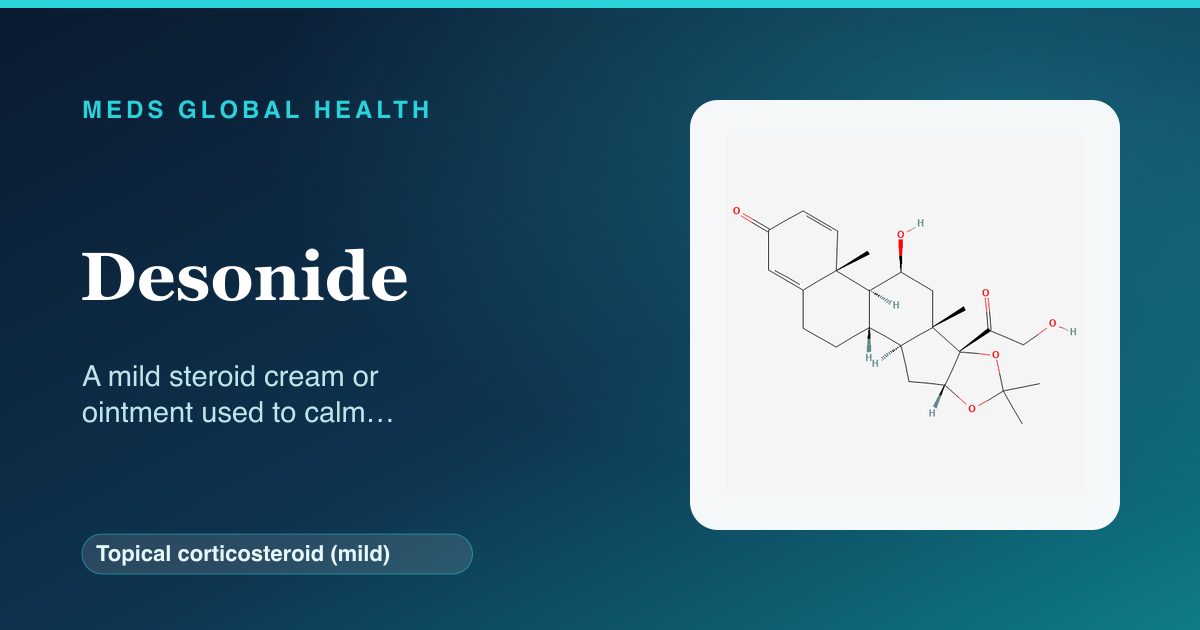
What it is
Desonide is a topical corticosteroid, a steroid medicine that is put on the skin rather than taken by mouth. It is a mild-strength steroid, which makes it suitable for inflamed, itchy skin conditions such as eczema and dermatitis, and for use on more sensitive areas where stronger steroids would be avoided. It comes as a cream, ointment, lotion or gel applied to the affected skin. Like all topical steroids, it treats flare-ups of inflammation but is not a cure, and it is used alongside good skin care such as regular moisturisers.
How it works
Desonide works by calming the inflammation in the skin that causes redness, swelling, itching and soreness in conditions like eczema and dermatitis. It does this where it is applied, reducing the overactive local immune response in the skin. Because it is a mild steroid, it has a gentler effect than stronger ones, which makes it suitable for sensitive areas but means very inflamed or thick skin may need something stronger. It controls flare-ups rather than curing the underlying tendency, so it is usually used in short bursts when the skin flares and then stopped, with moisturisers continued in between.
Company & origin
A mild steroid applied to the skin to calm inflammation in conditions such as eczema and dermatitis, including in sensitive areas like the face.
What it treats
Conditions Desonide is used for
Practical use
How to take Desonide
General, dose-free guidance — always follow your prescriber's and the leaflet's specific instructions.
- Apply a thin layer sparingly to the affected skin only, usually once or twice a day as directed.
- Use it for short courses to settle a flare-up, rather than continuously on healthy skin.
- Be especially careful on the face and skin folds, and avoid long-term continuous use in these areas.
- Keep using your moisturisers as well, leaving a little time between them and the steroid.
- Wash your hands after applying, unless your hands are the area being treated, and avoid the eyes.
Weighing it up
Advantages & disadvantages of Desonide
Advantages
- A mild, gentle steroid that calms inflamed, itchy skin in conditions like eczema and dermatitis.
- Mild enough to use for short periods on sensitive areas such as the face.
- Acts where it is applied, with little effect on the rest of the body when used as directed.
Disadvantages
- Treats flare-ups but does not cure the underlying skin condition.
- Overuse, especially on the face or in skin folds, can thin the skin over time.
- Very inflamed or thickened skin may need a stronger steroid instead.
Practical use
Good to know
The key to using desonide well is to apply it thinly and sparingly to the inflamed areas only, not over large areas of healthy skin, and to use it for as short a time as needed to settle a flare-up. Even though it is mild, using topical steroids for too long, particularly on the face, in skin folds or under nappies, can thin the skin and cause other local changes, so long-term continuous use on the face is avoided. It works best alongside regular moisturisers, which should be the mainstay of looking after eczema-prone skin; leave a little time between applying a moisturiser and the steroid. Wash your hands after applying it unless your hands are the area being treated, and avoid getting it in the eyes. If the skin does not improve, looks infected, or you find you need it very often, get it reviewed.
Who should not take it / use with caution
- It should not be put on skin that is infected, unless the infection is being treated, as steroids can make infections worse.
- People who have had a reaction to it or to its ingredients should not use it.
- It is used with extra care on the face, in skin folds and on babies and young children, under guidance.
- It is not used to treat conditions such as rosacea or acne, where it can make things worse.
Monitoring
- Reviewing how the skin responds and whether the strength or amount needs changing.
- Watching for signs of skin thinning, particularly with longer use or on the face.
- Checking that the affected skin is not becoming infected.
Side effects
- Mild stinging, burning or irritation when first applied, which usually settles.
- With overuse, thinning of the skin, stretch marks or visible small blood vessels, especially on the face.
- Sometimes worsening of an untreated skin infection.
- Rarely, local changes such as increased hair growth or colour changes where it is applied.
Key interactions
- There are very few interactions with other medicines, as little is absorbed into the body when used correctly.
- Other creams applied to the same area may need to be spaced out, so follow advice on timing.
- Tell your prescriber about other steroid treatments you use, so the total amount is kept sensible.
Available as: Cream, ointment, lotion or gel applied to the skin.
Answers
Desonide: frequently asked questions
What is desonide used for?
It is a mild steroid applied to the skin to calm redness, itching and inflammation in conditions such as eczema and dermatitis.
Can I use it on my face?
Because it is mild, it can be used on the face for short periods, but apply it thinly and avoid long-term continuous use there, as steroids can thin facial skin.
How much should I put on?
Apply a thin layer sparingly to the affected areas only, not over large areas of healthy skin, and use it for as short a time as needed.
Should I still use my moisturiser?
Yes, regular moisturisers are the mainstay of caring for eczema-prone skin; leave a little time between applying a moisturiser and the steroid.
Does it cure my eczema?
No, it settles flare-ups of inflammation but does not cure the underlying tendency, so it is used in short bursts alongside everyday skin care.
The wider class
About Topical corticosteroid (mild)
Desonide belongs to the topical corticosteroid (mild) class. For how the class as a whole works, its shared safety principles and monitoring, see the full guide.
Browse by body system
Authoritative sources
- BNF
- NICE CKS
Building a medicines information resource?
We create evidence-led, dose-free drug and formulary references for teams.