A potent topical corticosteroid
Fluocinolone
A potent steroid cream or ointment used in short courses to calm inflamed, itchy skin conditions such as eczema.
What is Fluocinolone?
Fluocinolone is a potent topical corticosteroid applied to the skin to reduce the redness, itch and inflammation of conditions like eczema. It is used thinly in short courses, because long-term or heavy use of a strong steroid can thin the skin. It is usually kept away from the face and skin folds unless a clinician advises otherwise.
Education and reference only. This is a plain-language guide to Fluocinolone — it deliberately contains no doses. Doses depend on the person, the brand and the reason for treatment, and belong with your prescriber. Always check the BNF, the product labelling (SmPC) and follow medical advice.
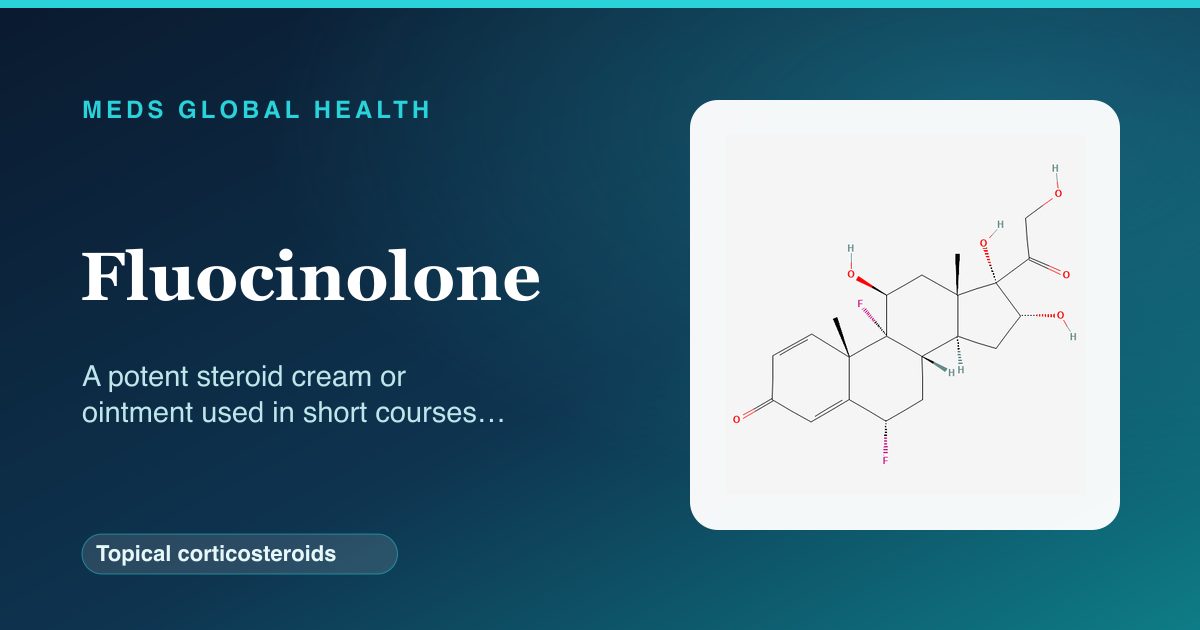
What it is
Fluocinolone (often sold as Synalar) is a potent topical corticosteroid, meaning a steroid applied directly to the skin rather than taken by mouth. It is used to settle flares of inflammatory skin conditions such as eczema (atopic dermatitis) and other forms of dermatitis where milder steroids have not been enough. As a stronger steroid, it works well but is intended for short, targeted use on affected areas rather than as a long-term everyday cream.
How it works
Applied to the skin, fluocinolone is absorbed into the inflamed area where it calms the local immune response. It reduces the release of inflammatory chemicals, which eases redness, swelling, itching and weeping. Because the inflammation is dampened at the source, the skin barrier can begin to recover. The same anti-inflammatory action, if used too heavily or for too long, can also thin the skin and suppress its normal defences, which is why amount and duration are kept in check.
Company & origin
Originated / developed by: Marketed in the UK under the brand Synalar, with generic options available..
What it treats
Conditions Fluocinolone is used for
Practical use
How to take Fluocinolone
General, dose-free guidance — always follow your prescriber's and the leaflet's specific instructions.
- Apply a thin layer to the affected skin only, using a fingertip unit as a guide to amount.
- Use it for the short course advised, then step down or stop as your skin settles.
- Avoid the face, eyelids and skin folds unless a clinician has specifically told you to use it there.
- Wash and dry your hands after applying, unless your hands are the area being treated.
- Carry on with your regular moisturiser (emollient), leaving a little time between the moisturiser and the steroid.
Weighing it up
Advantages & disadvantages of Fluocinolone
Advantages
- Potent and effective at calming stubborn flares that milder steroids have not controlled.
- Works locally on the affected skin, so the rest of the body is largely spared.
- Available as both cream and ointment, so it can suit weepy or dry skin.
Disadvantages
- Long-term or heavy use can thin the skin and cause stretch marks or visible small blood vessels.
- Not ideal for the face or skin folds, where stronger steroids more easily cause problems.
- Symptoms can rebound if a potent steroid is stopped abruptly after prolonged use, so it needs sensible tapering and review.
Practical use
Good to know
Use a thin layer — a 'fingertip unit' (the amount squeezed onto the end of an adult fingertip) is a handy guide for how much to spread over an area the size of two flat hands. Apply only to the affected skin, usually in short courses, and avoid the face, eyelids and skin folds (such as the groin or underarms) unless told otherwise, as these areas absorb more. Keep using your moisturiser (emollient) regularly, and don't continue a potent steroid long-term without review.
Who should not take it / use with caution
- People with untreated bacterial, viral or fungal skin infections at the site (such as impetigo, cold sores or ringworm).
- People with rosacea, acne or peri-oral dermatitis on the face, which potent steroids can worsen.
- Anyone allergic to fluocinolone or other ingredients in the product; use only as directed in young children.
Monitoring
- Skin response and signs of over-use such as thinning or stretch marks
- Watch for signs of infection that may need different treatment
- Review before continuing a potent steroid long-term
Side effects
- Burning, stinging or itching when first applied, which usually settles.
- With longer use: thinning skin, stretch marks, easy bruising or visible small blood vessels, mainly where it is overused.
- Worsening or masking of skin infections, and rarely effects from absorption if very large areas are treated heavily over long periods.
Key interactions
- Few interactions with other medicines because little is absorbed when used correctly on limited areas.
- Other creams should usually be applied at a different time so they do not dilute or rub each other off.
- Heavy use over large or broken skin areas can increase absorption, which matters most in young children.
Available as: Cream and ointment (and a gel/scalp preparation in some products).
Answers
Fluocinolone: frequently asked questions
How much fluocinolone should I use?
Use a thin layer on affected skin only. The 'fingertip unit' is a useful guide: the amount squeezed from the tube along an adult fingertip covers roughly an area the size of two flat adult hands. Using more than needed raises the risk of side effects without extra benefit.
Can I put it on my face?
Generally no, unless a clinician has specifically told you to. The face and skin folds absorb more and are more prone to thinning and other steroid effects, so a potent steroid like fluocinolone is usually avoided there in favour of a milder option.
Will it thin my skin?
Skin thinning is mainly a risk with heavy or prolonged use of a strong steroid. Used thinly in short courses on the affected area as advised, the risk is low. If you find you need it very often, ask for a review of your eczema plan.
Should I still use my moisturiser?
Yes. Regular moisturisers (emollients) are the foundation of eczema care and should continue even when using the steroid. Leave a little time between applying the moisturiser and the steroid so they are not rubbed off each other.
What is the difference between fluocinolone and Synalar?
They are the same medicine — fluocinolone is the active-ingredient name and Synalar is a brand name for it. Generic fluocinolone contains the same active ingredient.
The wider class
About Topical corticosteroids
Fluocinolone belongs to the topical corticosteroids class. For how the class as a whole works, its shared safety principles and monitoring, see the full guide.
Browse by body system
Authoritative sources
- BNF: Fluocinolone acetonide.
- NICE CKS: Topical corticosteroids.
Building a medicines information resource?
We create evidence-led, dose-free drug and formulary references for teams.