A potent steroid cream for inflamed skin
Fluocinonide
A potent steroid cream or ointment used to calm inflamed, itchy skin conditions such as flares of eczema or psoriasis.
What is Fluocinonide?
Fluocinonide is a potent topical corticosteroid, a steroid cream or ointment used to calm inflammation, redness and itch in skin conditions that need a stronger preparation. It is applied thinly to the affected skin for short periods. Because it is potent, the main concerns are thinning of the skin and other local effects with overuse, so it is generally avoided on the face and in skin folds and not used over large areas or for long stretches without advice. Used as directed, it can settle a flare quickly.
Education and reference only. This is a plain-language guide to Fluocinonide — it deliberately contains no doses. Doses depend on the person, the brand and the reason for treatment, and belong with your prescriber. Always check the BNF, the product labelling (SmPC) and follow medical advice.
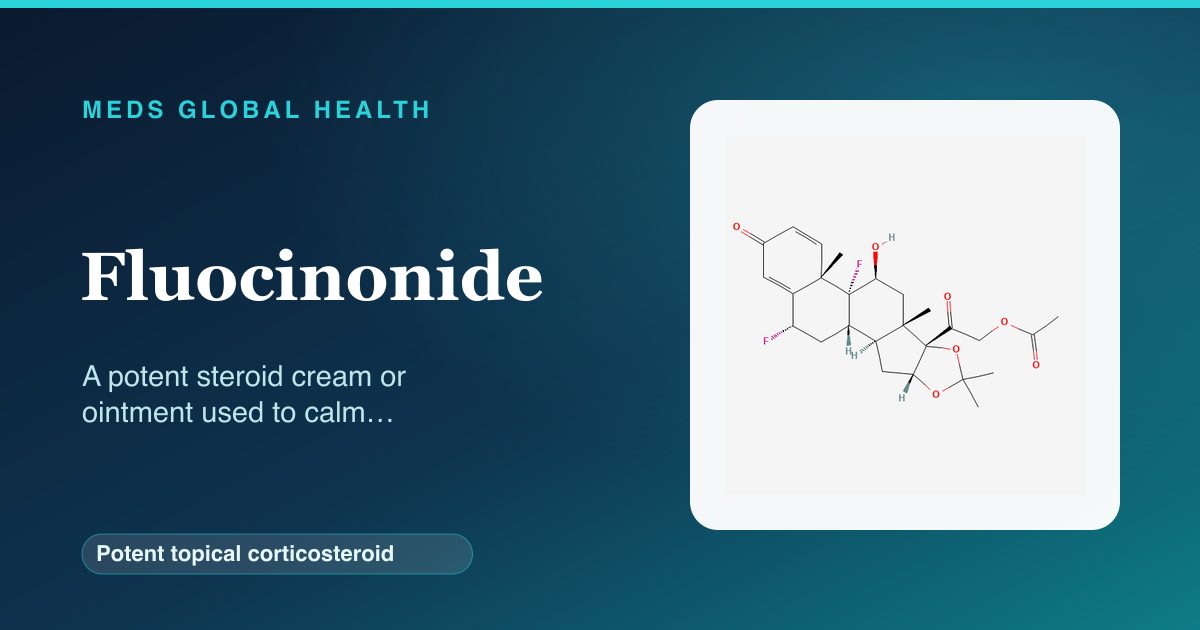
What it is
Fluocinonide is a potent topical corticosteroid, a steroid applied to the skin to reduce inflammation. It is used for inflammatory and itchy skin conditions, such as flares of eczema, psoriasis and some other rashes, particularly when milder steroid creams have not been strong enough. It comes as a cream, ointment or gel and is applied directly to the affected area. Because it is one of the stronger steroid preparations, it is used carefully, in thin amounts and usually for limited periods, under the guidance of a prescriber or pharmacist.
How it works
Fluocinonide calms the overactive inflammation in the skin that causes redness, swelling, itch and scaling. By damping down this inflammatory response, it helps a flare settle and relieves the discomfort that comes with it. Because it is a potent steroid, it works well on stubborn or thicker patches, but the same strength means it can also affect the skin itself if overused, which is why it is applied thinly and for short courses. It treats the flare rather than curing the underlying condition, so flares can return and the cream is used again as advised.
Company & origin
A potent steroid cream or ointment used in the UK to calm inflamed, itchy skin conditions that need a stronger preparation.
What it treats
Conditions Fluocinonide is used for
Practical use
How to take Fluocinonide
General, dose-free guidance — always follow your prescriber's and the leaflet's specific instructions.
- Apply a thin layer only to the affected skin, as directed, not to healthy surrounding skin.
- Avoid the face, around the eyes and skin folds unless a specialist has advised it, as skin there is more delicate.
- Use it for short periods to settle a flare rather than continuously, and review with your prescriber.
- Wash your hands after applying, unless your hands are the area being treated.
- Keep using emollients (moisturisers) alongside, and step down to a milder steroid as the skin improves.
Weighing it up
Advantages & disadvantages of Fluocinonide
Advantages
- A potent option that can settle stubborn flares of inflamed, itchy skin quickly.
- Useful when milder steroid creams have not been strong enough.
- Applied directly to the skin, with little effect elsewhere when used correctly.
Disadvantages
- Can thin the skin and cause local changes if overused or used for too long.
- Generally not suitable for the face or skin folds without specialist advice.
- Enough can be absorbed to have wider effects if used over large areas, under dressings or in children.
Practical use
Good to know
The most important things to know about fluocinonide come from it being a potent steroid. Used correctly, in thin amounts on the affected skin for short periods, it is an effective way to settle a flare. Used too heavily, over too large an area or for too long, it can thin the skin, cause stretch marks, visible small blood vessels or other local changes, and enough can be absorbed through the skin to have wider effects, particularly in children or when used under dressings. For these reasons it is generally avoided on the face, around the eyes and in skin folds unless a specialist advises, and it should not be used for long stretches without review. A useful rule is to use the smallest amount that controls the problem and to step down to a milder steroid or an emollient as the skin improves.
Who should not take it / use with caution
- It should not be applied to skin that is infected, unless the infection is being treated as well.
- It is generally avoided on the face, around the eyes and in skin folds unless a specialist advises.
- People who have had a reaction to it or to ingredients in the cream should not use it.
- It is used with particular care in young children and during pregnancy, under guidance.
Monitoring
- Reviewing how the skin responds and whether a milder steroid can be used.
- Watching for signs of skin thinning or other local effects with longer use.
- Checking that any skin infection is recognised and treated.
Side effects
- Thinning of the skin, stretch marks or visible small blood vessels with overuse.
- Burning, stinging or irritation when first applied.
- Worsening or spread of an untreated skin infection.
- Rarely, with large amounts over a long time, wider effects from absorption through the skin.
Key interactions
- Other creams applied to the same area may be best separated; ask your pharmacist about timing.
- Covering the area with dressings increases absorption, so only do so if advised.
- Tell your prescriber about other steroid treatments you use, including inhalers or tablets.
Available as: Cream, ointment and gel applied to the skin.
Answers
Fluocinonide: frequently asked questions
What is fluocinonide used for?
It is a potent steroid cream or ointment used to calm inflammation, redness and itch in skin conditions such as flares of eczema or psoriasis, especially when milder steroids have not worked.
Can I use it on my face?
It is generally avoided on the face, around the eyes and in skin folds unless a specialist advises, because the skin there is more delicate and prone to thinning.
How much should I use?
Apply a thin layer only to the affected skin and use the smallest amount that controls the problem, for short periods rather than continuously.
Will it thin my skin?
It can thin the skin or cause other local changes if overused or used for too long, which is why it is applied thinly for limited courses and reviewed.
Can I still use my moisturiser?
Yes. Keep using emollients alongside it, and step down to a milder steroid or just the moisturiser as the skin improves.
The wider class
About Potent topical corticosteroid
Fluocinonide belongs to the potent topical corticosteroid class. For how the class as a whole works, its shared safety principles and monitoring, see the full guide.
Browse by body system
Authoritative sources
- BNF
- NICE CKS
Building a medicines information resource?
We create evidence-led, dose-free drug and formulary references for teams.