A proton-pump inhibitor (PPI) for acid reflux
Dexlansoprazole
A medicine that strongly reduces stomach acid, used for acid reflux and inflammation of the gullet.
What is Dexlansoprazole?
Dexlansoprazole is a proton-pump inhibitor, or PPI, a medicine that strongly reduces the amount of acid the stomach makes. It is used for acid reflux and for healing inflammation of the gullet (the food pipe) caused by acid. It is closely related to lansoprazole. PPIs are generally well tolerated, but long-term use carries some cautions, including low magnesium and vitamin B12 levels, a slightly higher risk of bone fractures, and a higher chance of certain gut infections. Stopping a PPI suddenly after long-term use can cause a temporary surge of acid, so it may need to be reduced gradually.
Education and reference only. This is a plain-language guide to Dexlansoprazole — it deliberately contains no doses. Doses depend on the person, the brand and the reason for treatment, and belong with your prescriber. Always check the BNF, the product labelling (SmPC) and follow medical advice.
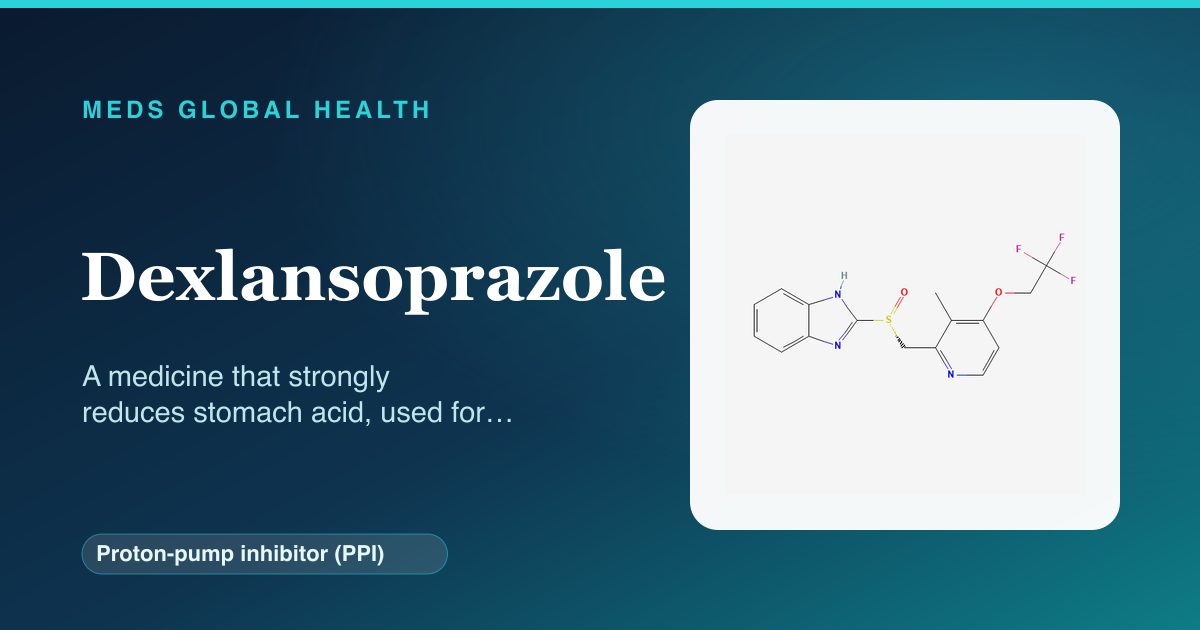
What it is
Dexlansoprazole is a proton-pump inhibitor (PPI), one of a group of medicines that powerfully reduce stomach acid. It is closely related to lansoprazole. By lowering acid, it relieves the symptoms of acid reflux, such as heartburn, and allows acid-related inflammation of the gullet to heal. It is taken by mouth as a capsule and is generally well tolerated. PPIs are widely used and effective, but, like all of them, dexlansoprazole is best used at the lowest dose for the shortest time that controls symptoms, with longer-term use reviewed from time to time.
How it works
Dexlansoprazole works by switching off the tiny 'pumps' in the lining of the stomach that produce acid. With far less acid being made, the stomach contents become less irritating, which eases heartburn and reflux and gives an inflamed gullet a chance to heal. Because it acts on acid production itself rather than just neutralising acid already there, it has a strong and lasting effect on acid levels. This is also why, after taking a PPI for a long time, stopping suddenly can lead to a temporary rebound increase in acid, which is why it is sometimes reduced gradually.
Company & origin
A proton-pump inhibitor used to reduce stomach acid in acid reflux and inflammation of the gullet; closely related to lansoprazole.
What it treats
Conditions Dexlansoprazole is used for
Practical use
How to take Dexlansoprazole
General, dose-free guidance — always follow your prescriber's and the leaflet's specific instructions.
- Take the capsule as directed; it can usually be taken with or without food, at about the same time each day.
- Swallow it whole, or follow the specific advice for your product if you cannot swallow capsules.
- Use the lowest dose that controls your symptoms, and review with your prescriber whether you still need it.
- If you have taken it long term, ask before stopping, as reducing the dose gradually may avoid a rebound of acid.
- Report persistent diarrhoea, or warning signs such as difficulty swallowing or unintended weight loss, promptly.
Weighing it up
Advantages & disadvantages of Dexlansoprazole
Advantages
- Strongly and reliably reduces stomach acid, easing reflux and heartburn.
- Helps acid-related inflammation of the gullet to heal.
- Generally well tolerated and taken as a once-a-day capsule.
Disadvantages
- Long-term use can lower magnesium and vitamin B12 and slightly raise the risk of bone fractures.
- Can make certain gut infections a little more likely, and may mask more serious stomach problems.
- Stopping suddenly after long-term use can cause a temporary rebound increase in acid.
Practical use
Good to know
Dexlansoprazole is usually well tolerated, but there are a few sensible points to keep in mind, mostly with longer-term use. Over time, PPIs can lower magnesium and vitamin B12 levels, slightly increase the risk of bone fractures, and make some gut infections, including one called Clostridioides difficile, a little more likely, so any persistent diarrhoea while taking it should be reported. Because they are so effective, PPIs are sometimes taken for longer than needed, so it is worth reviewing whether you still need it, aiming for the lowest dose for the shortest time. If you have taken it for a long while, stopping abruptly can cause a temporary surge of acid and a return of symptoms, so it may be better to step the dose down. PPIs can also mask the symptoms of more serious stomach problems, so any warning signs such as difficulty swallowing, unintended weight loss or vomiting blood should always be checked.
Who should not take it / use with caution
- People who have had a serious allergic reaction to it or to similar PPIs should not take it.
- It is used with care, and serious warning signs investigated, in people with possible serious stomach problems.
- Long-term use is reviewed in people at risk of low magnesium, bone problems or certain infections.
- Some medicines interact with it, so tell your prescriber what else you take before starting.
Monitoring
- Reviewing whether the medicine is still needed and using the lowest effective dose.
- Checking magnesium and, where relevant, vitamin B12 levels with long-term use.
- Investigating any warning signs such as difficulty swallowing, unintended weight loss or signs of bleeding.
Side effects
- Headache, diarrhoea, constipation, wind or tummy discomfort in some people.
- Nausea or, occasionally, dizziness.
- With long-term use, low magnesium or vitamin B12 levels and a slightly higher fracture risk.
- Rarely, persistent diarrhoea from a gut infection, or skin reactions, which should be reported.
Key interactions
- By reducing stomach acid, it can change how well some other medicines are absorbed.
- It can interact with certain medicines, including some used to prevent blood clots, so your prescriber should know your full list.
- Long-term use alongside other medicines that lower magnesium may increase the chance of low magnesium.
Available as: Capsules taken by mouth.
Answers
Dexlansoprazole: frequently asked questions
What is dexlansoprazole used for?
It is a proton-pump inhibitor that strongly reduces stomach acid, used for acid reflux and to heal acid-related inflammation of the gullet.
How is it different from lansoprazole?
It is closely related to lansoprazole and works in the same way, by switching off the stomach's acid pumps to reduce acid.
Are there risks with long-term use?
Long-term use can lower magnesium and vitamin B12, slightly raise the risk of bone fractures and certain gut infections, so it is worth reviewing whether you still need it.
Can I stop it suddenly?
After long-term use, stopping abruptly can cause a temporary surge of acid and a return of symptoms, so it may be better to reduce the dose gradually with advice.
Should I take it with food?
It can usually be taken with or without food at about the same time each day, but follow the specific instructions for your product.
The wider class
About Proton-pump inhibitor (PPI)
Dexlansoprazole belongs to the proton-pump inhibitor (ppi) class. For how the class as a whole works, its shared safety principles and monitoring, see the full guide.
Browse by body system
Authoritative sources
- BNF
- NICE CKS
Building a medicines information resource?
We create evidence-led, dose-free drug and formulary references for teams.